
A definitive guide to choosing the right vitamin C derivative for private label serums — covering stability, formulation constraints, OEM compatibility, and what to demand from your manufacturer before sampling.
How to Choose the Right Vitamin C Derivative for Your Private Label Serum
You have committed to launching a Vitamin C serum. The category is proven, consumer demand is real, and your OEM factory has confirmed they can manufacture it. Then the factory sends over a formulation proposal listing three different Vitamin C derivatives — and you realize you do not know which one to choose, or why it matters.
This is where most private label brand owners make their first serious mistake: deferring entirely to the factory's recommendation without understanding what they are actually choosing. The wrong Vitamin C derivative will produce a product that discolors on shelf, irritates your target consumer, or fails to deliver the brightening results your marketing team has already promised.
This guide breaks down every commercially relevant Vitamin C derivative available for OEM production, explains what the stability science actually means for your formulation decisions, identifies the questions you must ask your manufacturer before sampling begins, and outlines the four post-launch failures that a better pre-production process would have prevented.
Why Vitamin C Is the Most Technically Demanding Active to Formulate
Vitamin C — in its pure, bioactive form as L-Ascorbic Acid — is among the most extensively researched topical actives in dermatology. The clinical evidence for its role in collagen synthesis stimulation, melanin inhibition, and antioxidant protection is robust and well-replicated. It is also, in its pure form, one of the most chemically unstable ingredients in commercial skincare formulation.
L-Ascorbic Acid oxidizes readily on exposure to air, light, and heat. Oxidation turns the product yellow, then brown, producing dehydroascorbic acid and further degradation products that may cause irritation. A Vitamin C serum that arrives at a customer's door discolored is a return request and a brand credibility problem, not a formulation footnote.
The pH requirement compounds this challenge. L-Ascorbic Acid is only meaningfully absorbed through the skin at pH 2.5 to 3.5 — a range that is irritating to a significant proportion of consumer skin types, especially at the concentrations (10–20%) required for clinical efficacy. Formulators and OEM factories developed Vitamin C derivatives specifically to solve for these two problems: stability and tolerability. But each derivative solves them differently, and none solves both perfectly. Understanding those trade-offs is the entire job of derivative selection.
The single most expensive formulation mistake a brand owner can make is choosing a Vitamin C derivative based on factory availability or ingredient cost rather than the specific stability profile, efficacy ceiling, and consumer skin type their product is targeting.
The Major Vitamin C Derivatives: A Complete Comparison
Six derivatives dominate commercial private label and OEM production for the global market.
| Derivative | INCI Name | Stability | Efficacy Ceiling | Functional pH | Ideal Skin Type | Typical Use % |
|---|---|---|---|---|---|---|
| L-Ascorbic Acid | Ascorbic Acid | Low | Highest | 2.5–3.5 | Oily / tolerant | 10–20% |
| AA2G (Ascorbyl Glucoside) | Ascorbyl Glucoside | Very High | Moderate | 5.0–7.0 | Sensitive / all types | 2–5% |
| SAP (Sodium Ascorbyl Phosphate) | Sodium Ascorbyl Phosphate | High | Moderate | 5.5–7.0 | Acne-prone / oily | 3–10% |
| MAP (Magnesium Ascorbyl Phosphate) | Magnesium Ascorbyl Phosphate | High | Moderate–High | 5.5–7.0 | Brightening / dry | 5–10% |
| 3-O-EA (Ethyl Ascorbic Acid) | 3-O-Ethyl Ascorbic Acid | High | Moderate–High | 4.0–6.5 | All types / brightening | 1–3% |
| VC-IP (Ascorbyl Tetraisopalmitate) | Ascorbyl Tetraisopalmitate | High (oil phase) | Moderate | Oil-phase only | Dry / anti-aging | 2–5% |
Understanding the Efficacy vs. Stability Trade-off
Every Vitamin C derivative achieves its stability through molecular modification — attaching a stabilizing group (phosphate, glucoside, ester) to the ascorbic acid molecule. The modification that makes the molecule stable is the same modification that requires enzymatic cleavage in the skin before the ascorbic acid becomes biologically active. More stable derivative = more conversion steps required = lower peak bioavailability at the target site.
A brand targeting clinical-grade results for tolerant skin can justify the formulation complexity of L-Ascorbic Acid. A brand targeting daily-use brightening for sensitive skin consumers in Southeast Asia or Europe should not be using L-Ascorbic Acid — the return and complaint rate from irritation will undermine the brand faster than any competitor.
AA2G (Ascorbyl Glucoside): The Stability Champion
Ascorbyl Glucoside is currently the dominant Vitamin C derivative in sensitive-skin and daily-use positioning globally. It converts to free ascorbic acid in the skin via glucosidase enzymes, is water-soluble, and is fully compatible with neutral-pH formulation bases. Its stability across temperature and light exposure is exceptional — validated accelerated stability data regularly shows less than 5% degradation over 12 months at ambient conditions.
SAP (Sodium Ascorbyl Phosphate): The Acne-Adjacent Choice
Sodium Ascorbyl Phosphate has documented antimicrobial activity against Cutibacterium acnes, making it the preferred Vitamin C derivative for acne-prone skin positioning. It is water-soluble, stable at neutral pH, and compatible with most acne-adjacent actives including niacinamide and zinc.
3-O-EA (Ethyl Ascorbic Acid): The Versatile Performer
3-O-Ethyl Ascorbic Acid has emerged as the preferred derivative for brands targeting broad market positioning across skin types. It is both water- and oil-soluble, stable across a wider pH range than phosphate derivatives, and has a stronger efficacy profile than AA2G or SAP.
MAP (Magnesium Ascorbyl Phosphate): The Brightening Specialist
Magnesium Ascorbyl Phosphate has the strongest melanin-inhibition data among the stable derivatives, making it the preferred choice for brightening-focused formulations targeting hyperpigmentation.
VC-IP (Ascorbyl Tetraisopalmitate): The Lipid-Phase Option
Ascorbyl Tetraisopalmitate is the only commercially relevant lipid-soluble Vitamin C derivative, appropriate for oil serums, facial oils, and bi-phase formulations.
Choosing by Brand Claim: The Decision Framework
Clinical-Grade Brightening / Anti-Aging (Tolerant Skin): L-Ascorbic Acid at 10–20% with airless pump packaging and pH 2.5–3.5 formulation.
Daily-Use Brightening (Sensitive / All Skin Types): AA2G at 2–5% or 3-O-EA at 1–3%. Both appropriate for neutral-pH bases and standard pump dispensers.
Brightening + Anti-Aging (Broad Market): 3-O-EA at 1–3% or MAP at 5–10%. The strongest efficacy profile among stable derivatives.
Acne-Prone Brightening / Post-Inflammatory Hyperpigmentation: SAP at 5–10%. Documented antimicrobial activity, compatible with niacinamide and zinc.
Luxury Oil Serum / Facial Oil: VC-IP at 2–5%. The only commercially relevant lipid-soluble derivative.
Stability Testing: The Variable Most Brand Owners Skip
Stability testing is the most systematically skipped step in private label Vitamin C serum development. Brand owners frequently proceed from approved sample to production run without accelerated stability data, on the assumption that the factory's existing formulation has been validated. This assumption is almost always partially wrong — and with Vitamin C derivatives, partially wrong means product discoloration on shelf within six months.
The relevant testing protocol for most markets is based on ICH Q1A(R2) guidelines: accelerated condition testing at 40°C and 75% relative humidity over a minimum of six months, with evaluation at 0, 1, 2, 3, and 6 months.
Every time a brand owner requests stability testing after packaging has been finalized, there is a 30–40% probability that the packaging selection requires revision. Align on packaging specification before sampling, not after.
Stability documentation to request from your OEM factory:
- Real-time and accelerated stability test reports with HPLC active content data at each time point
- Appearance and color change documentation (photographic or colorimetric)
- pH stability data across the testing period
- Compatibility test results confirming the formula-packaging interaction
- Preservative efficacy test (PET / Challenge Test) results
Formulation Design: Key Decision Points Before You Brief Your Factory
Your formulation brief should resolve: derivative selection and concentration, target pH range, base formula type (water-phase serum, emulsion, oil serum, or bi-phase), packaging specification, and target market regulatory requirements.
Niacinamide combination formulations require specific attention. The niacin formation risk in combined L-Ascorbic Acid / niacinamide formulations is real at the concentrations and pH ranges typically used. If your brief calls for this combination, the formulation must be evaluated specifically for niacin content under accelerated stability conditions.
Efficacy Validation: What You Can and Cannot Claim
In the EU, cosmetic efficacy claims must be substantiated by evidence proportionate to the claim. "Brightening" and "antioxidant protection" are supportable for most Vitamin C derivatives with appropriate in-vitro or consumer perception data. "Clinically proven collagen stimulation" requires clinical study data specific to your formulation.
The OEM Selection Checklist for Vitamin C Serums
When evaluating an OEM partner, the following capabilities are non-negotiable:
- In-house HPLC testing capability for active content verification
- Documented accelerated stability programs with data available for review
- Experience with all major Vitamin C derivatives
- Packaging supplier relationships including airless pump and UV-protective options
- ISO 22716 / GMPC certification
- Regulatory support for your target market (EU CPNP, US FDA, China NMPA)
Four Mistakes That Ruin Vitamin C Serums After Launch
Mistake 1: Maximizing Concentration Without Stability Data — Higher active concentration does not automatically produce better performance. For L-Ascorbic Acid, concentrations above 20% are not more effective — they are simply more unstable and more irritating.
Mistake 2: Approving Packaging Without Compatibility Testing — Packaging selection must be confirmed before stability testing is conducted. Changing packaging after receiving a stable result invalidates the data.
Mistake 3: Ignoring the Niacinamide Combination Risk — The niacin formation risk in combined L-Ascorbic Acid / niacinamide formulations is real. The formulation must be evaluated specifically for niacin content under accelerated stability conditions.
Mistake 4: Skipping Accelerated Stability Testing to Save Time — Accelerated stability testing at 40°C/75% RH for six months is the minimum technical standard for any product intended for retail distribution.
Conclusion
Vitamin C serum remains one of the most commercially successful categories in global skincare — and one of the most technically unforgiving. The right derivative for your product is determined by your target consumer's skin type, your primary efficacy claim, your price positioning, your packaging specification, and your target market's regulatory environment.
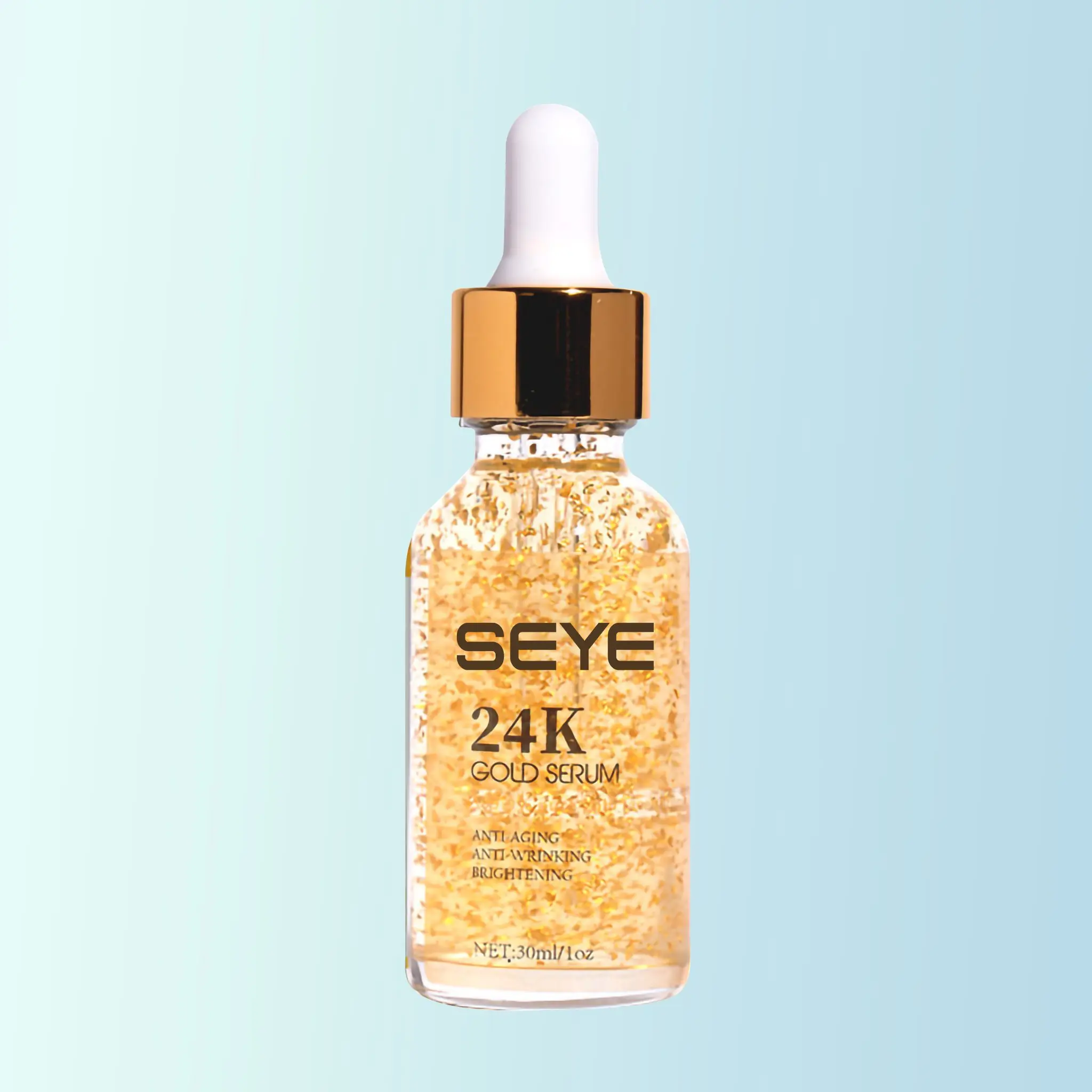
At SEYE, our formulation team works with brand partners from derivative selection through stability sign-off, providing technical guidance and full documentation at each stage. We bring in-house HPLC testing, accelerated stability programs, and Vitamin C OEM experience across all major derivative types to every partnership. Contact us to discuss your formulation brief and request a sample documentation package.
SEYE Cosmetics Formulation Team
Formulation Science
Publication details are shown from the article record. Individual expertise, reviewer information, and review dates appear only when verified for public display.