
Not long ago, an established skincare brand owner visited SEYE.
Her company had been operating successfully for years.
She had loyal customers.
Strong repeat purchases.
And a product line that had performed consistently well.
From the outside, there seemed to be no obvious problem.
Yet she arrived with a concern that immediately caught our attention.
She said:
"Our customers are still buying from us."
"But they are not the same women they were ten years ago."
That single sentence stayed with us long after the meeting ended.
Because it highlighted a challenge that many growing skincare brands eventually face.
A challenge that rarely appears in sales reports.
A challenge that most brands do not notice until growth begins to slow.
The customer who discovered your brand at 28 may now be 38.
The customer who loved your products at 35 may now be approaching 45 or 50.
Her skin is different. Her priorities are different. Her daily frustrations are different.
And yet many brands continue offering the same solutions they offered years ago.
One of the Biggest Risks in Skincare Is Not Losing Customers — It Is Failing to Notice They Have Changed
When brands think about growth, they often focus on attracting new customers. New products. New channels. New markets.
But some of the most successful brands we have worked with at SEYE spend significant time studying a different question.
Not: how do we find more customers? But: how do we continue serving the customers we already have?
This distinction matters more than it might appear.
Because a loyal customer who feels understood is often worth far more than a new customer who has not yet decided whether to trust you.
And when a loyal customer begins to feel that your products no longer address her needs, she does not always tell you directly.
She simply starts exploring alternatives. Quietly. Gradually. Without drama.
By the time the data shows a decline in repeat purchases, the shift has often already happened.
What Changes As Skin Ages — and Why It Matters for Product Development
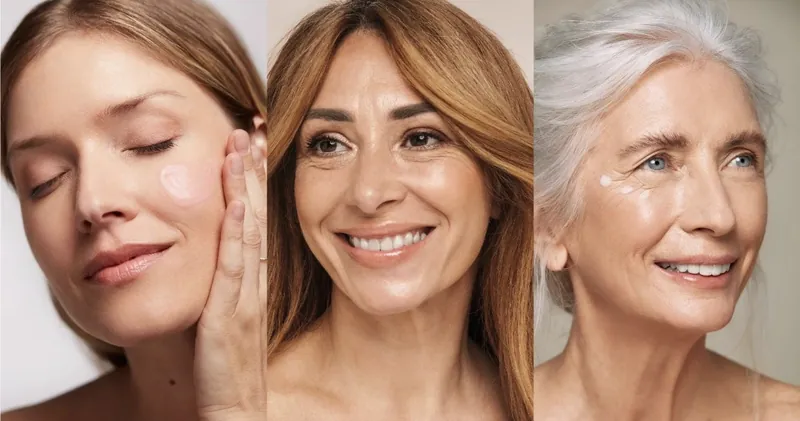
Understanding why loyal customers may eventually need different products requires understanding what actually changes in skin over time.
As skin matures, several natural shifts occur.
Collagen production gradually declines, which affects firmness and texture.
Skin hydration levels decrease as the skin barrier becomes less efficient at retaining moisture.
Oil production often slows, which can make skin feel drier and more sensitive than it did in earlier decades.
Cell turnover becomes slower, which can affect how products absorb and how skin responds to active ingredients.
These changes are not dramatic. They happen gradually.
But their cumulative effect means that a product formulated for skin at 30 may deliver a noticeably different experience for the same person at 50.
This is not a failure of the product. It is simply a reflection of how skin changes over time.
And it creates a genuine opportunity for brands willing to think carefully about formulation.
Three Questions Worth Asking About Your Existing Product Line
When we work with brands at SEYE who are thinking about expanding or evolving their product range, we often begin with three questions.
First: Who is your customer today — and who was she when she first discovered your brand?
If your brand has been operating for five years or more, there is a reasonable chance that a meaningful portion of your loyal customers have moved into a different life stage. Their skin concerns may have shifted. Their expectations may have changed.
Second: Are your current formulations still addressing the concerns your loyal customers actually have today?
This is worth examining honestly. A hydrating serum formulated for a 28-year-old and a hydrating serum formulated for a 48-year-old can look identical on the label. But the ingredients that deliver results for each skin type may be quite different.
Third: Is there a gap between what your customers need now and what your current product line offers?
Gaps are not always obvious. But they often show up in customer feedback, in questions your team receives, or in the products your customers are quietly adding from other brands.
What Formulation Adjustments Can Address Mature Skin Needs
At SEYE, we work with brands across different markets to develop formulations that address the specific needs of skin at different life stages.
For mature skin, some of the most effective approaches we have seen include:
Barrier-focused hydration. Ingredients such as ceramides, fatty acids, and cholesterol help support the skin barrier, which often becomes more fragile with age.
Longer-lasting moisture delivery. Hyaluronic acid at multiple molecular weights can help deliver hydration both at the surface and deeper within the skin.
Gentler active ingredient profiles. Mature skin can be more reactive to high concentrations of certain actives. Formulations that deliver visible results through gentler, well-tolerated ingredients tend to perform better for this demographic.
Texture and sensory experience. As skin changes, the textures that feel comfortable and effective often change too. Richer textures that once felt heavy may become exactly what the skin needs.

The Opportunity in Evolving With Your Customer
The brand owner who visited SEYE left with a clearer picture of what her customers might need next.
Not a complete overhaul of her product line. Not a new brand identity.
But a thoughtful expansion that acknowledged where her loyal customers were in their lives — and offered them something that genuinely addressed their current concerns.
That is often all it takes.
A signal to your existing customers that you see them. That you understand how their needs have evolved. That you have developed something specifically for where they are now.
In our experience, loyal customers who feel seen and understood tend to respond with continued loyalty. And sometimes, with genuine enthusiasm.
How SEYE Supports Brands Through Product Line Evolution
At SEYE, we work with brands at different stages of their development — including brands that are thinking carefully about how to evolve their product range as their customer base matures.
Our R&D team can help you assess which formulation adjustments are most likely to address the specific concerns of mature skin. We can develop samples that allow you to test different approaches before committing to production.
If you are thinking about how your product line might evolve to better serve your existing customers, we would be glad to discuss what that process might look like for your brand.
The conversation usually begins with a simple question: who is your customer today — and what does her skin actually need?