Three suppliers can quote very different prices for what appears to be the same skincare product. Learn the seven variables behind OEM quotations and how to compare them on a like-for-like basis.
Quick Answer
Cosmetic OEM quotations vary because pricing depends on much more than the product name. Formula assumptions, packaging, decoration, order quantity, testing, documentation, and shipping terms can all change manufacturing cost—even when two brands believe they are comparing the same product.

The key question is not “Who is cheapest?” but “Are the manufacturers quoting exactly the same specification?”
Why This Matters When Comparing Manufacturers
Sending the same inquiry to three suppliers and receiving very different prices can feel confusing. It may appear that one factory is overcharging. In practice, the manufacturers are often responding to different assumptions. A standard PET bottle and a frosted glass airless bottle can carry the same formula but represent very different projects.
The most useful starting point is a clear commercial and technical brief. If you are still deciding between a stock, adapted, or bespoke route, our Custom Formula Development hub explains the decisions that should be made before pricing is compared.
Seven Reasons Cosmetic OEM Quotations Vary
1. Formula Assumptions
“Face serum” or “body cream” is not a complete specification. A quotation can be based on a stock formula, a semi-custom adaptation, or a fully custom formula; it may also assume different active levels, fragrance choices, preservative systems, and market requirements. These choices change ingredient, development, and testing requirements.
For a focused first SKU, start by defining the consumer problem and product role. Our guide on creating your own skincare formula can help determine the appropriate development route before an OEM quote is requested.
2. Packaging Differences
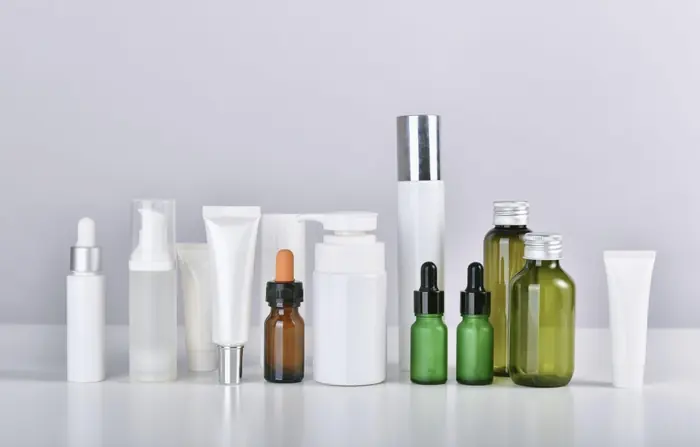
Packaging can influence cost as much as, or more than, the formula. Bottle material, pump type, cap, decoration, secondary carton, insert, and finish all affect the price. A 30 mL serum in a simple PET bottle is not comparable with the same fill in a custom-decorated glass airless pump.
3. Order Quantity and MOQ
Order quantity changes the full cost structure, not only the unit price. Setup, printing preparation, quality inspection, line cleaning, and component minimums are spread across more units at higher volume. When evaluating a launch quantity, review the options in our Low MOQ Private Label Skincare hub and ask suppliers to quote the same volume tiers.
4. Scope of Services Included
Some quotations include filling, component sourcing, decoration, cartons, batch coding, and outer packing. Others quote the formula and bulk fill only. A low headline figure can be incomplete rather than less expensive. Request an itemised quotation so every scope line can be compared.
5. Compliance Documentation and Testing
INCI lists, Certificates of Analysis, Safety Data Sheets, stability testing, challenge testing, and market-specific product information can be included, optional, or excluded. These requirements must be aligned with the destination market. Our Global Compliance for Cosmetics hub outlines why documentation planning belongs in the brief, not after a quote has been accepted.
6. Shipping Terms
EXW, FOB, and DDP quotations assign different responsibilities for freight, customs clearance, duties, and taxes. A comparison is only meaningful when each quote uses the same Incoterm, destination, and logistics scope.
7. Project Brief Clarity
A vague inquiry forces a manufacturer to price assumptions. The most accurate quotation describes product type, net content, expected order quantity, formula requirements, reference product, packaging preference, target market, and delivery destination. This is also why validating demand before product development makes a project more commercially disciplined.
How to Compare Quotations Fairly
Use the same requirements for each manufacturer. The following points should match before comparing unit prices:
| Comparison factor | Why it must match |
|---|---|
| Formula type | Stock, adapted, and bespoke formulas have different cost and timeline assumptions. |
| Order quantity | Unit economics vary substantially across MOQ and volume tiers. |
| Packaging | Material, component, decoration, and carton specifications affect cost. |
| Included services | Filling, printing, testing, and packing may be bundled or separate. |
| Documentation | Regulatory and quality documents can add visible or hidden scope. |
| Shipping terms | EXW, FOB, and DDP assign costs and responsibilities differently. |
For example, a private label facial serum becomes a comparable project only when its net content, formula route, packaging, market documentation, quantity, and delivery terms are held constant.
Before You Request a Quote
Instead of asking only for a price, prepare a one-page project brief covering formula type and active ingredients, size and pack material, decoration method, individual box requirement, quantity, documentation needs, target market, and preferred shipping terms. This reduces re-quoting cycles and gives technical teams enough information to recommend a suitable path.

Frequently Asked Questions
Does a lower quotation mean a lower-quality manufacturer?
Not necessarily. It often reflects different assumptions about formula, packaging, included services, documentation, or shipping terms. Compare scope before reaching a quality conclusion.
Why does order quantity change the unit price so much?
Preparation, printing, inspection, and production-line cleaning costs are largely fixed, so they are shared across more units at higher quantities.
What should I include in my first inquiry to get an accurate quote?
Include the product type, net content, expected quantity, formula requirements, reference product if relevant, packaging preference, target market, and delivery destination.
How do shipping terms affect the quote?
EXW, FOB, and DDP allocate freight, clearance, duties, and taxes differently. Quotes using different Incoterms are not directly comparable.
Is it reasonable to ask a manufacturer to re-quote using the same terms as a competitor?
Yes. Asking each supplier to quote against the same formula assumptions, quantity, documentation scope, packaging, and shipping terms is the clearest way to compare proposals.
Request a More Accurate OEM Quotation
SEYE develops quotations from confirmed project requirements rather than generic assumptions. Share your product idea, expected order quantity, formula direction, packaging preference, target market, and destination; our team can recommend a development route before pricing. Contact our OEM team to begin.
SEYE Cosmetics
OEM Project Advisory Team, SEYE Cosmetics
Publication details are shown from the article record. Individual expertise, reviewer information, and review dates appear only when verified for public display.