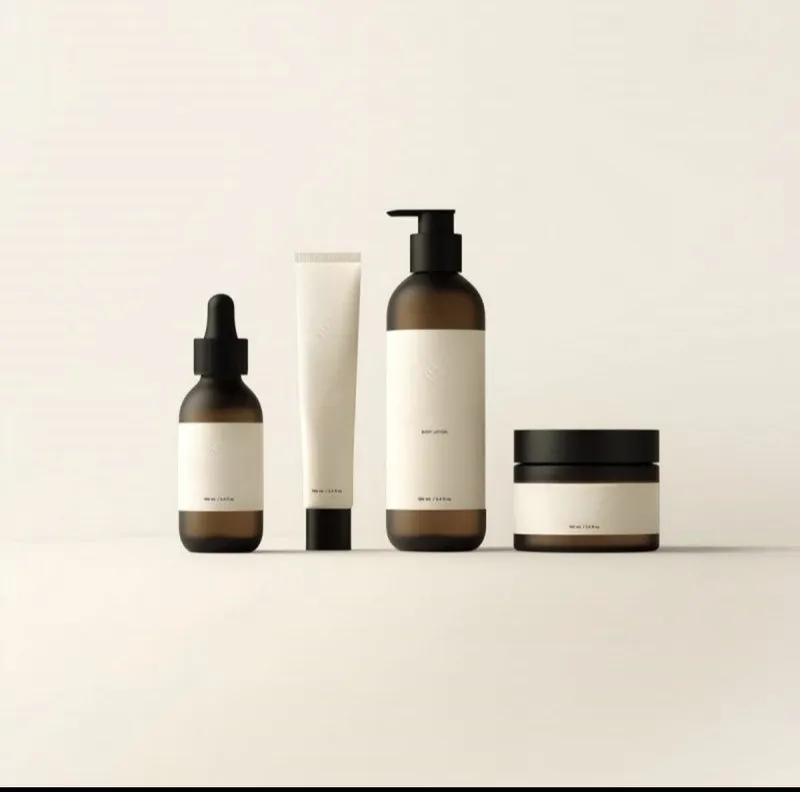

A practical, evidence-led framework for comparing low-MOQ skincare OEM/ODM partners in China. Learn what to verify across formula platforms, packaging, 5–7 day sampling targets, quotes, quality records, compliance roles, and reorder readiness before committing to a 500–3,000-unit first order.
Choose Evidence, Not a Marketing Ranking
Choosing a “top” manufacturer should be an evidence-led procurement decision, not a marketing ranking. China offers a deep ecosystem of formulation laboratories, primary-packaging suppliers, decoration specialists, filling operations, and export logistics. The right partner for a 500–3,000-unit skincare project is the supplier that can show a workable technical route, document its assumptions, and repeat quality and timing—not simply the supplier with the largest catalogue.
This guide helps brands compare low-MOQ OEM/ODM partners for private-label serum, cream, eye cream, cleanser, and related formats. It explains why China can be competitive, how to test a supplier’s readiness, and where SEYE may fit a small-batch brand’s requirements. If you are still deciding whether a first order should start at low MOQ, begin with the Low-MOQ Private-Label Skincare hub.
The useful question is not “Who is the biggest supplier?” It is “Which supplier can control the formula, pack, evidence, schedule, and reorder assumptions for this exact brief?”
Why China Is Strong for Low-MOQ Skincare Development
China’s advantage is the ability to coordinate multiple specialist inputs in one product-development path. For a small skincare order, that can mean access to mature formulation platforms, flexible package sourcing, localized decoration, and a manufacturing team that understands how formula, pump, bottle, label, carton, and shipping requirements interact. It does not eliminate the need for due diligence: the buyer should still audit the exact factory, quality system, capacity assumptions, and document ownership for the specific project.
| Potential advantage | What a buyer should verify | Why it matters at low MOQ |
|---|---|---|
| Formulation platform depth | Sample records, ingredient rationale, change-control process, and whether the proposed formula suits the intended market | A mature platform can reduce early development iterations |
| Packaging ecosystem | Component availability, component MOQ, decoration lead time, compatibility plan, and replacement options | Packaging minimums often determine whether a 500-unit run is truly feasible |
| Integrated execution | Who coordinates formula, components, filling, artwork, inspection, and freight handoff | Clear ownership avoids time loss between multiple suppliers |
| Export experience | Which technical and quality documents are available, in what format, and which parties own market submissions | Export readiness must be planned before components are printed |
How to Compare Low-MOQ OEM/ODM Suppliers
Compare the same written brief across every shortlisted supplier. A headline MOQ or unit price is not enough because formula, fill size, primary component, decoration, carton, testing, and destination can each change the commercial route.
| Evaluation area | Evidence to ask for | Warning sign |
|---|---|---|
| MOQ definition | MOQ by formula, fill size, component, decoration, and total order—not only a headline number | “500 units” is quoted without package or customization assumptions |
| Sample process | Sample target, included revisions, dispatch condition, approval method, and sample-to-bulk version control | A 5–7 day claim is used as if it includes all testing, artwork, and material lead time |
| Quote transparency | Separate formula, components, decoration, setup, filling, inspection, documents, freight, and taxes where relevant | A low unit price appears before setup, loss, or packaging minimums are disclosed |
| Quality system | Current certificate copies, factory scope, batch traceability, inspection criteria, and exception procedure | Certification names are supplied without issuing body, date, scope, or product-site match |
| Regulatory support | Clear division between OEM records and brand, Responsible Person, or importer obligations | A supplier promises universal EU or US compliance before reviewing the finished product and market |
| Reorder readiness | Component availability, formula-lock status, lead-time assumption, forecast process, and change-control terms | There is no plan for what happens after the first small run sells through |
For a fuller discussion of setup fees, yield allowances, production readiness, and scheduling, use From 500 to 3,000 Units: Avoid Hidden Costs and Lead-Time Traps. It helps turn an attractive quotation into a scope that can actually be executed.
SEYE’s Low-MOQ OEM/ODM Positioning
SEYE is positioned for brands that need a controlled route from brief to first order, rather than a catalogue-only transaction. Its public materials describe low-MOQ projects from 500 units for selected options, an initial 5–7 day sample target once project inputs are ready, and a mature formula library. The current public site references 3,000+ proven formulas; if SEYE’s approved corporate fact sheet confirms a larger 10,000+ mature-formula claim, use that same approved figure consistently across the website, sales deck, and technical materials.
SEYE also reports a portfolio of 30+ patents. A buyer should request a current patent list, ownership or licence context, jurisdiction, expiry status, and relevance to the proposed product before treating that figure as a procurement decision point. Patent count is not a substitute for formula suitability, manufacturing controls, claims evidence, or freedom-to-operate review.
- Formula route: choose a mature platform where speed and market validation are the priority, or use Custom Formula Development for a defined technical point of difference.
- Product focus: explore SEYE’s private-label facial serum platform to align texture, benefit direction, pack format, and volume with the brand brief.
- Compliance planning: use the Global Compliance for Cosmetics hub to assign the factory, brand, Responsible Person, importer, and adviser roles before bulk release.
- Quality evidence: review the site’s Certifications information together with the certificate scope, dates, and the proposed manufacturing location.
A 30-Minute Supplier Comparison Framework
Send every shortlisted OEM/ODM partner the same one-page request. Score evidence, not promises. The table below can be copied into a procurement file.
| Question | Supplier response | Evidence received | Decision |
|---|---|---|---|
| What is the exact MOQ for this formula, size, component, decoration, and destination? | ________________ | Quote revision / component list | Accept / clarify / decline |
| What starts the 5–7 day sample clock, and what is excluded? | ________________ | Sample workflow / written confirmation | Accept / clarify / decline |
| Which certificates or quality records cover the proposed manufacturing site today? | ________________ | Current copies and scope | Accept / clarify / decline |
| Which costs are one-time, recurring, refundable, or credited against bulk? | ________________ | Line-item quotation | Accept / clarify / decline |
| Who approves formula, artwork, packaging, documentation, and production release? | ________________ | Responsibility matrix | Accept / clarify / decline |
The exact roles should be decided before artwork or components are released. Use the low-MOQ sample-to-first-order timeline and responsibility matrix to assign the brand, OEM, packaging supplier, and compliance owners to each decision gate.
From Supplier Selection to a Repeatable First Order
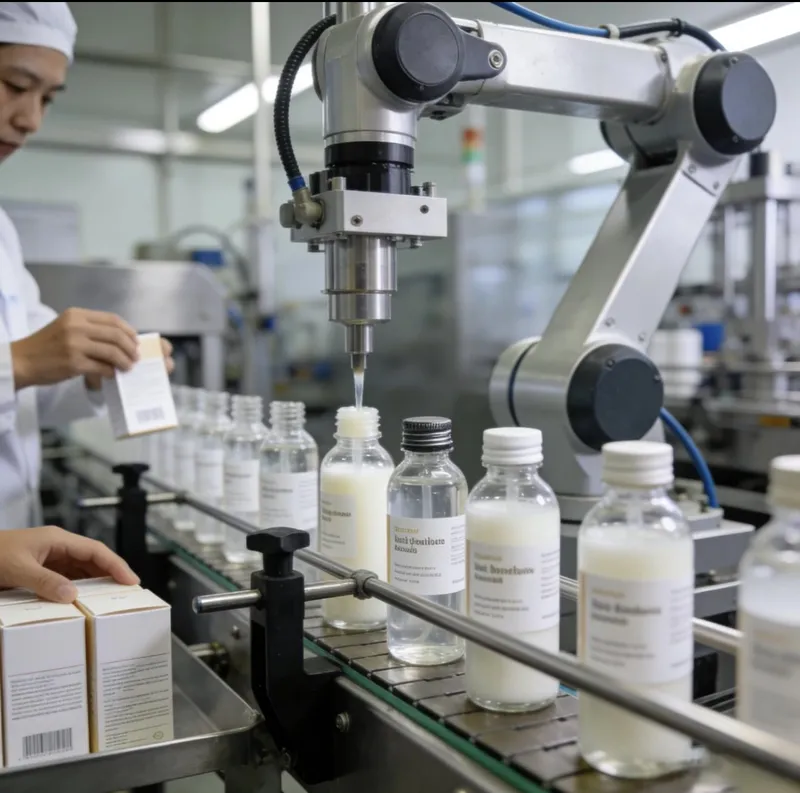
Shortlist only suppliers that can make the first order repeatable. The correct question is not “who can quote the lowest sample?” It is “who can preserve the approved formula, package, artwork, quality checks, document trail, and reorder logic when the brand moves from 500 to 3,000 units?”
After launch, use the first-production acceptance and replenishment checklist to reconcile delivered and saleable inventory, packaging execution, records, deviations, demand, cash, and supplier lead time before placing a second order. If the project enters the EU or US, pair the supplier comparison with the EU and US Cosmetics Export Compliance Guide so documentation, labels, claims, and market responsibilities are mapped early.
Frequently Asked Questions
What is a realistic low MOQ for skincare OEM in China?
A realistic MOQ depends on the formula, fill size, primary component, decoration, carton, testing, and customization route. Some selected private-label configurations can begin from 500 units, while custom formulas or bespoke packaging may require a higher threshold.
How should I compare Chinese skincare manufacturers?
Compare the same product brief across suppliers and request written evidence for MOQ assumptions, sample workflow, quote lines, quality-system scope, document ownership, change control, and reorder planning. Do not compare headline unit prices without the underlying assumptions.
Does a 5–7 day sample target mean bulk production will be equally fast?
No. An initial sample target is separate from bulk production, which depends on approved formula and artwork, component lead time, testing, production scheduling, payment terms, inspection, freight, and receiving.
What should I verify about an OEM’s patents?
Request a current patent list, jurisdiction, ownership or licence status, expiry date, and relevance to the proposed product. Patent count alone does not prove formula suitability, claims support, market compliance, or freedom to operate.
Can an OEM guarantee EU and US compliance for every skincare product?
No responsible supplier should promise universal compliance before the formula, packaging, claims, target market, Responsible Person or importer, and product documentation are reviewed. Compliance is project- and market-specific.
What should I ask before placing a first 500-unit order?
Confirm formula version, component and decoration assumptions, sample approval route, line-item costs, quality and documentation responsibilities, production-ready definition, acceptance criteria, and reorder lead-time assumptions in writing.
Turn the Supplier Brief into an Executable Project
SEYE can help turn an OEM/ODM sourcing brief into a documented low-MOQ development plan covering formula direction, packaging availability, quality scope, compliance inputs, production readiness, and reorder dependencies. Contact our OEM project team with your product type, target market, quantity, packaging status, desired claims, expected launch window, and decision-maker roles.
SEYE Cosmetics
OEM Sourcing & Project Advisory Team, SEYE Cosmetics
Publication details are shown from the article record. Individual expertise, reviewer information, and review dates appear only when verified for public display.