
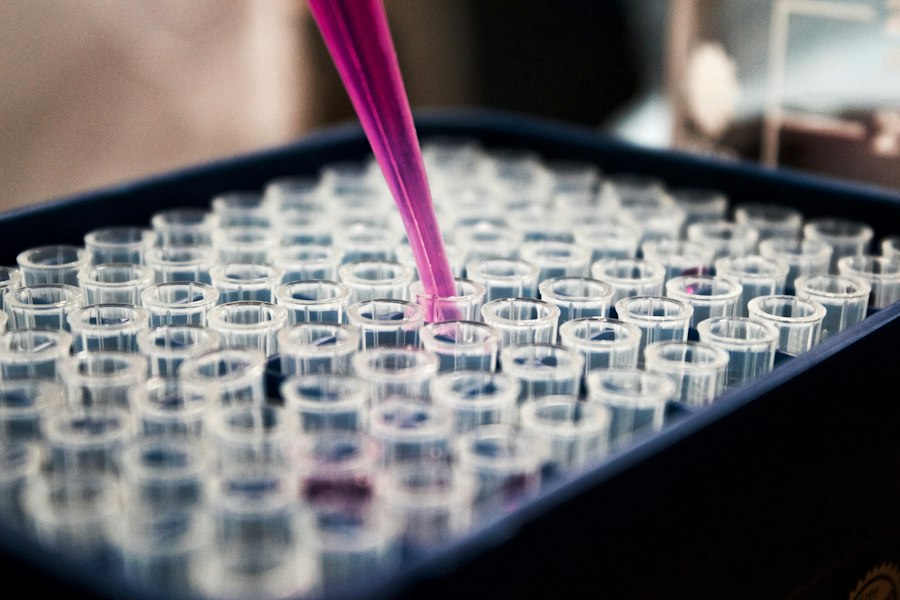
Choosing an OEM cosmetics manufacturer in China is one of the most consequential decisions a skincare brand makes. This B2B buyer's guide covers the criteria that matter most — from certifications and R&D depth to factory audits, quality control systems, and MOQ flexibility.
Introduction
Choosing an OEM cosmetics manufacturer in China is one of the most important decisions a skincare brand makes. Get it right, and you gain a partner who can accelerate product development, protect your formulas, and scale production alongside your growth. Get it wrong — poor quality, regulatory gaps, IP exposure — and the consequences can take years to recover from.
China remains the world's dominant cosmetics manufacturing hub, and the reasons are structural: the country's leading factories combine pharmaceutical-grade infrastructure, genuine R&D depth, and the logistical scale to serve brands across every corner of the globe. But that same market contains thousands of factories operating well below that level. Knowing how to tell them apart is the skill that protects a brand.
This guide covers the criteria that matter most when evaluating a Chinese OEM manufacturer — from certifications and R&D capability through to quality control systems and production infrastructure.
1. Start With Certifications — They Are Non-Negotiable
Certification is the first filter worth applying seriously. In cosmetics manufacturing, certifications aren't badges on a brochure — they're evidence that a factory operates to the standards that global markets require. Not all manufacturers do.
GMPC (Good Manufacturing Practice for Cosmetics) is the international benchmark for cosmetics production facilities. A GMPC-certified factory has demonstrated that its production environment, personnel training, equipment maintenance, and quality control systems all meet globally recognized standards. For brands selling into the EU, North America, or Australia, working with a GMPC-certified manufacturer is not just advisable — in many cases, it is a prerequisite for market entry.
Beyond GMPC, look for manufacturers holding ISO 22716 (the international standard for cosmetics GMP), FDA registration for brands targeting the US market, and HALAL certification if your products will be distributed in the Middle East or Southeast Asia. SEYE, based in Guangzhou, holds a comprehensive suite of certifications including GMPC, ISO, FDA, HALAL, and BSCI — covering virtually every major international market.
What to ask: request copies of all current certifications and verify their validity dates. A reputable manufacturer shares these readily, without prompting.
For a deeper look at what EU compliance requires, see our guide to EU Cosmetics Regulation compliance.
2. Evaluate R&D Depth — Not Just Production Capacity
Many buyers focus primarily on production capacity when evaluating an OEM partner. Capacity matters — but a factory's R&D capability matters just as much, if not more, for any brand serious about differentiation.
A manufacturer with real R&D infrastructure can help you identify emerging ingredient trends, develop proprietary formulas, run efficacy and safety testing, and produce the regulatory documentation you need for new market entries. A factory without that depth can produce — but it can't genuinely develop.
When evaluating R&D depth, look for:
- In-house research institutes — dedicated scientific departments covering dermatology, raw material development, and formula application
- Published scientific research — SCI-indexed papers, patents, and participation in national-level research projects
- Qualified scientists on staff — PhDs and postdoctoral researchers with pharmaceutical or biomedical backgrounds
SEYE's Guangzhou facility runs three specialist research institutes and employs over 100 scientists, around 80% of whom have pharmaceutical industry backgrounds. The team has published more than 147 scientific papers, holds 108+ technical invention patents, and has contributed to 65+ national-level research projects — a track record that directly shapes the quality of every formula produced.
3. Inspect the Production Facility
A factory audit — in person or through a qualified third-party inspector — should be standard practice before any agreement is signed. A manufacturer with nothing to hide welcomes the scrutiny. One who stalls or limits access is already telling you something.
Production environment: Look for cleanroom standards. SEYE's Guangzhou facility operates with a 100,000-level purification R&D and production site, and a 100-level freeze-drying canning workshop — standards that align with biopharmaceutical production rather than conventional cosmetics manufacturing.
Equipment: SEYE operates 26 fully automatic production lines and 24 sets of fully automatic emulsifying equipment, with emulsifying pots ranging from 30kg to 5,000kg — providing flexibility to accommodate both small development batches and large-scale commercial runs.
Water quality systems: SEYE employs a two-stage reverse osmosis water treatment system capable of achieving effluent conductivity of ≤2µs/cm and a pH of 6.5–7.5, with pure water tested daily.
4. Assess Formula Library and Product Category Coverage
The depth of a manufacturer's formula library has a direct effect on your time-to-market. A factory with 3,000+ proven, stable formulas can get a new product to production significantly faster than one that builds every formula from scratch — an advantage that compounds quickly across a multi-SKU launch calendar.
- Ask how many mature formulas the manufacturer maintains across categories
- Confirm whether the manufacturer can handle your specific product types
- Verify experience producing for your target market, including regulatory familiarity
If you're just starting out, our guide on how to start a skincare brand covers how to match your product vision to the right manufacturing partner.
5. Understand the Quality Control System End-to-End
Quality control in cosmetics manufacturing isn't a single checkpoint — it's a continuous process running from raw material receipt through final shipment. A rigorous QC system needs to cover every stage in between.
SEYE uses Haohan Control Technology's error-correction system — a barcode-driven process that verifies every raw material against the production formula before it's added to the batch, with multi-stage quality inspection sign-off at each step. The result is a documented, traceable quality record for every production run.
6. Clarify MOQ, Lead Times, and Scalability
Key commercial terms to clarify upfront include:
- Minimum order quantities (MOQ) for both development samples and commercial runs
- Standard lead times from formula confirmation to finished goods delivery
- Capacity availability for promotional campaigns or seasonal launches
- Inventory and warehousing arrangements for packaging and finished goods
For a detailed breakdown of what to expect on MOQ, see our guide on OEM vs ODM cosmetics manufacturing.
7. Evaluate Communication and Project Management
The quality of a manufacturer's communication infrastructure tells you a lot about what the actual partnership will feel like. Look for a dedicated account manager, clear documentation of all development decisions, and genuinely proactive communication when production issues arise — not explanations that come after the fact.
Since 2007, SEYE has built the infrastructure, expertise, and quality systems to meet the exacting standards of global skincare brands. Our Guangzhou facility spans over 80,000 square meters, operates under GMPC and ISO certification, and is backed by a scientific team with more than a hundred researchers.
Ready to explore a manufacturing partnership? Contact our team to arrange a facility introduction or discuss your product development requirements.
SEYE Editorial Team
OEM Manufacturing Specialist
Publication details are shown from the article record. Individual expertise, reviewer information, and review dates appear only when verified for public display.