The global hair and body mist market is valued at $4.33 billion in 2025 and growing at 7.2% CAGR. Discover why no-rinse scalp mist is the fastest-growing format in private label hair care — and how to develop your own formula with SEYE.
Why Scalp Mist Is Becoming a Core Private Label SKU
The scalp care category has undergone a fundamental transformation over the past three years. What was once a niche concern addressed primarily by medicated shampoos has evolved into a sophisticated, multi-step routine that mirrors the complexity of facial skincare. At the center of this evolution is a format that brands across North America, Europe, and Asia Pacific are now actively adding to their portfolios: the leave-on scalp mist.
The global hair and body mist market was valued at $4.33 billion in 2025 and is projected to reach $8.15 billion by 2034, representing a compound annual growth rate of 7.2%. Within this broader category, scalp-specific mist products are among the fastest-growing sub-segments, driven by consumer demand for lightweight, no-rinse treatments that can be incorporated into daily routines without disrupting styling or adding product buildup. For private label brands and OEM buyers, this represents a compelling opportunity: a product format with high perceived value, strong repeat purchase potential, and relatively low market saturation compared to shampoos and conditioners.
The scalp care segment more broadly sits within a global hair and scalp care market estimated at $88.20 billion in 2025, forecast to reach $150.45 billion. Scalp treatment tonics and sprays are identified by industry analysts as occupying a particularly attractive position — high gross margin potential (55–65%), low competitive intensity relative to core cleansing categories, and medium entry difficulty that rewards brands with differentiated formulations and clear positioning.
The Science Behind Scalp Mist Formulation
A well-formulated scalp mist is not simply a diluted serum in a spray bottle. The delivery format imposes specific formulation requirements: the product must atomize evenly through an ultra-fine mist nozzle, dry quickly without leaving residue, and deposit active ingredients precisely at the scalp surface rather than coating the hair shaft. Achieving this requires careful selection of both functional actives and the carrier system that supports them.
Niacinamide has emerged as the anchor active in modern scalp mist formulations. Its mechanism of action on the scalp parallels its well-documented effects on facial skin: it regulates sebum production through inhibition of lipase activity, reduces the appearance of scalp redness, and supports the skin barrier function that protects against environmental stressors. At concentrations of 2–5%, niacinamide is well-tolerated across scalp types and compatible with a wide range of co-actives.
Zinc PCA functions as a dual-action ingredient that addresses two of the most common scalp concerns simultaneously. The zinc component helps normalize sebum production and limits the proliferation of Malassezia species — the yeast associated with dandruff and scalp imbalance. The PCA (pyrrolidone carboxylic acid) component is a natural moisturizing factor that supports scalp hydration without contributing to greasiness. Together, they create a synergistic effect that is particularly valuable for consumers with oily or flake-prone scalps.
Centella Asiatica Extract brings a soothing and barrier-supportive dimension to the formula. Its active compounds — asiaticoside, madecassoside, and asiatic acid — have demonstrated anti-inflammatory properties in multiple in vitro and clinical studies. For scalp applications, this translates to reduced sensitivity and improved tolerance of other active ingredients in the formula.
Panthenol (provitamin B5) serves as both a humectant and a film-forming agent on the scalp surface. It penetrates the outer layers of the skin, converting to pantothenic acid and supporting cellular repair processes. In a mist format, panthenol also contributes to the smooth, non-sticky after-feel that consumers associate with premium leave-on treatments.
Supporting actives including Rosemary Leaf Extract, Tea Tree Leaf Extract, Caffeine, and Sodium Hyaluronate round out the formula by addressing botanical stimulation, antimicrobial balance, circulation support, and lightweight hydration respectively.
Regional Market Strategies for Scalp Mist
One of the most important decisions in developing a private label scalp mist is understanding how consumer expectations and regulatory requirements vary across target markets. A formulation and positioning strategy that performs well in Northern Europe may require significant adaptation for the Middle East or Southeast Asia.
| Market | Primary Consumer Concern | Preferred Texture | Key Regulatory Consideration |
|---|---|---|---|
| Europe & USA | Scalp sensitivity, clean beauty | Ultra-light, fast-absorbing | EU Cosmetics Regulation (EC) No 1223/2009 |
| Middle East | Scalp hydration under heat, premium positioning | Slightly richer, luxury sensory | Halal certification preferred |
| Southeast Asia | Oil control, humidity resistance | Extremely lightweight, no residue | ASEAN Cosmetic Directive compliance |
Europe and the United States represent the most mature market for scalp mist products. Consumers in these regions are accustomed to multi-step hair care routines and actively seek products with transparent ingredient lists, clinical backing, and clean beauty credentials. Formulations targeting this market benefit from emphasizing the absence of sulfates, parabens, and artificial fragrance, while highlighting the functional efficacy of each active. The EU Cosmetics Regulation imposes specific restrictions on certain preservatives and fragrance allergens, making it essential to work with a manufacturer who has direct experience with EU compliance documentation.
The Middle East presents a rapidly growing opportunity for premium scalp care. Consumers in this region face unique environmental challenges — high ambient temperatures, low humidity, and frequent use of head coverings — that create specific scalp concerns around dehydration, sebum imbalance, and scalp discomfort. A scalp mist positioned around intensive hydration and scalp comfort, with a premium fragrance profile and luxury packaging, can command significant price premiums in markets such as the UAE, Saudi Arabia, and Kuwait. Halal certification is increasingly expected by retailers and distributors in this region.
Southeast Asia is the fastest-growing regional market for hair care products, driven by a young, digitally engaged consumer base and rising disposable incomes across Indonesia, Vietnam, Thailand, and the Philippines. The climate in this region — high humidity and heat — creates a strong demand for lightweight, oil-controlling scalp treatments that do not add weight or greasiness. A scalp mist formulated for this market should prioritize a water-thin texture, rapid absorption, and a fresh, clean sensory profile. Packaging that emphasizes convenience and daily use resonates strongly with consumers who discover products through social commerce platforms.
OEM Development Considerations
For brands evaluating scalp mist as a new SKU, several practical considerations shape the development timeline and cost structure. The spray delivery system requires specific compatibility testing between the formula and the nozzle mechanism — not all ultra-fine mist pumps are compatible with all formulation viscosities, and selecting the wrong combination can result in clogging, inconsistent spray patterns, or premature pump failure. Working with an OEM manufacturer who has established relationships with packaging suppliers and conducts compatibility testing as part of the standard development process significantly reduces this risk.
Stability testing for leave-on scalp products typically requires a minimum of 12 weeks of accelerated stability data before commercial launch, covering temperature cycling, UV exposure, and compatibility with the chosen packaging material. For brands targeting the EU or US market, additional safety assessment documentation is required, including a Cosmetic Product Safety Report (CPSR) for EU registration.
Minimum order quantities for scalp mist products at SEYE start from 500 units, with sample dispatch within 48 hours of formula confirmation. Custom fragrance development, packaging design, and private label documentation are all included in the standard OEM service package.
Building a Scalp Care Product Line
The scalp mist format is most effective as part of a broader scalp care ecosystem rather than as a standalone product. Brands that have successfully built scalp care lines typically structure their offering around three functional tiers: a cleansing product (shampoo), a treatment product (serum or ampoule), and a maintenance product (mist or tonic). This structure supports higher average order values, encourages routine adoption, and creates natural cross-selling opportunities.
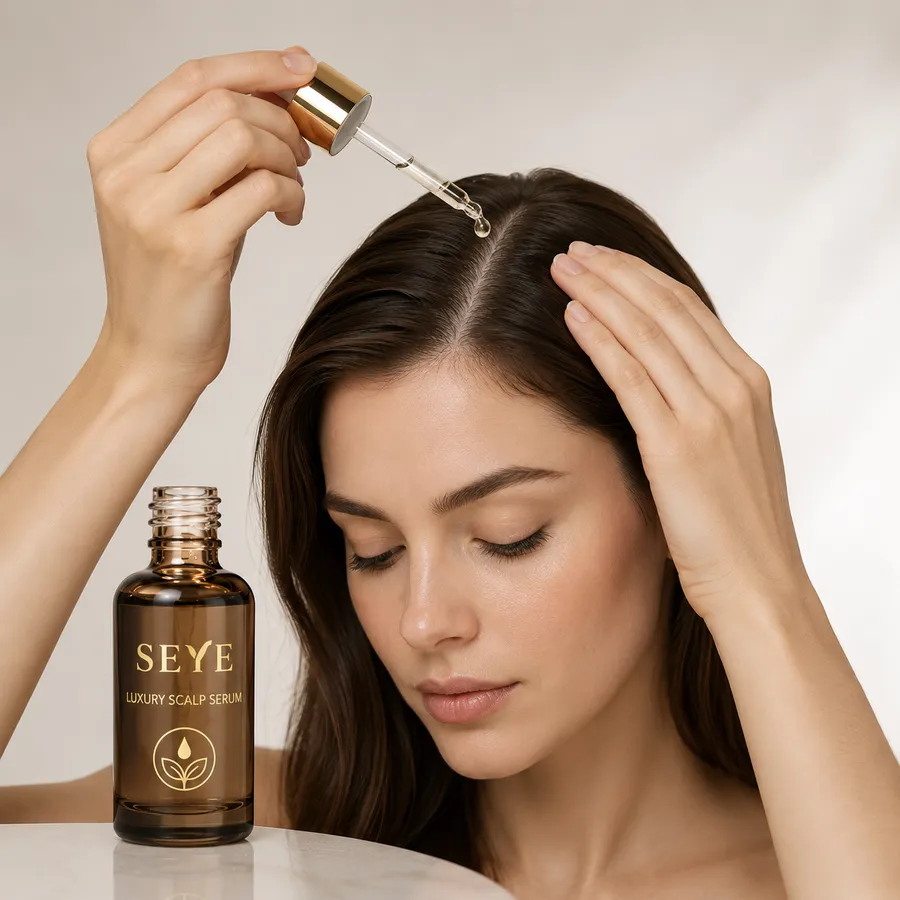
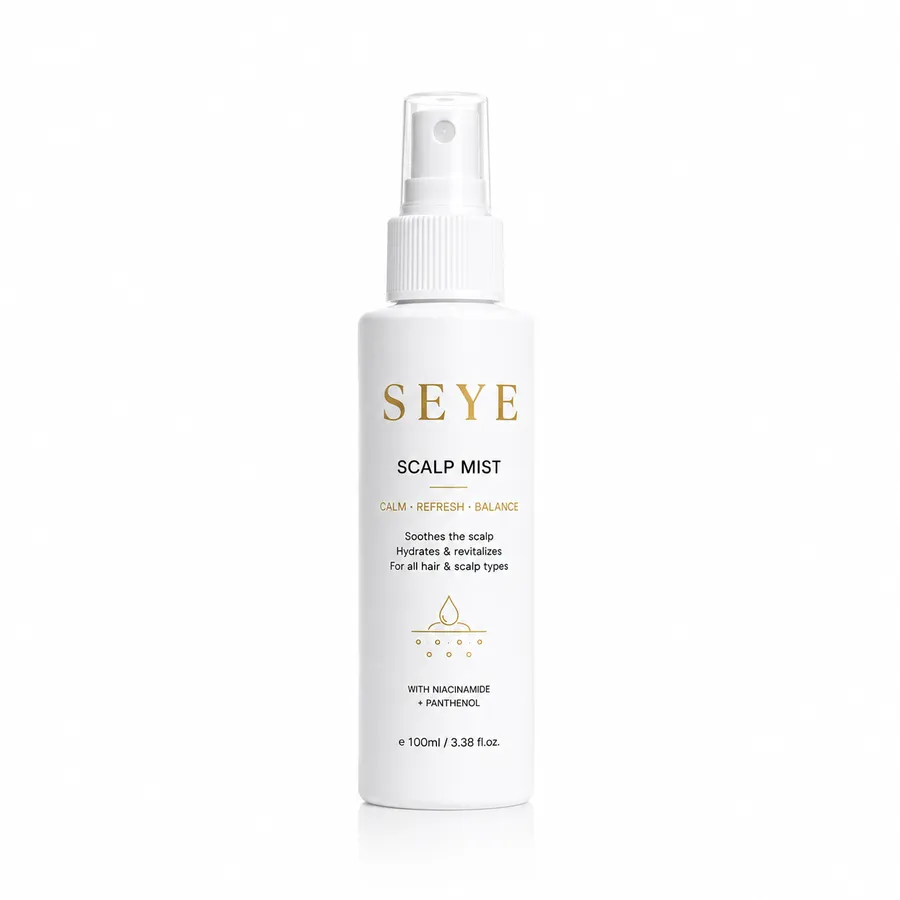
SEYE's Scalp Mist is designed to function as the daily maintenance tier within this structure, complementing deeper treatment products such as the Scalp Microbiome Serum Collection which addresses the underlying microbiome balance that supports long-term scalp health. Together, these two products create a scalp care routine that addresses both immediate concerns (oil control, freshness, comfort) and longer-term goals (microbiome balance, barrier support, scalp environment optimization).
For brands building a hair care line from scratch, the scalp mist is often the most accessible entry point: it requires less formulation complexity than a shampoo, has a lower regulatory burden than a rinse-off product in most markets, and delivers a sensory experience that photographs and demonstrates well on social media. The no-rinse format also means that consumers can use the product daily without disrupting their existing hair care routine, which supports high repeat purchase rates and strong customer retention.
Frequently Asked Questions
What is the minimum order quantity for private label scalp mist? SEYE's minimum order quantity for scalp mist is 500 units per SKU. Sample orders can be dispatched within 48 hours of formula confirmation.
Can the formula be customized for specific scalp concerns? Yes. SEYE offers customization of active concentrations, fragrance profile, and texture. Common customizations include fragrance-free variants for sensitive scalp, higher niacinamide concentrations for oily scalp, and additional botanical actives for specific market positioning.
What certifications does the manufacturing facility hold? SEYE's manufacturing facility is GMP certified and ISO 22716 compliant. Vegan and cruelty-free certification is available upon request. Full export documentation including COA, MSDS, and stability test reports is provided for all orders.
How long does product development take? Standard development timeline from brief to production-ready formula is 25–35 days. Sampling is available within 5–7 days of formula selection.
Is the product suitable for all hair types? The standard formula is designed for all scalp types. Specific variants for oily, dry, or sensitive scalps can be developed as part of a custom OEM brief.
SEYE R&D Team
Formulation & OEM Strategy
Publication details are shown from the article record. Individual expertise, reviewer information, and review dates appear only when verified for public display.