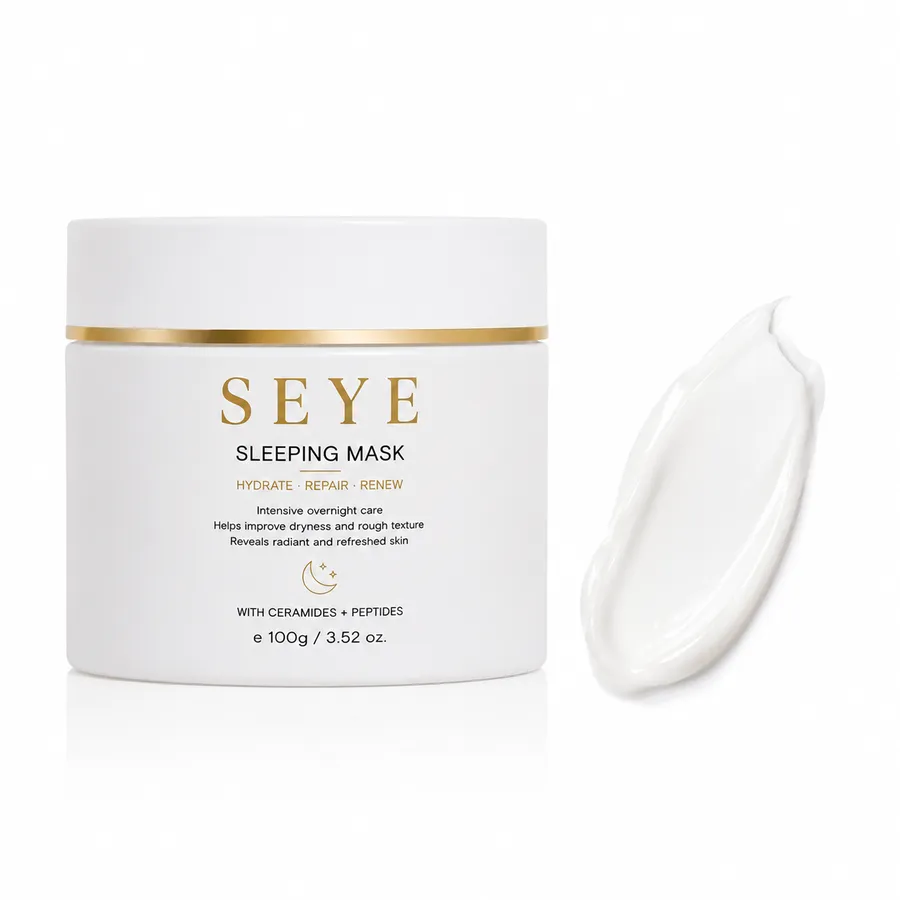
The global overnight skincare market is growing at over 9% CAGR toward $8.4 billion by 2030. Sleeping masks — once a niche K-beauty format — are now a mainstream category anchor for barrier recovery, luxury overnight care, and clean beauty brands worldwide. This guide explains the science, the OEM opportunity, and how to launch a private label sleeping mask line.
The Overnight Skincare Opportunity
Sleeping masks have moved decisively from K-beauty novelty to mainstream skincare category. What began as a single-step overnight treatment popularised by Korean beauty brands in the early 2010s has evolved into a sophisticated product platform — one that addresses the growing consumer demand for barrier recovery, overnight repair, and luxury self-care rituals.
The global overnight skincare market was valued at approximately USD 4.8 billion in 2024 and is projected to reach USD 8.4 billion by 2030, growing at a CAGR of over 9%. Within this category, sleeping masks are among the fastest-growing formats, driven by three converging trends: the clinical validation of barrier-support actives (ceramides, peptides, beta-glucan), the wellness ritual economy, and the increasing consumer sophistication around overnight skin biology.
For private label brands, the sleeping mask category offers a compelling combination of high perceived value, strong ingredient storytelling, and clear differentiation potential across global markets.
The Science of Overnight Skin Biology
The commercial case for sleeping masks is grounded in well-established skin biology. During sleep, the skin enters a state of accelerated repair and regeneration. Transepidermal water loss (TEWL) increases by approximately 25% during the night, creating a heightened demand for occlusive and humectant actives. Cell turnover and collagen synthesis peak during the early hours of sleep, making this the optimal window for delivering repair-focused actives.
A sleeping mask is designed to work with this biology rather than against it. Unlike a rinse-off mask that delivers a concentrated active burst before being removed, a sleeping mask maintains continuous contact with the skin throughout the night — allowing actives to penetrate more deeply and work in concert with the skin's own repair mechanisms.
This mechanism distinguishes sleeping masks from both conventional night creams and rinse-off treatments. Night creams are typically occlusive-heavy formulations designed to prevent moisture loss; sleeping masks combine occlusion with higher active concentrations and a lighter, more comfortable texture that does not interfere with sleep.
Core Active Architecture
The most effective private label sleeping masks are built around a multi-layer active system that addresses the three primary overnight skin needs: hydration retention, barrier reinforcement, and cellular renewal support.
| Active | Function | Overnight Benefit |
|---|---|---|
| Sodium Hyaluronate | Humectant, moisture retention | Supports continuous hydration throughout the night |
| Ceramide NP | Barrier lipid, TEWL reduction | Reinforces the skin barrier during peak overnight repair |
| Acetyl Hexapeptide-8 | Peptide, renewal support | Works with overnight cell turnover for refreshed appearance |
| Beta-Glucan | Barrier shield, soothing | Supports skin comfort and barrier integrity overnight |
| Squalane | Lightweight emollient | Provides comfort without heaviness during sleep |
| Panthenol (Pro-Vitamin B5) | Humectant, barrier support | Enhances moisture retention and skin comfort |
| Niacinamide (Vitamin B3) | Brightening, barrier support | Supports a healthy-looking, even skin tone by morning |
This active architecture allows a single sleeping mask formula to address multiple consumer concerns — hydration, barrier support, radiance, and overnight renewal — within a single final-step product. For private label brands, this multi-benefit positioning supports premium price points and reduces the need for consumers to layer multiple products.
Texture Differentiation: Four Variants, One Platform
One of the most significant commercial advantages of the sleeping mask format is texture differentiation. Unlike a conventional night cream where texture is largely fixed by the formulation type, sleeping masks can be developed across a wide sensory range — from rich, nourishing creams to lightweight gels and airy cloud textures — while sharing the same core active complex.
SEYE's Sleeping Mask OEM platform supports four distinct texture profiles:
Cream Mask — a rich, nourishing texture with a comfortable weight that suits dry and combination skin types and cooler climates. This variant performs strongly in European and North American markets where barrier recovery positioning resonates.
Gel Mask — a lightweight, fast-absorbing texture that provides hydration without heaviness. Ideal for oily and combination skin types, and particularly well-suited to humid Southeast Asian markets where consumers prefer minimal residue.
Cloud Mask — an airy, whipped texture that delivers a premium sensory experience with a barely-there finish. This variant is positioned for luxury overnight care and performs well in gift set configurations.
Rich Overnight Mask — an intensive repair formula with a higher occlusive content, designed for very dry skin, post-procedure recovery, and consumers seeking maximum overnight nourishment.
All four variants share the same ceramide-peptide-hyaluronate active core, allowing brands to build a multi-SKU sleeping mask line without the complexity of developing separate active systems for each texture.
Regional Market Strategies
Europe and North America: Barrier Recovery and Clean Beauty
European and North American consumers are increasingly focused on barrier health as a foundational skincare concern. The clinical validation of ceramides, peptides, and beta-glucan as barrier-support actives has created strong consumer demand for products that explicitly address barrier recovery — particularly among consumers with sensitive skin, eczema-prone skin, or post-procedure needs.
For these markets, the Cream Mask and Rich Overnight variants are the strongest performers. Positioning around barrier recovery, clinical actives, and clean beauty credentials (vegan, cruelty-free, fragrance-free options) aligns with the dominant consumer values. Packaging in minimal, clinical aesthetics — frosted glass jars, clean typography — reinforces the positioning.
Middle East: Luxury Overnight Ritual
Middle Eastern markets have a strong cultural tradition of intensive skincare rituals, and the sleeping mask format maps naturally onto this tradition. The Cloud Mask variant — with its premium sensory experience and luxury positioning — performs particularly well in this market. Champagne gold packaging, rich fragrance profiles (rose, oud, amber), and gift set configurations are strong commercial drivers.
The hydration-focused active system also addresses a genuine regional skin concern: the combination of dry climate, air conditioning, and high UV exposure creates a significant demand for overnight hydration and barrier support.
Southeast Asia: Daily Recovery and Lightweight Hydration
Southeast Asian consumers are sophisticated overnight skincare users, with sleeping masks already well-established as a category in markets including South Korea, Japan, China, and Thailand. In this region, the Gel Mask variant is the strongest performer — lightweight texture, fast absorption, and a non-sticky finish are the primary consumer requirements.
Brightening is a key active direction for Southeast Asian markets, making niacinamide positioning particularly relevant. The daily-use positioning (2–4 times per week) also supports higher repurchase rates compared to occasional-use treatments.
The OEM Opportunity: Why Sleeping Masks Are a High-Value Private Label Category
For private label brands evaluating category expansion, sleeping masks offer several structural advantages.
Perceived value and premium pricing: The overnight format, combined with luxury packaging (frosted glass jars, champagne gold lids), supports retail pricing at two to three times the equivalent volume of a standard night cream. Consumers consistently associate sleeping masks with premium skincare rituals.
Repeat purchase mechanics: Unlike occasional-use treatments, sleeping masks used 2–4 times per week create strong repurchase cycles. A 50ml jar at recommended usage lasts approximately 4–6 weeks, driving predictable subscription and repurchase revenue.
Ingredient storytelling: The ceramide-peptide-hyaluronate active system provides rich ingredient storytelling opportunities — clinical actives with established consumer recognition, clear benefit claims, and strong social media content potential.
Category adjacency: A sleeping mask is a natural addition to any facial care line that already includes serums, moisturisers, or eye creams. It extends the brand's overnight care offering without competing directly with existing products.
What to Look for in a Sleeping Mask OEM Partner
Launching a private label sleeping mask requires a manufacturing partner with specific formulation and production capabilities. The texture differentiation that makes sleeping masks commercially compelling also demands precise formulation expertise — the balance between humectants, emollients, actives, and rheology modifiers must be carefully calibrated to achieve the desired sensory profile, stability, and skin feel.
Key criteria for evaluating an OEM partner include:
Formulation flexibility: The ability to develop multiple texture variants from a shared active platform, and to customise fragrance, active levels, and sensory profile for different regional markets. An in-house R&D team — rather than reliance on off-the-shelf bases — is essential for meaningful differentiation.
Certifications: GMP certification and ISO 22716 compliance are the baseline requirements for export to the USA and Europe. Vegan and cruelty-free certification support is increasingly important for clean beauty positioning.
MOQ and lead time: Flexible MOQ (from 500 units) and fast sample dispatch (48 hours) are critical for brands in the early stages of market testing or building a multi-SKU facial care line.
Packaging support: The visual presentation of a sleeping mask is a core part of its brand proposition. A manufacturing partner with packaging design support — including frosted glass jars, champagne gold lids, and gift set configurations — reduces the complexity of the product development process.
SEYE's Sleeping Mask OEM programme is designed to address all of these requirements. With a GMP / ISO 22716 certified facility, 30+ in-house scientists, and 26+ automated production lines delivering over 50 million units annually, SEYE supports private label brands from initial sampling through to full-scale production across all four texture variants.
INCI Formula and Customisation
The standard SEYE sleeping mask INCI formula provides a strong foundation for customisation:
Water, Glycerin, Niacinamide, Ceramide NP, Panthenol, Squalane, Acetyl Hexapeptide-8, Beta-Glucan, Sodium Hyaluronate, Tocopherol, Butylene Glycol, Phenoxyethanol, Ethylhexylglycerin
This base formula is fully adjustable for OEM/ODM requirements. Common customisation directions include:
- Active concentration adjustment: Increasing ceramide or peptide levels for intensive barrier recovery positioning
- Fragrance addition: Rose, jasmine, or oud directions for Middle Eastern markets; unscented for EU/US clean beauty positioning
- Preservative system adjustment: Preservative-free options using high-concentration glycols and pH control for sensitive skin positioning
- Brightening enhancement: Additional niacinamide or tranexamic acid for Southeast Asian brightening-focused markets
- Texture modification: Adjusting carbomer and xanthan gum levels to achieve the desired gel, cream, or cloud texture profile
Getting Started
The private label sleeping mask opportunity is well-timed. Consumer demand for overnight barrier recovery products is established and growing, the format supports premium pricing and strong repurchase mechanics, and the texture differentiation platform allows brands to build a multi-SKU line without the complexity of separate active development.
For brands ready to explore the category, the first step is sampling. SEYE dispatches samples within 48 hours, allowing brands to evaluate texture, fragrance, and skin feel before committing to a production run. Custom fragrance development and active system adjustments can be incorporated at the sampling stage.
Request a sample or OEM consultation to begin your sleeping mask development, or explore the full product specification on the SEYE Sleeping Mask OEM page.
Frequently Asked Questions
What is the minimum order quantity for private label sleeping mask? SEYE supports MOQ from 500 units per formula. For brands launching multiple texture variants or regional SKUs, the MOQ applies per formula.
Can the texture be customised? Yes. SEYE supports four texture profiles — Cream Mask, Gel Mask, Cloud Mask, and Rich Overnight Mask — each sharing the same ceramide-peptide-hyaluronate active core. Custom texture adjustments are available within the standard development timeline.
What packaging formats are available? Standard options include frosted glass jars with champagne gold lids, double-wall jars, and luxury gift set configurations. Custom outer box and label design support is available.
How long does product development take? Standard development timeline from brief to production-ready formula is 25–35 working days for existing formula adaptations. Sampling is available within 48 hours of formula selection.
What export documentation is provided? SEYE provides COA (Certificate of Analysis), MSDS, stability testing support, and full export documentation for global markets including the USA, Europe, the Middle East, and Southeast Asia.
SEYE R&D Team
Formulation & OEM Specialists
Publication details are shown from the article record. Individual expertise, reviewer information, and review dates appear only when verified for public display.