Why consumers often buy a serum before a moisturizer, what purchase order reveals about consumer thinking, and how brands use serums for discovery and moisturizers for long-term loyalty.
Key Takeaways
- Consumers often buy a serum first because they view it as a targeted action for a specific concern.
- Serums carry higher perceived value (concentrated, advanced, professional), so they're researched first.
- The purchase order reveals how consumers think — a valuable lens for product strategy.
- Serums drive discovery and differentiation; moisturizers drive routine and loyalty.
- Many of a brand's most loyal customers eventually become heavy moisturizer users.
- The strongest brands don't choose between them — they sequence both across the consumer journey.
Why This Matters
Not long ago, a skincare brand owner visited SEYE to discuss a new product line and asked a question many founders eventually encounter when first starting a skincare brand:

"If consumers need both a serum and a moisturizer, why do they often buy the serum first?"
At first, the answer seemed obvious — serums are popular, widely discussed, and all over social media. But the more we explored it, the more it revealed about modern consumers. The order in which people buy products tells us how they think, and understanding how consumers think is one of the most valuable tools any brand can have when shaping product development strategy.
One of the most important lessons from years of development work is that consumers rarely purchase products simply for what they are. They purchase them for what they believe those products will do. A moisturizer is often viewed as maintenance; a serum is often viewed as action. When consumers experience dehydration, sensitivity, dullness, fine lines, uneven tone, or barrier damage, their first reaction usually isn't "I need a better moisturizer." It's "I need something that can fix this." And in the consumer's mind, that "something" is often a serum.
Market Insights: Why Serums Feel More Powerful
Whether the perception is entirely accurate isn't the point — what matters is that consumers believe it. For decades, marketing has positioned serums as highly concentrated, targeted solutions, so consumers associate them with advanced ingredients, higher performance, visible results, and professional skincare. As a result, serums carry more perceived value than moisturizers. When consumers want change, they reach for a serum; when they want stability, they return to a moisturizer. This is why serums are often the first product consumers research when addressing a specific concern.
This pattern holds across markets. SEYE has worked with brands targeting consumers in Europe, North America, Australia, the Middle East, and emerging markets. Cultures differ, but one observation stays consistent: consumers frequently discover brands through serums, but often stay loyal because of moisturizers. A serum attracts attention; a moisturizer builds routine. A serum generates curiosity; a moisturizer generates trust. The strongest brands understand both roles — and develop products accordingly.
Comparison: Serum vs. Moisturizer in the Consumer Journey
The question isn't whether a serum is better than a moisturizer — it's that they play different roles. Mapping those roles side by side makes the strategy clear.
| Dimension | Serum | Moisturizer |
|---|---|---|
| Consumer perception | Action / targeted fix | Maintenance / daily care |
| Bought when | Wanting change | Wanting stability |
| Role in journey | Discovery & differentiation | Routine & loyalty |
| Perceived value | Higher (concentrated, advanced) | Steady, essential |
| Drives | Attention & curiosity | Repeat purchase & trust |
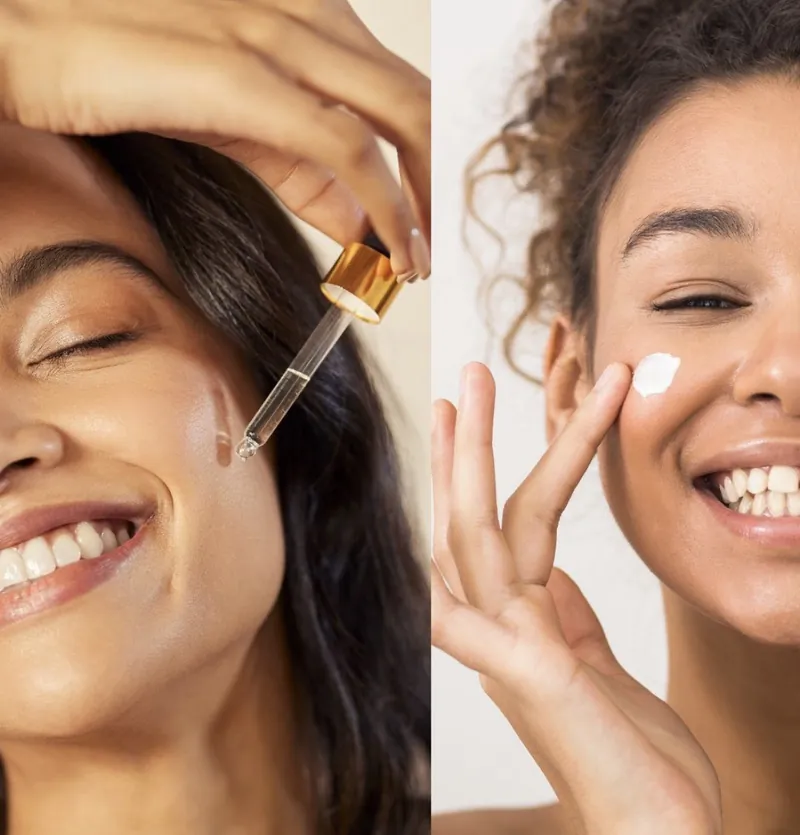
Interestingly, the product that attracts attention isn't always the one that creates long-term growth. SEYE frequently sees brands discover that their most loyal customers eventually become heavy moisturizer users — because moisturizers become part of everyday life, used regardless of season, trends, or changing routines. They become habits, and habits create repeat purchases. This is one reason many successful brands eventually invest heavily in both categories: the serum creates discovery, the moisturizer creates loyalty.
Recommendations: Use Serums to Attract, Moisturizers to Retain
For startups and private label brands, launching with a serum offers real advantages: it communicates a focused story — a peptide serum, a barrier repair serum, a brightening serum, a hydration serum — with positioning that's clear and easy to understand, and it creates stronger differentiation through ingredients, technologies, and results. That makes serums especially attractive for new brands entering competitive markets.
But the goal isn't to pick a winner — it's to sequence the two:
- Lead with a serum to attract attention and differentiate in a crowded market.
- Follow with a moisturizer to build the daily routine that drives repeat purchases.
- Position each for its role — serum as the solution, moisturizer as the habit.
- Plan the line, not just the launch — design discovery and loyalty products together.
"Which product will attract this customer — and which one will keep them?"
SEYE often summarizes the relationship simply: consumers discover solutions through serums; consumers build routines through moisturizers. Neither replaces the other — closely tied to how brands build customer loyalty through serums and the moisturizers that follow.
OEM / ODM Development Considerations
Building a serum-and-moisturizer strategy is, at the product level, a development sequencing decision. A few priorities help:
Develop both categories with one coherent story
The serum carries the differentiation and the concern it solves; the moisturizer carries the daily experience. Developing them together — shared positioning, complementary formulas — makes the routine feel intentional rather than assembled.
Formulate the serum for focus, the moisturizer for consistency
Serums benefit from a clear hero benefit and credible actives; moisturizers benefit from texture, tolerability, and repeatable daily-use experience — the qualities that turn a product into a habit. Learn more about our R&D capabilities.
Plan compliance early for international launches
For private label brands planning international launches, it's worth getting EU compliance sorted early, alongside ISO 22716 / GMPC production and FDA / EU CPNP support, so both products ship cleanly across markets. View our certifications.
Sequence the roadmap around the journey
A serum-first launch can validate the concept and attract consumers; a follow-up moisturizer converts that interest into routine and loyalty — a natural, low-risk path to a fuller line. See our guide on questions to ask before starting a private label skincare project.
The industry will keep introducing new ingredients, technologies, and concepts. Consumers will keep searching for products that solve their concerns, and brands will keep searching for differentiation. But one lesson keeps appearing: people often buy serums because they want change, and moisturizers because they want consistency. At SEYE, we believe understanding this distinction helps brands make better development decisions. Because successful products do more than serve a function — they serve a purpose within the consumer journey, and the brands that understand that journey achieve the most sustainable growth.
Frequently Asked Questions
Why do consumers buy a serum before a moisturizer?
Consumers view serums as targeted action for a specific concern, while moisturizers feel like maintenance. When facing dehydration, dullness, or sensitivity, people look for "something to fix it" and often reach for a serum first because it carries more perceived value.
Should a new brand launch with a serum or a moisturizer first?
Many brands launch with a serum because it communicates a focused story and differentiates clearly in a crowded market. Moisturizers, however, often drive long-term loyalty, so successful brands eventually invest in both. Read our guide on what makes a face serum suitable for private label brands.
How should serums and moisturizers work together in a product line?
Use serums as a discovery and differentiation tool to attract new consumers, and moisturizers to build daily routines and repeat purchases. The two complement each other across the consumer journey rather than competing.
Does buying a serum first mean moisturizers are less important?
No. Serums often attract the first purchase, but moisturizers frequently create long-term loyalty because they become daily habits. Many of a brand's most loyal customers become heavy moisturizer users, which is why successful brands invest in both categories. Explore why peptide serums are becoming core products for premium brands.
SEYE R&D Team
Skincare Formulation Specialists
Publication details are shown from the article record. Individual expertise, reviewer information, and review dates appear only when verified for public display.