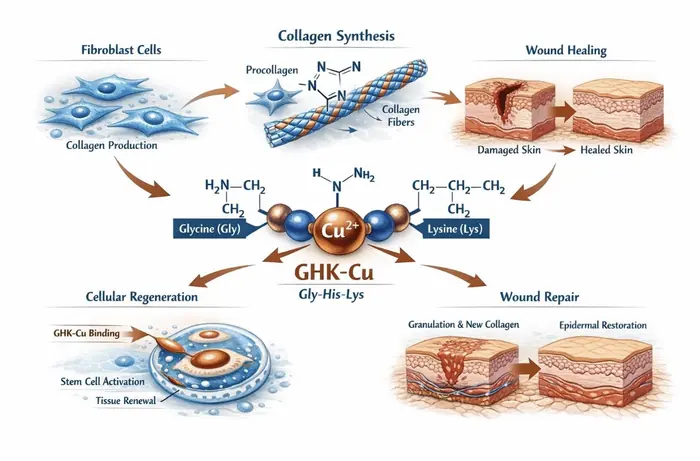
Copper Tripeptide-1 (GHK-Cu) does more than support collagen. Explore its role in inflammation regulation, antioxidant defense, and copper transport — and what the evidence actually supports for private label brands.
Quick Answer
Copper Tripeptide-1 (GHK-Cu) influences several physiological processes beyond collagen — including inflammatory regulation and antioxidant defense through biologically regulated copper transport. Its biology is increasingly well understood, but not every mechanism has yet translated into strong human clinical evidence.
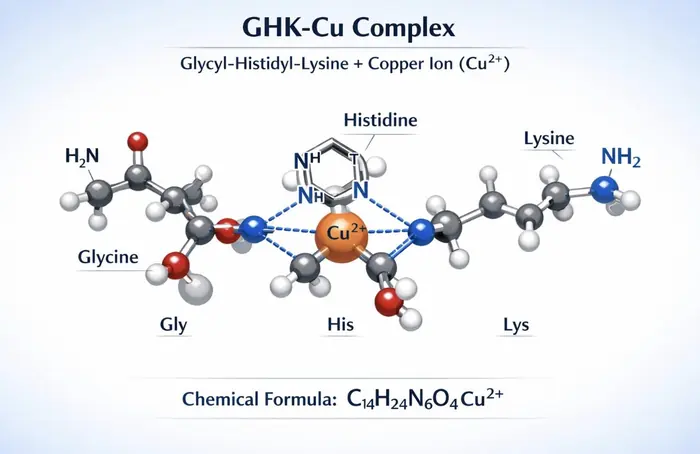
What Is Copper Tripeptide-1 (GHK-Cu)?
Copper Tripeptide-1, also known as GHK-Cu (Glycine-Histidine-Lysine copper complex), is a naturally occurring tripeptide found in human plasma, saliva, and urine. It was first isolated in the early 1970s and has since become one of the most studied peptide actives in skincare formulation science.
Unlike synthetic peptides designed to mimic specific signalling molecules, GHK-Cu is a naturally occurring compound with a broad range of investigated biological activities. Its commercial appeal in skincare stems from this multi-mechanism profile — but responsible formulation and marketing requires understanding which mechanisms are well-supported and which remain early-stage.
Key Takeaways
- GHK-Cu's biological significance extends well beyond collagen support into inflammatory regulation, antioxidant defence, and copper transport
- The strongest evidence base covers wound repair support and biochemical copper delivery; inflammatory and antioxidant mechanisms are promising but require more robust human clinical data
- DNA repair and stem cell regulation are observed in laboratory models but are not yet validated in human skin
- Responsible formulation and marketing requires matching claim language to the actual strength of evidence
- Ingredient compatibility, pH control, and processing sequence are critical to preserving the copper-peptide complex in finished formulations
Beyond Collagen: The Broader Biology of GHK-Cu
1. Inflammatory Regulation
GHK-Cu has been investigated for its role in modulating the skin's inflammatory response. Laboratory studies suggest it can influence the balance between pro-inflammatory and anti-inflammatory signalling pathways — supporting the skin's normal, regulated repair response rather than acting as a pharmaceutical anti-inflammatory agent.
This distinction matters for claim substantiation. Describing GHK-Cu as supporting "balanced inflammatory repair" is defensible based on current evidence; positioning it as an anti-inflammatory drug equivalent is not. For brands operating in the EU, this distinction is directly relevant to the EU cosmetics regulation compliance guide requirements around claim substantiation.
2. Antioxidant Defence
Copper is a cofactor for Superoxide Dismutase (SOD), one of the skin's primary antioxidant enzymes. GHK-Cu's role in delivering copper in a biologically regulated molecular complex — rather than as free ionic copper — means it can support SOD activity without the pro-oxidant risks associated with unbound copper ions.
This mechanism is biochemically well-established, though human clinical evidence specifically attributing antioxidant benefits to topically applied GHK-Cu remains limited. The distinction between biochemical plausibility and clinical proof is important for brands building evidence-based marketing claims.
3. Copper Transport and Enzyme Support
Perhaps the most biochemically robust activity of GHK-Cu is its role as a regulated copper transport molecule. Copper is essential for several skin-relevant enzymes beyond SOD, including Lysyl Oxidase (involved in collagen and elastin crosslinking) and Tyrosinase (involved in melanin synthesis).
By delivering copper in a controlled molecular complex, GHK-Cu supports these enzymatic processes without the cytotoxic risks of free copper. This mechanism is well-established in biochemistry and represents the strongest foundation for formulation science claims.
4. Early-Stage Mechanisms: DNA Repair and Stem Cell Regulation
Laboratory studies have observed changes in DNA repair-related gene expression in the presence of GHK-Cu, and some research has investigated its potential influence on stem cell behaviour. These findings are scientifically interesting but remain insufficiently validated in human skin to support direct marketing claims.
For brands working with peptide and retinol anti-aging serum formulations, understanding this evidence hierarchy is essential to building claims that will withstand regulatory scrutiny.
Comparison: Evidence Strength Across Investigated Activities
| Biological Activity | Human Clinical Evidence | Scientific Consensus |
|---|---|---|
| Wound repair | Moderate | Well supported |
| Anti-inflammatory activity | Limited to moderate | Promising |
| Antioxidant activity | Limited | Promising |
| Copper transport | Limited clinical relevance | Well established biochemically |
| DNA repair / stem cell regulation | Insufficient | Early research |
Myth vs. Fact
Myth: Copper Peptide directly creates collagen. Fact: It supports extracellular matrix remodeling, of which collagen synthesis is one part.
Myth: Copper Peptide repairs DNA. Fact: Gene-expression changes have been observed in labs — this is not proven DNA repair in human skin.
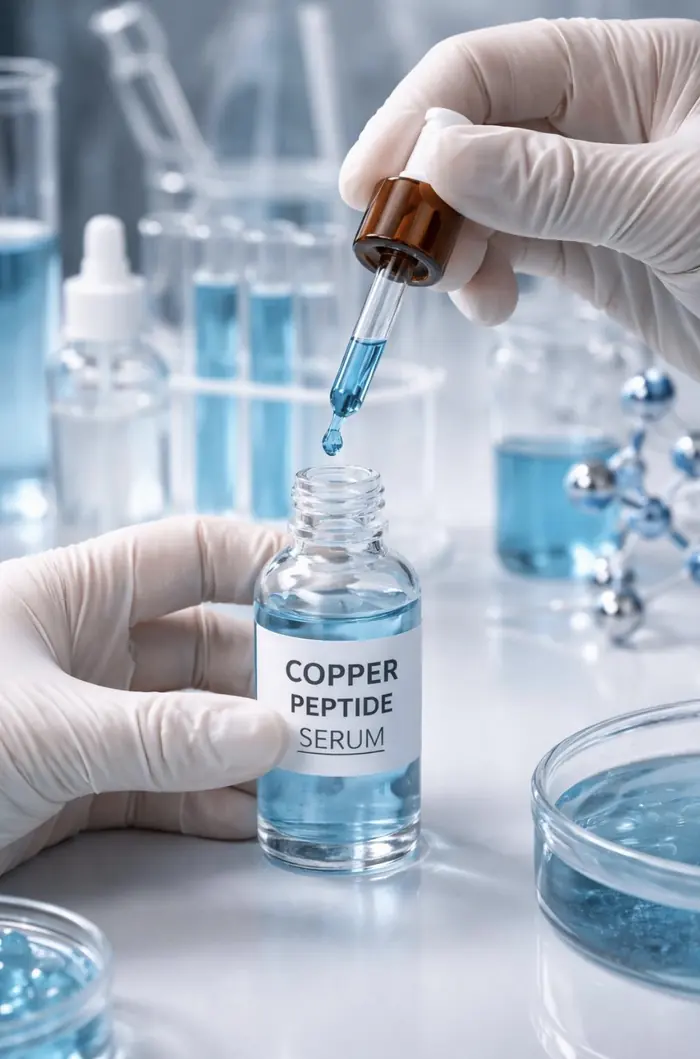
Myth: Any blue serum contains active Copper Peptide. Fact: Blue color alone doesn't confirm presence, concentration, or stability.
Recommendations: Communicating Responsibly
- Describe inflammatory support as "balanced regulation," not an anti-inflammatory drug claim
- Frame copper delivery as a regulated transport function, not a mineral supplement benefit
- Avoid DNA repair or stem cell activation language without strong clinical backing
- Cross-check every marketing claim against the underlying study's actual conditions, not just the abstract headline
For brands building niacinamide and vitamin C formulations alongside copper peptide actives, compatibility testing is essential — GHK-Cu can be sensitive to pH and chelating agents present in multi-active formulations.
OEM Development Considerations
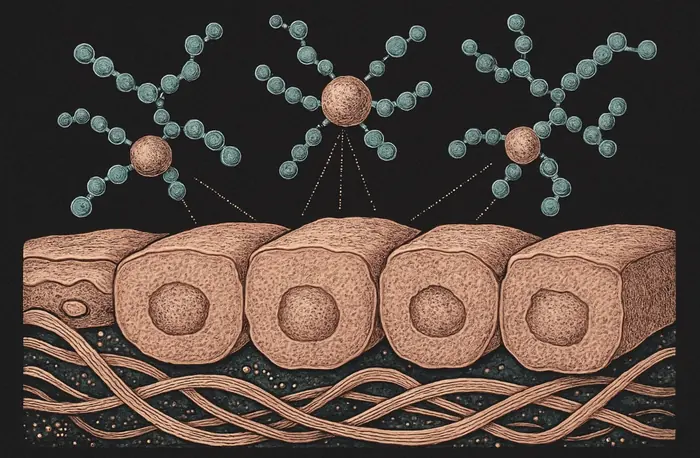
Preserving the integrity of the copper-peptide complex is one of the most important formulation objectives. Ingredient compatibility, pH control, and processing sequence all influence whether the complex remains in its intended molecular form.
Key formulation considerations for GHK-Cu products:
- pH range: GHK-Cu is most stable in a pH range of approximately 5.5–7.0; formulations outside this range risk complex degradation
- Chelating agents: EDTA and similar chelating agents can compete with the peptide for copper binding — careful compatibility testing is required
- Processing temperature: Excessive heat during manufacturing can affect complex stability; cold-process or low-temperature mixing is preferred
- Concentration: Effective concentrations in published studies typically range from 0.1% to 2%; higher concentrations do not necessarily improve efficacy and may introduce stability challenges
If a formulation increases overall irritation potential, GHK-Cu's inflammatory support alone cannot compensate for an incompatible product design. See our EU cosmetics regulation compliance guide for claim-substantiation requirements.
For brands considering GHK-Cu in combination with retinol, see our retinol OEM formulation stability guide — the pH requirements of these two actives require careful formulation architecture.
Frequently Asked Questions
Does Copper Tripeptide-1 act like an anti-inflammatory drug? No. Current evidence suggests it supports the skin's normal, balanced inflammatory repair response rather than functioning as a pharmaceutical anti-inflammatory.
Does the "copper" in Copper Tripeptide-1 work like a mineral supplement? Not exactly. Its biological importance lies in delivering copper within a controlled molecular complex that supports normal cellular physiology — not in simply supplying free copper.
Is it true that Copper Peptide repairs DNA? Laboratory studies show changes in DNA repair-related gene expression, but this is not the same as proven DNA repair in human skin.
Can Copper Tripeptide-1 be combined with other actives in a formulation? Compatibility depends on the complete formulation — pH, chelating agents, and ingredient forms all matter more than a simple yes-or-no rule about any single active.
How should a brand validate GHK-Cu claims before launch? Cross-check every marketing claim against the underlying study's actual conditions (concentration, model type, exposure time) rather than the abstract's headline finding, and keep that documentation on file for regulatory review.
Formulating with Copper Tripeptide-1?
At SEYE Cosmetic, our formulation team helps brands evaluate ingredient compatibility, stability, and regulatory-appropriate claims for GHK-Cu products. Whether you are developing a private label facial serum or an eye cream OEM formulation featuring copper peptide, we provide full technical support from formula development through to finished product.
Related Reading: Peptide & Retinol Anti-Aging Serum OEM Guide · How to Start a Skincare Brand · EU Cosmetics Regulation Compliance Guide
SEYE R&D Team
Formulation & OEM Specialists
Publication details are shown from the article record. Individual expertise, reviewer information, and review dates appear only when verified for public display.