Evaluate exosome and PDRN serum proposals through documented ingredient identity, source traceability, formulation stability, preservation and US/EU cosmetic requirements before committing to private-label production.
A credible PDRN skincare OEM project starts with an ingredient specification, not a regeneration story. Buyers need to know what material enters the factory, how its identity survives formulation, and whether the intended market permits that material and its claims. A premium bottle cannot resolve gaps in those answers.
For brands comparing an exosome private label serum manufacturer, the first commercial decision is whether the proposed ingredient has enough provenance and analytical support to justify development. This article addresses topical cosmetics only, not injection, microneedling or medicinal applications. It does not establish that SEYE currently manufactures exosome products or holds approval for them.
Define the material before comparing quotations
Extracellular vesicles are not automatically exosomes
Extracellular vesicles, or EVs, are cell-released particles bounded by a lipid bilayer. The international MISEV consensus reserves “exosome” for an endosomal origin and discourages that name when the origin cannot be demonstrated. Small particle size alone does not establish exosome identity. Synthetic vesicles and artificially produced EV mimetics also have distinct terminology.1
Request the source organism, tissue or cell type, production process, separation method, carrier composition and batch traceability. Ask whether the ingredient is an EV preparation, conditioned medium, an extract or a synthetic delivery system. For a claimed EV preparation, seek complementary particle, membrane and composition evidence, with controls for non-vesicular contaminants. A particle-count certificate alone is not an identity dossier.1
PDRN and polynucleotides need composition-based specifications
Polydeoxyribonucleotide, or PDRN, describes DNA-fragment material; polynucleotide is a broader compositional term. Do not assume that suppliers using PDRN and PN offer interchangeable chain distributions, purity or concentrations. An original microbial-derived PDRN study used absorbance measurements and electrophoresis and reported different fragment profiles from its salmon-derived comparators. Those results describe the tested preparations, not universal commercial specifications.2
| Procurement criterion | EV-based proposal | PDRN or PN proposal |
|---|---|---|
| Identity evidence | Source, membrane evidence and complementary characterization | DNA identity and fragment-size distribution |
| Quantity basis | Defined particle method and carrier dilution | DNA content, assay method and dry or solution basis |
| Purity questions | Co-separated proteins and non-vesicular particles | Residual protein, RNA and process contaminants |
| Change control | Source, separation process and storage changes | Source, extraction and fragmentation changes |
Request the exact proposed ingredient-list name and full mixture composition. A trade name does not establish legal identity, while an ingredient-list name alone does not establish provenance or equivalence.
Resolve EU admissibility and US claims first
EU Cosmetics Regulation Annex II, entry 416, prohibits “Cells, tissues or products of human origin.” Human-derived EV or DNA proposals therefore face a fundamental prohibition, not merely a missing certificate. Do not assume purification removes that issue. Non-human provenance avoids this particular human-origin restriction but does not itself establish safety or market admissibility.3
For EU supply, the responsible person needs a cosmetic safety assessment and report, product information file and required notification before market placement. CPNP notification is not certification or approval. The safety dossier must address the actual formula, exposure and packaging, not simply attach a supplier brochure.3
In the US, intended use determines whether a product is a cosmetic or drug. FDA specifically identifies cell-regeneration claims as evidence of drug intent. Its published exosome safety notification states that exosomes used to treat diseases and conditions are generally regulated as drugs and biological products requiring premarket review.4 5
Keep proposed claims within substantiated cosmetic purposes, such as moisturization or improving the appearance of dry skin. Removing a medical word does not rescue a therapeutic message communicated elsewhere on a website or through distributor training.
Build a formula-specific stability specification
There is no defensible universal “exosome serum pH” or “PDRN serum pH.” Ask the laboratory to propose a finished-product pH specification supported by the ingredient's stability data, preservative performance, skin compatibility and the remaining formula. Confirm the measurement method and investigate pH drift during storage.
For EV proposals, screen the complete system rather than only the ingredient in water. Surfactants, solvents, electrolytes and processing conditions are compatibility variables requiring assessment. MISEV discusses storage-dependent changes and possible loss through surface attachment; it does not provide a ready-made cosmetic shelf-life claim.1
For DNA-fragment materials, assess whether possible nuclease contamination or processing exposure changes the specified fragment profile. This is a development risk to investigate, not evidence that every formula degrades. Set acceptance criteria for DNA content and fragment distribution where technically meaningful. Total DNA content alone cannot show that the original size distribution remains unchanged.
Select analytical methods that work in the finished serum matrix. Fragrance, polymers and other suspended ingredients can complicate measurements, so include a matched base without the featured ingredient. Agree what will be measured at release and during stability before ordering the premium raw material.
Challenge preservation and test the actual package
Raw-material microbiological limits do not demonstrate preservation of the finished product. Establish incoming-material controls, hygienic handling, finished-product limits and preservative-efficacy testing appropriate to the formula and use. The EU safety-report requirements explicitly address microbiological quality, preservation challenge results and relevant packaging characteristics.3
Preservation and ingredient integrity must be assessed together. A system that controls microbial growth but changes the material's agreed identity is not a successful development outcome. Conversely, retaining a particle profile does not establish microbiological safety.
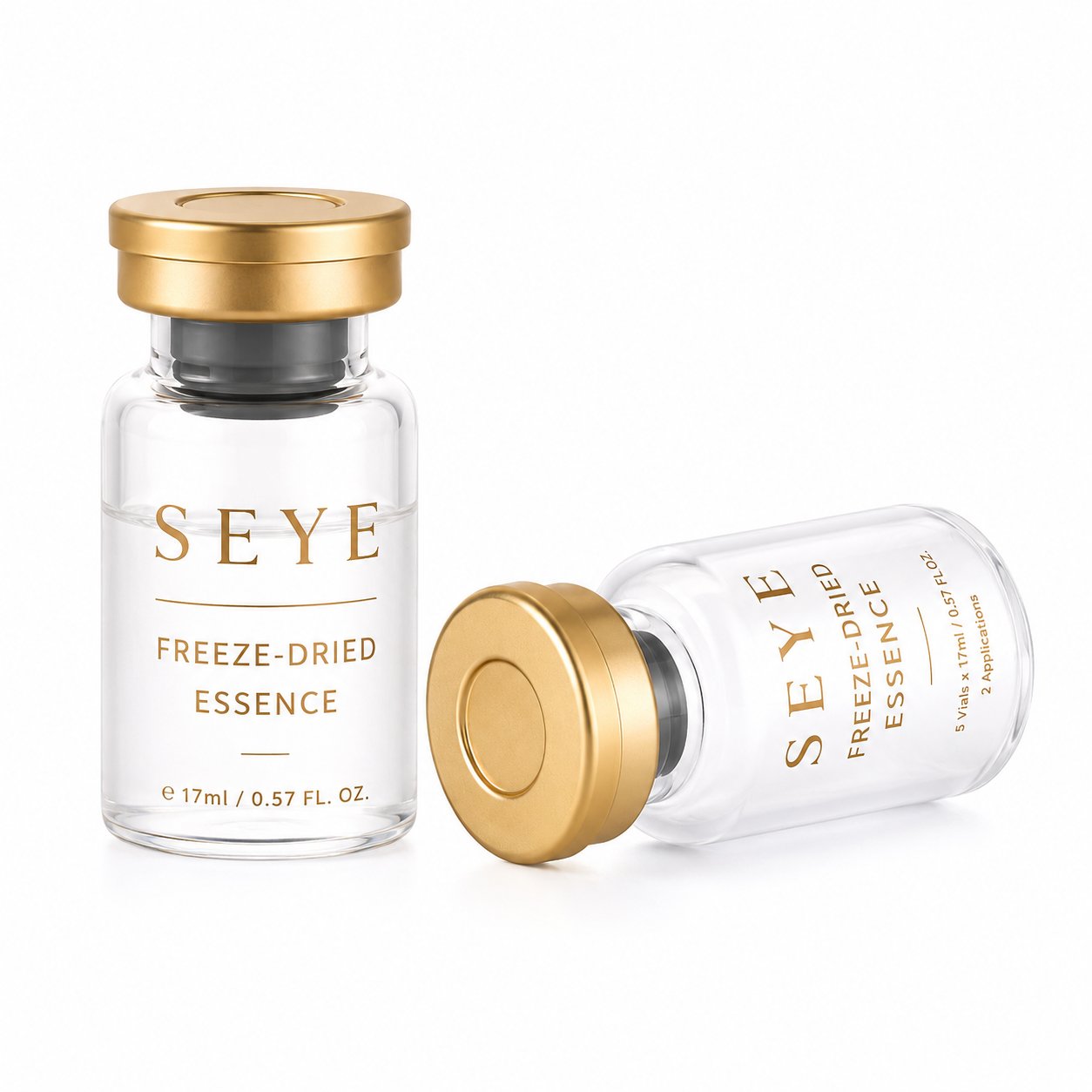
If considering a powder-and-liquid format, test the specified mixing ratio, diluent, closure and post-mixing use period. Reconstitution creates a separate exposure scenario; dry presentation does not justify an unsupported preservative-free or sterile claim.
Compare shortlisted packs through real-time and justified accelerated stability, transport simulation, light exposure where relevant, and suitable temperature cycling. Measure appearance, odor, pH, viscosity, microbiological quality and selected ingredient markers. Examine leakage, pump delivery, seal integrity, material interaction and potential adsorption. Airless packaging may be a candidate, but its name is not proof of compatibility or longer shelf life.
Compare total project cost and release readiness
The private-label opportunity is a differentiated cosmetic with documented sourcing and a reproducible specification, not a promised biological repair effect. Compare ready-to-use serum against reconstituted formats on testing burden, consumer instructions, filling complexity and component availability before selecting a format.
Cost drivers include ingredient concentration on a clearly defined basis, analytical testing, supplier minimums, packaging tooling, component quantities and market documentation. Ask quotations to separate development, testing, packaging and bulk manufacture. A cheaper diluted ingredient is not necessarily cheaper per unit of characterized material.
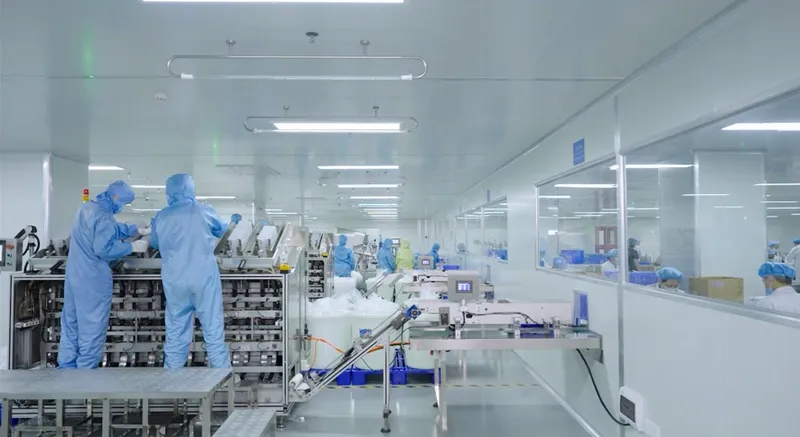
SEYE is Guangzhou-based with 12+ Years OEM Experience and supports ISO 22716/GMPC manufacturing quality evidence and project-specific target-market documentation. Review current evidence for the relevant scope. FDA registration and product listing are not product approval or factory certificates; FDA states that it does not issue cosmetic registration certificates. Current SEYE FDA registration status is not asserted here.6
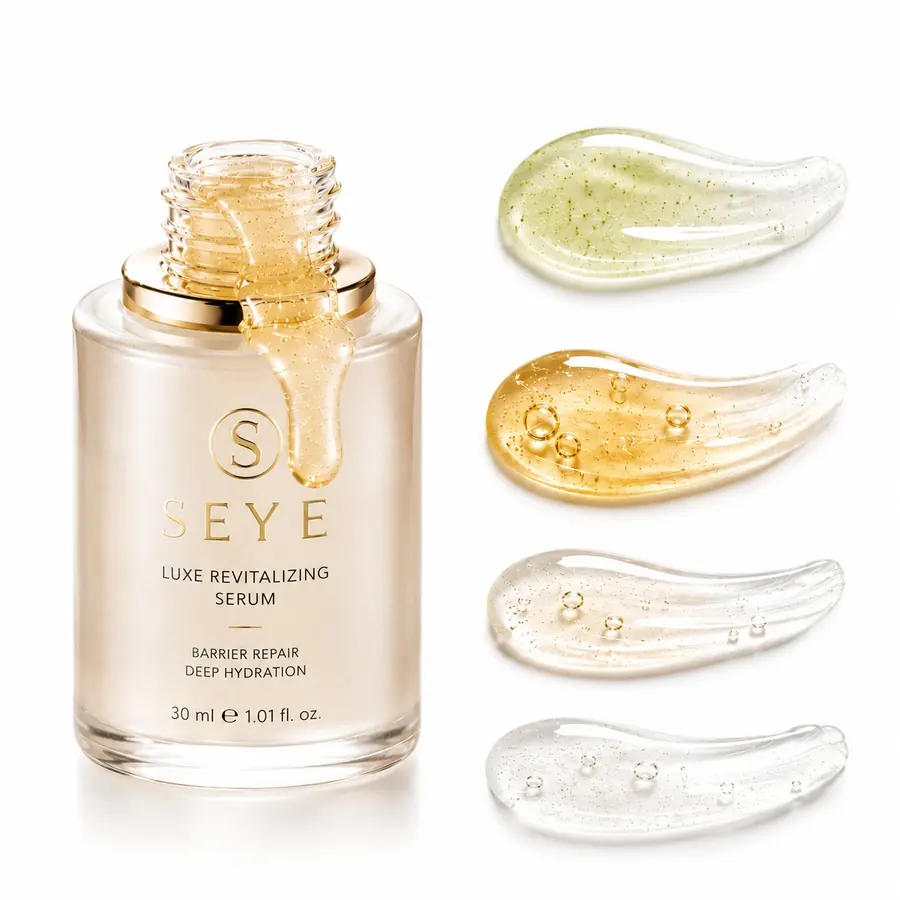
Use SEYE's Skincare catalogue to frame the product category, then discuss Anti-aging serum development around substantiated appearance-focused claims. Request the catalogue and submit the ingredient dossier with the brief; neither link confirms availability of an exosome formula.
Procurement and timeline conditions
- Quote response: Within 1 business day after we receive a complete project inquiry.
- Laboratory sample development: Target: 5–7 business days after the approved development brief.
- Sample dispatch: Scheduled after sample approval; shipping transit is separate and confirmed with the destination.
- Packaging confirmation: Project-specific after component sourcing, pack-compatibility review and artwork sign-off.
- Bulk production: Target: 25–35 working days after the production-readiness gate is complete.
- Gate: Production timing starts only after formula approval, packaging confirmation, artwork sign-off, required market documentation, component availability and agreed payment conditions are complete.
- MOQ: Starting MOQ is subject to formula, packaging and market documentation; request a project-specific quotation.
These are targets, not universal promises. Laboratory sample development does not mean completed stability, shelf-life or export validation. Confirm US safety substantiation, labeling and applicable MoCRA obligations, alongside EU responsible-person and dossier requirements, before agreeing commercial release.3 6
Policy v2026.10.23.1
Buyer FAQs
Can an exosome-named ingredient automatically be used in EU cosmetics?
No. Establish its actual identity and provenance first. EU Annex II prohibits cells, tissues or products of human origin. A non-human source still requires an ingredient-specific regulatory and safety assessment; marketing terminology does not establish admissibility.
Are PDRN and PN equivalent purchasing specifications?
No. Require the composition, source, DNA assay, fragment-size distribution and concentration basis. Compare the actual specifications and methods rather than assuming that two trade descriptions identify interchangeable materials.
Does an airless bottle prove serum stability?
No. Evaluate the finished formula in the selected pack, including ingredient integrity, preservation, dispensing and material interactions. Packaging selection cannot replace stability and compatibility evidence or support a guaranteed shelf-life extension.
What should a complete development inquiry contain?
Provide target markets, topical cosmetic claims, the ingredient dossier, desired format, packaging preferences, forecast quantity and testing expectations. SEYE can then assess project feasibility and quotation requirements without implying that an exosome product is already available or approved.
References
SEYE R&D Team
Formulation & OEM Specialists
Publication details are shown from the article record. Individual expertise, reviewer information, and review dates appear only when verified for public display.