Evaluate freeze-dried skincare through complete-kit costs, saleable yield and validated shelf-life evidence—not automatic margin or stability promises.
A lyophilized skincare OEM project can create a premium two-part product, but neither higher margins nor longer shelf life follows automatically. Removing water may improve the stability of a suitable formulation; additional components, drying cycles and rejected units can offset that advantage. FDA's pharmaceutical lyophilization guide identifies processing time, equipment complexity and stability-control challenges. These are useful process-risk signals, not cosmetic performance guarantees or requirements to manufacture skincare as an injectable. 1
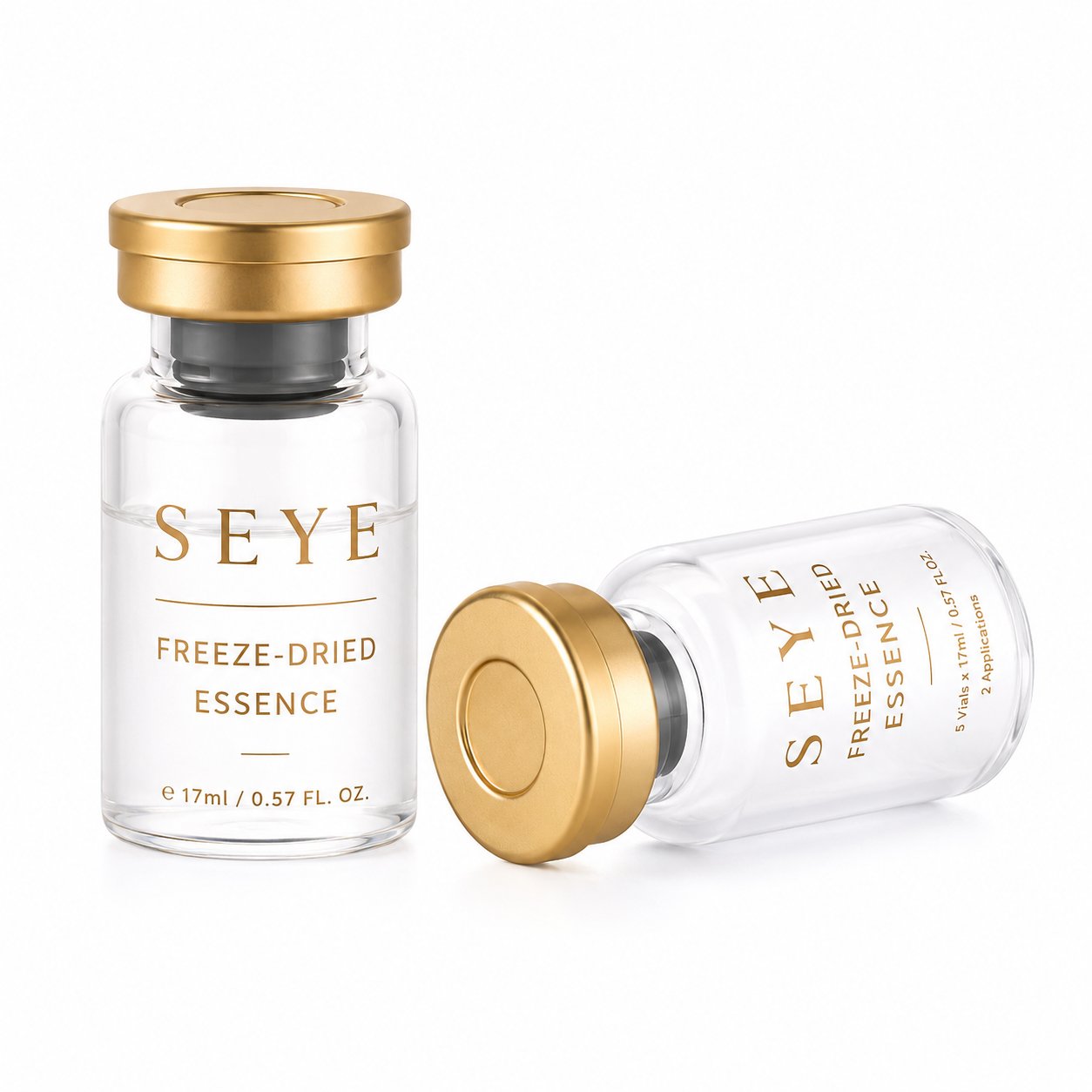
For buyers evaluating freeze-dried ampoules private label, the commercial question is whether a complete, validated kit earns enough net revenue after manufacturing losses and distribution costs. Start with SEYE's Lyophilized skincare platform, then compare proposals using the same saleable-kit definition.
Price the complete kit, not the powder vial
A powder-only quotation is not comparable with a finished retail kit. Define the dry unit, measured activator, closures, dispensing accessory, instructions and outer packaging before comparing cost of goods sold, or COGS. Confirm whether testing, development, assembly and freight are included, separately charged or amortized across an agreed quantity.
The following budget is entirely illustrative, not a SEYE quotation or measured factory result. It assumes 10,000 planned one-powder/one-activator kits and a committed batch cost that remains unchanged in the yield sensitivity.
| Cost line | Illustrative batch cost | Procurement check |
|---|---|---|
| Dry formula, filling and drying | US$9,000 | Fill specification, cycle capacity, changeover |
| Activator formula and filling | US$4,000 | Volume, preservation and release tests |
| Both primary packs and accessories | US$6,000 | Closures, dispensers, component defects |
| Cartons, instructions and assembly | US$2,500 | Kit count and artwork versions |
| Allocated setup and quality costs | US$2,500 | Included scope and repeat-order treatment |
| Total committed batch budget | US$24,000 | Excludes landed-cost additions below |
At 96% commercial saleable yield, 9,600 released complete kits carry US$2.50 each of this budget. At 90%, 9,000 kits carry approximately US$2.67 each. The denominator is complete kits available for sale, not vials filled or powder units passing inspection.
For illustration, add US$1.00 per saleable kit for freight, duty and receiving costs. At US$8.00 net revenue per kit, the resulting cost-based margin proxy is 56.25% at 96% yield and approximately 54.17% at 90%. This is not operating profit: selling expenses and corporate overhead remain outside the example. Confirm accounting treatment of development and qualification costs separately.
Use net revenue after discounts and channel deductions, not suggested retail price. If the supplier charges only for accepted kits, clarify who bears reject costs rather than applying a second loss allowance automatically.
Make yield and reject responsibility explicit
Request a reconciliation from units started through filling, drying, inspection, testing and assembly. Separate rejected units from destructive test samples, retained samples and commercial overage. All can affect saleable output, but they are not the same quality failure.
Agree specifications before production. Relevant checks may include fill mass, cake appearance, residual moisture, analytical ingredient markers where justified, closure performance and complete-kit count. A visually imperfect cake should not automatically be called unsafe; equally, attractive appearance does not prove chemical stability. The acceptance decision needs documented limits and an investigation procedure. FDA's guide illustrates why fill errors and cycle deviations require more than visual reassurance. 1
For mismatched component yields, identify the bottleneck: surplus activator cannot replace missing powder units. Ask who owns unused components, whether replenishment requires another minimum run, and how confirmed defects affect replacement, credit and delivery obligations.
Also model the inventory that will actually sell before expiry. Agree a minimum remaining shelf life at delivery, allowing for transit, customs clearance and distributor requirements. A longer supported expiry may reduce write-offs, but a larger packaging MOQ can still leave more cash tied up in stock. Compare reorder quantities and expected sell-through, not only the nominal expiry period. Distinguish units rejected before shipment from later commercial returns: they occur at different cost stages and need separate allowances rather than one blended percentage.
Buy a shelf-life evidence package
A dry format is a development strategy, not an expiry-date certificate. For process background, consult the existing technology guide; use project-specific reports rather than generic numerical claims to approve shelf life and commercial terms.
EU cosmetic safety documentation addresses physical and chemical stability, microbiological quality and relevant packaging characteristics. Commission guidance requires a rationale and test evidence supporting minimum durability. 2 3 A procurement specification should therefore connect each proposed claim to an acceptance criterion and an actual study.
Request testing in the intended market packaging, including both the dry unit and activator. The protocol should address foreseeable storage and transport exposure, seal leakage or moisture ingress, discoloration, odor, precipitation and package functionality. Assess formula–container interactions, including migration or adsorption where relevant. Commission guidance specifically discusses stability testing in inert containers and intended-market packs. 3
Use accelerated studies to support development decisions alongside an appropriate real-time program; do not turn a short screening test into an unsupported multi-year claim. A change in vial, stopper, activator or ingredient supplier should trigger documented review of whether existing evidence remains applicable.
Specify formulation and microbiological controls together
Set product-specific pH specifications for the activator and reconstituted formula, with the mixing ratio and measurement method defined. Choose limits through ingredient-stability, preservative-performance and skin-compatibility assessment, not a universal skincare pH range. If reporting pH for a dry material, specify the preparation and dilution used for measurement. Commission guidance calls for relevant finished-product specification limits and reference methods. 3
Freeze-drying does not establish sterility or remove the need for microbiological controls. Assess raw-material quality, water quality, bulk holding, filling hygiene and finished-product microbiological specifications. Evaluate the activator's preservation system separately and assess foreseeable contamination during mixing and dispensing.
Single-use packaging may change the testing rationale, but it does not justify declaring every dry kit preservative-free or microbiologically safe. Commission guidance distinguishes microbiological risk categories and requires scientific justification for reduced testing. 3 Any post-reconstitution holding period needs its own supporting assessment; an unopened shelf-life claim cannot establish an in-use period.
Resolve export responsibilities before committing inventory
For the United States, assign responsibility for adequate safety-substantiation records and applicable MoCRA facility registration and product listing, including exemption assessment. 4 FDA registration or listing is not product approval, and FDA does not issue certificates verifying those submissions. 5
For the EU, confirm the Responsible Person, cosmetic product safety report, product information file, compliant labeling and CPNP notification before market placement. 2 CPNP notification is not certification or approval. Neither CPNP nor FDA registration is a factory certificate. Check current ingredient restrictions and proposed claims against the destination market; topical cosmetic feasibility alone does not establish legal marketability.
Confirm MOQ and the production-readiness gate
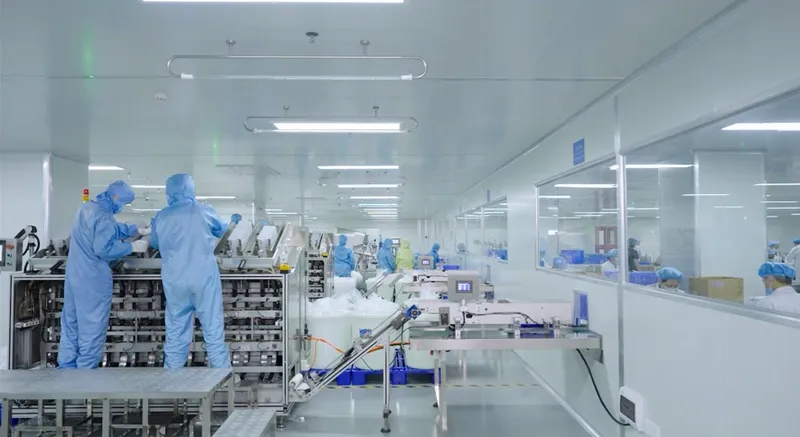
SEYE is Guangzhou-based with 12+ Years OEM Experience. Buyers can request ISO 22716/GMPC manufacturing quality evidence and project-specific target-market documentation. Evaluate the evidence against the proposed formula, packaging and responsible-party arrangement rather than assuming one credential covers every launch.
Component tooling, decoration, activator batch size, dryer loading, kit assembly and documentation scope can change cost and MOQ. The following operating conditions apply:
- Quote response: Within 1 business day after we receive a complete project inquiry.
- Laboratory sample development: Target: 5–7 business days after the approved development brief.
- Sample dispatch: Scheduled after sample approval; shipping transit is separate and confirmed with the destination.
- Packaging confirmation: Project-specific after component sourcing, pack-compatibility review and artwork sign-off.
- Bulk production: Target: 25–35 working days after the production-readiness gate is complete.
- Gate: Production timing starts only after formula approval, packaging confirmation, artwork sign-off, required market documentation, component availability and agreed payment conditions are complete.
- MOQ: Starting MOQ is subject to formula, packaging and market documentation; request a project-specific quotation.
These are targets, not universal promises. The 5–7 business days laboratory-development target does not mean completed stability, shelf-life or export validation. Send the kit configuration, destination, order forecast and cost ceiling with your inquiry, or request the 2026 catalogue to discuss candidate formats.
Policy v2026.10.23.1
Buyer FAQs
Do freeze-dried ampoules always improve brand margins?
No. Compare net realized revenue with complete-kit costs, saleable yield and landed expenses. Premium positioning may help, but additional packaging, rejects and slow inventory turnover can reduce the expected benefit.
Can we claim a longer shelf life than a liquid serum?
Only with suitable comparative evidence for the actual products and packaging. A freeze-drying process description or another formula's stability report does not establish your product's shelf life.
Does single-use packaging eliminate preservation testing?
Not automatically. A documented microbiological risk assessment must justify the testing approach for the powder, activator and intended mixing procedure. Any permitted holding period after mixing requires supporting evidence.
What should our first quotation request include?
Specify the target market, kit contents, powder fill, activator volume, packaging preference, intended claims and forecast quantity. Include acceptance criteria and documentation needs so that competing quotations cover the same saleable product.
References
SEYE R&D Team
Formulation & OEM Specialists
Publication details are shown from the article record. Individual expertise, reviewer information, and review dates appear only when verified for public display.