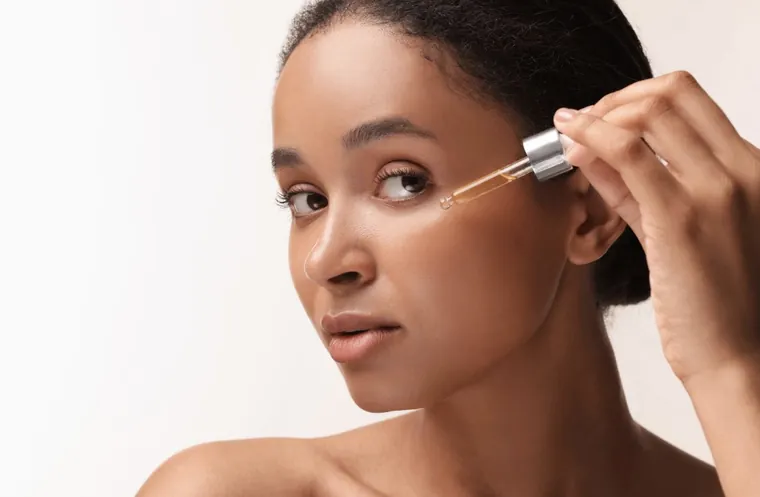

The vitamin C serum market is growing at 11.9% CAGR toward $9.1 billion by 2035 — but most conventional formulations lose 30–50% of their ascorbic acid potency within 90 days of opening. Lyophilized vitamin C solves the stability problem at the source. This guide explains the science, the OEM opportunity, and how to build a freeze-dried vitamin C line that commands a premium.
The Stability Problem That Has Defined — and Limited — Vitamin C Skincare
Vitamin C is the most clinically validated brightening and antioxidant ingredient in modern skincare. The evidence base is extensive: L-ascorbic acid at concentrations of 10–20% demonstrably reduces hyperpigmentation, stimulates collagen synthesis, neutralises free radical damage from UV and pollution, and delivers measurable improvements in skin firmness and evenness. A clinical assessment published in the Journal of Panda Wain Institute found that a vitamin C derivative serum produced a 20.35% increase in skin firmness and a 13.71% reduction in wrinkles after consistent use.
The problem is not efficacy. The problem is stability.
L-ascorbic acid is highly susceptible to oxidation in the presence of water, light, heat, and oxygen. In a conventional aqueous serum, the active ingredient begins degrading from the moment of manufacture. Studies on topical ascorbic acid formulations consistently show that 30–50% of the active content can be lost within 90 days of opening, and some formulations show significant degradation even before the consumer opens the bottle. The characteristic yellowing and browning of vitamin C serums is not a cosmetic issue — it is a direct indicator of oxidised, inactive ascorbic acid.
The industry has responded with two strategies: stabilised derivatives (such as sodium ascorbyl phosphate, magnesium ascorbyl phosphate, and tetrahexyldecyl ascorbate), which sacrifice some potency for shelf stability; and lyophilisation — freeze-drying the active ingredient in its pure, anhydrous form and reconstituting it at the point of use. For private label brands building premium vitamin C lines, lyophilisation represents the more compelling commercial and scientific proposition.
The Vitamin C Serum Market: A $9 Billion Opportunity with a Formulation Gap
The global vitamin C serum market was valued at $2.95 billion in 2025 and is projected to reach $9.13 billion by 2035, growing at a CAGR of 11.9% — one of the highest growth rates in any skincare sub-category. Stabilised derivatives currently hold a 51.3% market share by formulation type, reflecting the industry's pragmatic response to the stability challenge. Pure ascorbic acid formulations, despite their superior potency, remain a smaller segment precisely because conventional aqueous delivery cannot reliably preserve them.
Lyophilised vitamin C sits at the intersection of these two dynamics: it delivers the potency of pure L-ascorbic acid while solving the stability problem that has constrained that segment's growth. For OEM buyers, this creates a clear positioning opportunity — a product that can legitimately claim clinical-grade efficacy, preservative-free formulation, and a demonstrably longer active shelf life than any conventional competitor.
| Market Metric | Value |
|---|---|
| Global Vitamin C Serum Market (2025) | $2.95 billion |
| Projected Market Size (2035) | $9.13 billion |
| CAGR (2025–2035) | 11.9% |
| Stabilised Derivatives Market Share | 51.3% |
| Brightening Function Share | 55.6% |
| Online Distribution Share | 56.8% |
| Dermatologist-Tested Claim Share | 52.5% |
The 10–20% concentration range dominates with a 56.8% share, reflecting consumer and dermatologist consensus on the optimal balance of efficacy and tolerability. This is the concentration range where lyophilised vitamin C performs most distinctively — a 15% L-ascorbic acid lyophilised serum, reconstituted fresh at point of use, delivers meaningfully higher bioavailable active content than a 20% conventional serum that has been sitting in a warehouse for three months.
How Lyophilisation Solves the Vitamin C Stability Problem
Lyophilisation removes water from the formulation through a three-stage process: freezing the active-loaded solution to below -40°C, reducing chamber pressure to allow ice to sublimate directly to vapour (primary drying), and then removing residual bound moisture under continued vacuum (secondary drying). The result is a dry, porous powder or cake that retains the molecular structure of the active ingredients in a stable, anhydrous state.
For vitamin C specifically, lyophilisation achieves three critical outcomes:
Elimination of the oxidation pathway. Oxidation of ascorbic acid requires water as a reaction medium. In the anhydrous lyophilised state, the oxidation rate drops to near zero. Stability studies on lyophilised L-ascorbic acid formulations consistently show active retention above 95% after 24 months of storage at ambient temperature — compared to 50–70% retention in conventional aqueous serums over the same period.
Preservation of synergistic co-actives. Vitamin C's efficacy is significantly enhanced by the presence of vitamin E (tocopherol) and ferulic acid — a combination that has been shown to increase the photoprotective effect of vitamin C by up to eightfold in published research. In conventional serums, these co-actives also degrade in aqueous solution. Lyophilisation preserves all three in their active forms simultaneously, allowing the brand to deliver the full clinical complex at point of use.
Concentrated dosing in a minimal volume. A lyophilised vitamin C ampoule or powder sachet can contain the equivalent active load of a 30ml serum in a 1–2ml reconstitution volume. This enables premium single-use dosing formats — ampoules, sachets, vials — that command significantly higher per-unit pricing than conventional serums.
Key Active Ingredients in Lyophilised Vitamin C Formulations
The most effective lyophilised vitamin C formulations are not single-ingredient products. The following table summarises the core actives and their roles in a high-performance freeze-dried vitamin C complex:
| Active Ingredient | Function | Lyophilisation Advantage | Recommended Concentration |
|---|---|---|---|
| L-Ascorbic Acid (Vitamin C) | Brightening, collagen synthesis, antioxidant | Eliminates aqueous oxidation; 95%+ retention at 24 months | 10–20% in reconstituted solution |
| Tocopherol (Vitamin E) | Antioxidant synergy, membrane protection | Preserved in anhydrous state; activates on reconstitution | 0.5–1% |
| Ferulic Acid | Antioxidant synergy, UV protection enhancement | Stable in dry form; enhances vitamin C photoprotection 8× | 0.5–1% |
| Niacinamide (Vitamin B3) | Brightening, barrier support, anti-inflammatory | Water-stable but benefits from co-lyophilisation with unstable actives | 2–5% |
| Hyaluronic Acid (HA) | Humectant, delivery vehicle | Lyophilised HA reconstitutes rapidly; supports even active distribution | 0.1–2% |
| Glutathione | Systemic antioxidant, brightening | Highly unstable in water; lyophilisation is the preferred delivery method | 0.1–0.5% |
| Peptides (e.g., Matrixyl 3000) | Anti-aging, collagen stimulation | Preserved in dry form; synergistic with vitamin C for collagen synthesis | 3–5% |
The combination of L-ascorbic acid, tocopherol, and ferulic acid — the so-called "vitamin C triad" — is the gold standard for lyophilised vitamin C formulations targeting anti-aging and brightening claims. Adding glutathione positions the product for brightening-focused markets, particularly in East Asia and the Middle East. Peptide inclusion supports anti-aging positioning for European and North American consumers.
Regional Market Strategies for Lyophilised Vitamin C
Europe and North America: Clinical Credibility and Ingredient Transparency
European and North American consumers approach vitamin C skincare through a clinical and evidence-based lens. The 52.5% market share held by dermatologist-tested claims in 2025 reflects this orientation. For lyophilised vitamin C products in these markets, the key positioning levers are: clinical stability data (active retention at 12 and 24 months), dermatologist endorsement, EU Cosmetics Regulation 1223/2009 compliance, and transparent ingredient labelling.
Packaging for these markets should emphasise the reconstitution ritual as a feature, not a complication — the act of mixing the powder with the provided ampoule of activator serum communicates freshness, potency, and scientific rigour. Price points of €80–€150 for a 30-day supply are achievable for well-positioned lyophilised vitamin C lines in European specialty retail and e-commerce.
Middle East: Brightening Efficacy and Luxury Presentation
The Middle East represents one of the highest-value markets for vitamin C skincare globally, driven by strong consumer demand for brightening and skin tone-evening efficacy. GCC consumers are sophisticated buyers who respond to clinical claims, luxury packaging, and high active concentrations. Lyophilised vitamin C formulations with glutathione and niacinamide — the "triple brightening complex" — are particularly well-suited to this market.
Halal certification is a meaningful differentiator in this region, and lyophilised formulations that avoid animal-derived ingredients and alcohol-based solvents are well-positioned to obtain it. Premium ampoule formats in gold or white packaging with Arabic-language labelling support the luxury positioning that commands the highest margins in GCC retail.
Asia-Pacific: Innovation Narrative and K-Beauty Influence
Asia-Pacific is the fastest-growing region for vitamin C serums, with China and India projected to account for more than one-third of the market's incremental value by 2035. K-beauty's influence on this market has established a strong consumer preference for innovative formats, multi-step routines, and ingredient-forward storytelling. Lyophilised vitamin C aligns perfectly with these preferences.
In China and South Korea, the "fresh mixing" ritual of lyophilised skincare has strong social media appeal — the visual of powder dissolving into serum is inherently shareable and communicates potency in a way that a pre-mixed bottle cannot. Brands targeting this market should invest in short-form video content demonstrating the reconstitution process, and consider single-use ampoule formats that support the "special treatment" positioning popular in the K-beauty segment.
Completing the Freeze-Dried Skincare Cluster: How Vitamin C Fits the System
Lyophilised vitamin C is most powerful when positioned as part of a coordinated freeze-dried skincare system rather than a standalone product. The most effective architecture for private label brands combines three formats:
A freeze-dried essence serves as the daily intensive treatment — a concentrated lyophilised active complex that delivers the core efficacy payload in a lightweight, fast-absorbing format. A freeze-dried mask provides the weekly deep-treatment step, with a higher active concentration and a more occlusive base that extends contact time and supports deeper penetration. The lyophilised vitamin C serum or ampoule functions as the targeted brightening and antioxidant booster — applied after the essence in the morning routine, or used as an intensive treatment course.
All three formats can share a core active complex — the vitamin C triad of L-ascorbic acid, tocopherol, and ferulic acid — with different concentrations, base formulations, and application frequencies. This shared ingredient architecture enables consistent brand storytelling, simplified stability testing (the same active complex is validated across all three formats), and a coherent product line that supports cross-sell and upsell at every price point.
SEYE's lyophilisation platform is designed to support exactly this kind of coordinated development. The same freeze-drying infrastructure, active ingredient sourcing, and stability testing protocols that underpin the essence and mask lines are available for vitamin C ampoule and powder development, with MOQs starting at 3,000 units per SKU.
OEM Development Considerations for Lyophilised Vitamin C
Formulation and Stability Requirements
Lyophilised vitamin C formulations require careful attention to the reconstitution vehicle. The activator serum or ampoule that the consumer mixes with the powder must be formulated to maintain the pH range of 2.5–3.5 that L-ascorbic acid requires for optimal skin penetration. This means the reconstitution vehicle is typically a low-pH aqueous solution — often containing hyaluronic acid and a pH buffer — that is itself stable in conventional liquid form.
The lyophilised powder component should be tested for active retention at 6, 12, and 24 months under accelerated stability conditions (40°C/75% RH) and real-time conditions (25°C/60% RH). Brands targeting EU and US markets should request stability data as part of their OEM development brief.
Packaging Formats and Consumer Experience
Lyophilised vitamin C is available in several packaging formats, each with different cost structures and consumer experience profiles:
Dual-chamber ampoules — the powder and activator are separated by a breakable seal within a single ampoule. The consumer snaps the seal, shakes to mix, and applies. This format offers the best consumer experience and the strongest premium positioning, but carries the highest tooling cost.
Powder sachet + activator vial — a separate powder sachet and liquid vial are packaged together. Lower tooling cost than dual-chamber, with similar consumer ritual. Well-suited to travel sizes and sampling programmes.
Powder jar + activator pump bottle — a 30-day supply of powder in a jar, mixed with a separate activator bottle. The most cost-effective format for daily-use positioning, but requires consumer education on the mixing ratio.
Minimum Order Quantities and Lead Times
MOQs for lyophilised vitamin C formulations at SEYE start at 3,000 units per SKU. Development lead times are 35–50 days for fully custom formulations, or 20–30 days for adaptations of existing portfolio formulas. Sampling is available within 7–10 days of formula selection.
Frequently Asked Questions
What is the difference between lyophilised vitamin C and stabilised vitamin C derivatives? Stabilised derivatives (such as sodium ascorbyl phosphate or tetrahexyldecyl ascorbate) are chemically modified forms of vitamin C that are more stable in aqueous solution but convert to L-ascorbic acid less efficiently in the skin. Lyophilised vitamin C uses pure L-ascorbic acid — the most potent and clinically validated form — preserved in an anhydrous state to eliminate the oxidation problem without chemical modification.
How does the consumer reconstitute a lyophilised vitamin C product? The reconstitution process varies by format. In a dual-chamber ampoule, the consumer breaks the internal seal and shakes for 10–15 seconds. In a powder + vial format, the powder is added to the vial and shaken. In a powder jar format, the consumer measures a small amount of powder and mixes it with the activator in their palm before application. All formats are designed to be completed in under 30 seconds.
What concentration of vitamin C is appropriate for a lyophilised formulation? The 10–20% range is the clinical sweet spot, consistent with the market data showing this concentration segment holds a 56.8% share. For brightening-focused markets (Middle East, Asia-Pacific), 15–20% with added glutathione is optimal. For anti-aging-focused markets (Europe, North America), 10–15% with the vitamin C triad (L-AA + tocopherol + ferulic acid) is the preferred formulation.
Can lyophilised vitamin C be combined with retinol or AHAs? Vitamin C and retinol are generally not recommended for simultaneous application due to pH incompatibility — vitamin C requires pH 2.5–3.5, while retinol is most stable at pH 5–6. In a lyophilised system, this can be managed by formulating the activator at a pH that is compatible with both, or by positioning the vitamin C ampoule for morning use and retinol for evening use. AHA combinations are possible at lower concentrations and are popular in brightening-focused formulations.
What regulatory documentation does SEYE provide for lyophilised vitamin C products? SEYE provides full export documentation including Certificate of Analysis (COA), Material Safety Data Sheet (MSDS), stability test reports, and GMPC facility certification. For EU-bound products, SEYE can support the preparation of the Product Information File (PIF) required under EU Cosmetics Regulation 1223/2009. For US-bound products, SEYE provides documentation supporting FDA cosmetic registration requirements.
SEYE R&D Team
Formulation & OEM Strategy
Publication details are shown from the article record. Individual expertise, reviewer information, and review dates appear only when verified for public display.