Lyophilized facial masks are growing at 13.5% CAGR, outpacing most conventional mask formats. This guide explains the technology, key active ingredients, regional market strategies, and what OEM brands need to know before launching a freeze-dried mask line.
Why Freeze-Dried Masks Are Outgrowing Every Other Mask Format
The global face mask market is large — estimated at over $51 billion by 2025 — but within it, one sub-category is expanding at a pace that commands attention. Lyophilized facial masks (commonly called freeze-dried masks) are projected to grow at a 13.5% CAGR through 2033, according to market research published in mid-2026. That growth rate is roughly double the broader face mask category average, and it is being driven by a convergence of three forces: consumer demand for clinical-grade efficacy, the clean beauty movement's preference for preservative-minimal formulations, and the premiumisation of at-home skincare rituals.
For private label brands and OEM buyers, this trajectory represents a genuine product opportunity — but one that requires understanding the technology before committing to a development brief. This article covers the science behind freeze-dried masks, the ingredient categories that perform best in lyophilized form, regional market strategies, and the practical OEM considerations that determine whether a launch succeeds or stalls.
What Makes Freeze-Drying Different From Conventional Mask Manufacturing
Conventional sheet masks, gel masks, and sleeping masks are water-based systems. They rely on preservatives to maintain stability, and the active ingredients they carry — peptides, growth factors, vitamin C derivatives, hyaluronic acid — are dissolved in aqueous solution from the moment of manufacture. Every day on the shelf is a day of slow degradation.
Lyophilization (freeze-drying) eliminates water from the equation entirely. The process works in three stages:
- Freezing: The active ingredient solution is frozen to approximately −40°C to −80°C, locking the molecular structure in place.
- Primary drying (sublimation): Under high vacuum, the frozen water converts directly from ice to vapour without passing through a liquid phase. This removes roughly 95% of moisture.
- Secondary drying (desorption): Residual bound water is removed at slightly elevated temperatures, bringing moisture content below 1–3%.
The result is a porous, brittle cake or powder that retains the biological activity of the original formula. When the consumer activates the mask — by adding the included activating serum, toner, or water — the actives are released in a concentrated burst at the moment of use rather than having been slowly degrading in solution for months.
This architecture delivers two commercially significant advantages. First, no preservatives are required in the lyophilized phase, which satisfies clean beauty positioning. Second, active ingredient concentration at point of use is dramatically higher than a conventional mask can achieve without stability trade-offs.
Active Ingredient Categories Best Suited to Lyophilization
Not every active ingredient benefits equally from freeze-drying. The technology is most valuable for molecules that are inherently unstable in aqueous solution or that lose potency rapidly when exposed to oxygen, light, or heat.
| Ingredient Category | Key Examples | Why Lyophilization Helps | Typical Use Concentration |
|---|---|---|---|
| Vitamin C (L-ascorbic acid) | L-AA, sodium ascorbyl phosphate | Highly oxidation-prone in water; lyophilized form extends active life 10–15× | 5–20% in reconstituted solution |
| Peptides | Matrixyl 3000, Argireline, copper peptides | Hydrolysis in water reduces efficacy; dry form preserves chain integrity | 2–8% in reconstituted solution |
| Growth factors | EGF, FGF, IGF-1 | Protein denaturation in liquid; lyophilization preserves tertiary structure | 0.001–0.01% (highly active) |
| Hyaluronic acid (high MW) | Sodium hyaluronate (>1,000 kDa) | Viscosity degradation in solution; powder form maintains MW distribution | 0.5–2% in reconstituted solution |
| Niacinamide | Vitamin B3 | Stable but benefits from high-concentration delivery without solubility limits | 5–15% in reconstituted solution |
| Botanical extracts | Centella asiatica, resveratrol, coenzyme Q10 | Polyphenol oxidation in water; dry form extends shelf life 2–3× | Varies by extract |
For brands building a freeze-dried mask line, the most commercially compelling formulations combine a high-potency unstable active (vitamin C or a growth factor) with a structural humectant (hyaluronic acid) and a soothing agent (centella asiatica or allantoin). This combination addresses the three primary consumer concerns — brightening, anti-aging, and barrier support — in a single product.
SEYE's freeze-dried skincare platform supports all six ingredient categories above, with in-house lyophilization capacity and stability testing protocols validated for EU and US market entry.
Two Formats: Dry Powder Mask vs. Lyophilized Stock Solution Mask
The lyophilized mask category splits into two distinct product architectures, each with different consumer experiences and OEM cost profiles.
Dry Powder Mask: The lyophilized active blend is packaged as a loose powder or compressed tablet. The consumer mixes the powder with water, toner, or a provided activating liquid immediately before application, then applies the resulting paste or soaked sheet to the face. This format maximises freshness perception and allows consumers to adjust concentration. It is particularly popular in the K-beauty and J-beauty markets, where ritual participation is a valued part of the skincare experience.
Lyophilized Stock Solution Mask: The freeze-dried cake is pre-loaded onto a compressed sheet or into a dual-chamber sachet. One chamber contains the lyophilized cake; the other contains the activating liquid. The consumer breaks the seal, combines the two, and applies the activated sheet mask. This format is closer to a conventional sheet mask in user experience, making it more accessible for Western markets where consumers are less accustomed to mixing steps.
From an OEM perspective, the stock solution mask commands a higher retail price (typically $8–$25 per unit at retail) and supports premium positioning more effectively. The dry powder format offers lower unit cost and is better suited to multi-dose packaging strategies.
Regional Market Strategies
Europe and North America
European and North American consumers approach freeze-dried masks primarily through an anti-aging and clinical efficacy lens. The key purchase drivers are ingredient transparency, clinical claims, and dermatologist endorsement. Formulations for these markets should lead with peptide and growth factor content, carry EU Cosmetics Regulation 1223/2009 compliance documentation, and be positioned alongside the brand's existing serum or treatment range rather than as a standalone novelty.
Packaging for these markets should communicate the science simply: the two-component format (powder + activating liquid) should be presented as a quality signal rather than an inconvenience. Brands that have succeeded in this positioning — particularly in the French and German pharmacy channel — use clinical photography and ingredient-forward copy rather than lifestyle imagery.
Regulatory note: growth factors (EGF, FGF) occupy a grey area in EU cosmetics regulation. Brands targeting EU markets should confirm with their regulatory consultant whether the intended concentration and claim set requires a cosmetic or quasi-drug pathway before finalising the brief.
Middle East
The Middle East market for premium face masks is growing rapidly, driven by high disposable income in GCC countries and a strong preference for brightening and whitening efficacy. Freeze-dried masks are well positioned here because the format supports high-concentration vitamin C and niacinamide delivery — the two actives most associated with brightening claims in this market.
Formulations for Middle East distribution should be fragrance-free or use oud-adjacent fragrance profiles, and packaging should support halal certification where possible. The dual-chamber sachet format performs well in this market because it aligns with the premium gifting culture; individual sachets are easy to present as part of a curated skincare set.
Southeast Asia
Southeast Asia is the fastest-growing regional market for lyophilized masks, with particular strength in South Korea's export influence on Thai, Vietnamese, and Indonesian consumers. The K-beauty connection is commercially important: brands that can credibly reference Korean formulation heritage or Korean-style ritual positioning have a meaningful advantage.
The dry powder mask format — mixed with a provided essence or toner — resonates strongly in this market because it mirrors the multi-step skincare ritual that K-beauty has normalised. Brightening and hydration claims outperform anti-aging claims in the under-35 demographic that dominates premium skincare purchasing in the region. Packaging should be compact, travel-friendly, and visually distinctive on social media.
How Freeze-Dried Masks and Freeze-Dried Essences Work Together as a Product Line
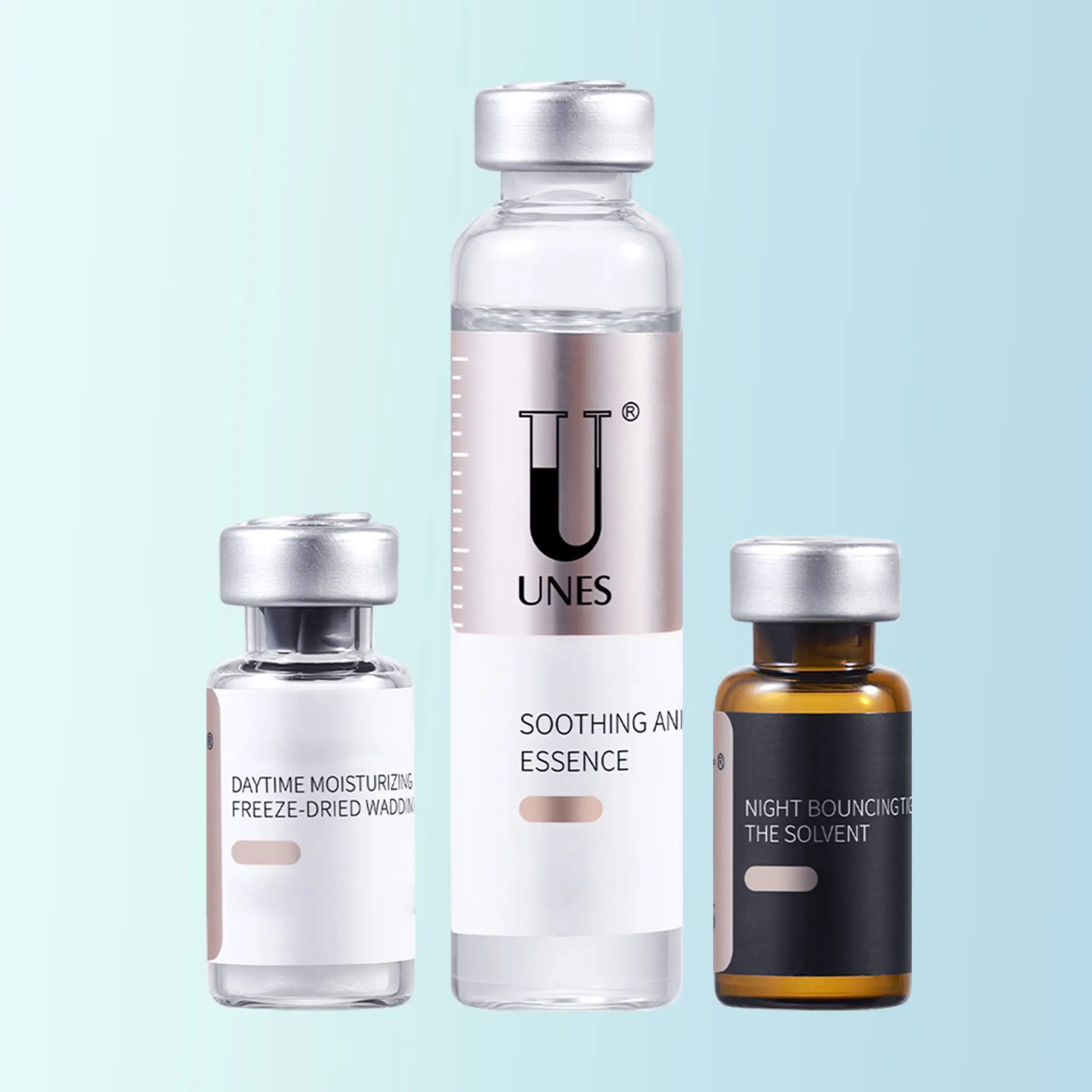
One of the most effective private label strategies in the lyophilized category is to launch a coordinated three-product system. The mask provides an intensive weekly treatment; the freeze-dried essence provides the daily maintenance dose of the same active complex; and a lyophilised vitamin C serum or ampoule serves as the targeted brightening and antioxidant booster applied in the morning routine. This three-format architecture creates natural cross-sell opportunities at every price point, supports a higher average order value, and gives the brand a coherent story: the lyophilization technology is the hero, not just a single product.
From a formulation standpoint, the mask and essence can share a core active complex (for example, a peptide-HA-vitamin C blend) with the mask version carrying a higher concentration and a more occlusive base to extend contact time. SEYE's freeze-dried skincare platform is designed to support exactly this kind of coordinated development, with shared stability testing protocols and consistent ingredient sourcing across both formats.
Brands that launch both formats simultaneously also benefit from stronger SEO and content marketing positioning: a single content cluster covering lyophilization technology, ingredient science, and application ritual can support both product pages and drive qualified organic traffic to the entire line.
OEM Development Considerations
Minimum Order Quantities and Lead Times
Freeze-dried masks carry higher tooling and equipment costs than conventional masks due to the lyophilization infrastructure required. MOQs for private label freeze-dried masks typically start at 3,000–5,000 units per SKU, compared to 1,000–2,000 units for conventional sheet masks. Brands should plan for this when sizing their initial order.
Development lead times are longer than for conventional masks: 35–50 days for a fully custom formulation, or 20–30 days for an adaptation of an existing formula from the manufacturer's portfolio. Sampling is typically available within 7–10 days of formula selection.
Stability and Shelf Life
A properly lyophilized mask should achieve 24–36 months shelf life at ambient temperature (15–30°C) when packaged in moisture-barrier materials. Brands should request accelerated stability test data (40°C/75% RH, 6 months) from their manufacturer before committing to a production run. This data is essential for EU and US import documentation.
Packaging Compatibility
The lyophilized cake or powder is highly hygroscopic — it will absorb ambient moisture rapidly if exposed. Primary packaging must provide a moisture vapour transmission rate (MVTR) below 0.1 g/m²/day. Aluminium foil laminates and glass vials meet this requirement; standard PE pouches do not. Brands should confirm packaging material specifications with their manufacturer before finalising the packaging brief.
Regulatory Pathway
For EU market entry, freeze-dried masks require a Product Information File (PIF) including safety assessment, stability data, and ingredient INCI list. For US market entry, the product is regulated as a cosmetic under the FD&C Act; no pre-market approval is required, but the manufacturer must be able to provide safety substantiation data. SEYE provides full export documentation packages for both markets as part of the standard OEM service.
Frequently Asked Questions
What is the difference between a freeze-dried mask and a conventional sheet mask? A conventional sheet mask is a water-based system that contains active ingredients dissolved in solution from the time of manufacture. A freeze-dried mask removes water entirely through lyophilization, preserving active ingredients in dry form until the moment of use. This allows higher active concentrations, eliminates the need for preservatives in the dry phase, and extends shelf life to 24–36 months.
Can freeze-dried masks be formulated without preservatives? The lyophilized phase itself requires no preservatives because there is no water to support microbial growth. However, if the activating liquid (provided separately) is water-based, it will require preservation. SEYE offers activating liquid formulations using mild preservative systems (phenoxyethanol/ethylhexylglycerin) or preservative-free options using high-concentration glycols and pH control.
What is the minimum order quantity for private label freeze-dried masks? MOQs start at 3,000 units per SKU for standard formula adaptations. Fully custom formulations may require higher minimums depending on the complexity of the active ingredient blend. Contact the SEYE team for a project-specific MOQ assessment.
How long does development take from brief to production-ready formula? Standard development timeline is 35–50 days for fully custom formulations, or 20–30 days for adaptations of existing portfolio formulas. Sampling is available within 7–10 days of formula selection.
What certifications does SEYE's manufacturing facility hold? SEYE's facility is GMP certified and ISO 22716 compliant, with dedicated clean room environments for lyophilization and sterile filling. Full export documentation including COA, MSDS, and stability test reports is provided for all orders.
Can I launch a coordinated mask and essence system using the same active complex? Yes. SEYE's freeze-dried platform is designed to support coordinated product line development. The mask and essence can share a core active complex with different concentrations and base formulations, with shared stability testing protocols and consistent ingredient sourcing.
SEYE Cosmetics
Product Development Team, SEYE Cosmetics
Publication details are shown from the article record. Individual expertise, reviewer information, and review dates appear only when verified for public display.