Should your skincare brand launch one hero product or a full collection? Learn why focused launches often outperform full-range launches for new brands, and when a broader collection is the better strategic choice.
For most new skincare brands, launching one carefully positioned hero product is smarter than launching a full collection. A focused launch reduces investment, simplifies inventory, improves marketing efficiency, and lets you learn from real customer feedback before expanding your range.
Quick Answer
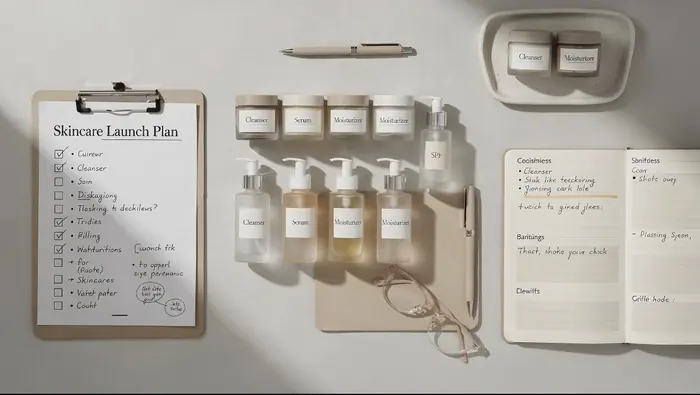
Start with one hero product when you are entering the market for the first time, have a limited budget, or have not yet validated demand. Consider a wider collection only when you already have an established customer community, a channel that requires a broader routine, and the resources to support multiple SKUs after launch.
Key Takeaways
- New brands are remembered for clarity of positioning, not catalogue size.
- Every extra SKU adds packaging, photography, marketing, regulatory, and inventory costs.
- A single hero product makes advertising, messaging, and customer feedback far more efficient.
- A full collection can work — but only after demand and operating resources are validated.
- Focus creates clarity, and clarity helps customers remember your brand.
Why This Matters When You’re Launching a New Brand
Many founders believe more products signal a more established brand. In reality, customers rarely evaluate a new skincare brand by how many SKUs it offers. They judge it by how clearly they understand what the brand stands for.
A recognizable hero product gives customers one clear reason to remember you — and gives your budget one clear place to work. Before deciding on any launch range, validate the core customer problem first. Our guide on why brands should validate demand before product development explains why this order matters.
The Hidden Cost of a Full Collection
Every additional SKU requires more than manufacturing. It typically means more packaging development, more inventory, more product photography, more marketing content, more regulatory documentation, and more warehouse space.
- More cash tied up in stock across multiple SKUs.
- Marketing budget divided across several products instead of one clear offer.
- More formulas, packaging components, and claims to manage.
- Harder to answer customer questions consistently across a wide range.
Many founders calculate manufacturing cost. Far fewer calculate the ongoing operational cost of running a wide catalogue from day one. For a practical budgeting view, see how much it costs to launch a skincare brand in 2026.
When Each Strategy Makes Sense
| Situation | One Hero Product | Full Collection |
|---|---|---|
| First-time brand launch | Recommended | Higher risk |
| Limited startup budget | Recommended | Spreads budget thin |
| Established customer community | Optional | Can work well |
| Distribution requires a routine | May not fit | Often necessary |
| Demand not yet validated | Recommended | Not recommended |
If you are deciding which product deserves to be the hero, begin with the product that best expresses your brand promise and is easiest to explain in one sentence. The choice between a face cream and serum is often a useful starting point; see our guide to choosing your first face cream or serum.
Planning Beyond Launch Day
Before committing to a product range, ask yourself:
- Can I consistently market several different products every week?
- Can I manage inventory across multiple SKUs without cash-flow strain?
- Can I produce content and answer customer questions for every formula?
- Can I reorder slow-moving products without hurting cash flow?
The key question is: am I planning only for launch day, or for the six months after it? Brands that expand too early often dilute their resources before the first product has enough evidence of repeat demand. Learn the warning signs in our article on why skincare brands expand too early.

OEM Development Considerations
A good OEM partner helps plan both the launch product and the roadmap for future expansion. The right manufacturing partner should help you evaluate production requirements, budget, documentation, and development timelines for both a single hero product and a full collection — not simply push the largest initial production plan.
Starting with one product does not limit your future range. Many brands validate their hero product first, then expand once they understand which formulas, textures, and price points their customers respond to. For the full sequence of early brand decisions, read our guide to starting a skincare brand. When you do select an OEM partner, use the criteria in what successful skincare brands look for beyond price to assess their long-term fit.
Brands selling in Europe should also plan regulatory documentation before adding new SKUs. Our EU cosmetics compliance guide outlines the core compliance considerations for each finished cosmetic product.
Frequently Asked Questions
Won’t one product make my brand look incomplete?
Not to customers. They do not expect a new brand to solve every skincare concern immediately — they want one product that clearly works and communicates a credible promise.
When does launching a full collection make more sense?
When you already have an established customer community, your marketing depends on complete routines, your budget comfortably supports multiple SKUs, or your distribution channel requires a broader range.
How do I choose which product should be my hero product?
Choose the product that best expresses your brand’s core promise and is easiest to explain in one sentence — ideally one that customers are likely to repurchase and recommend.
How soon can I expand after launching one hero product?
Timing should depend on sales performance and customer feedback rather than a fixed schedule. Many brands begin planning a second product once repeat-purchase patterns and customer requests become clear.
Should the second product be a companion item or a new category?
Most brands do best expanding into a natural companion to the hero product first. It reinforces the same positioning rather than asking customers to understand a second, unrelated promise.
Planning Your First Skincare Launch?
At SEYE Cosmetics, we help founders choose a launch strategy that matches their stage of business. Whether you are considering one hero product or a complete collection, contact our team to discuss the advantages, requirements, and timeline for your private label launch.
SEYE Brand Strategy Team
Private Label & OEM Specialists
Publication details are shown from the article record. Individual expertise, reviewer information, and review dates appear only when verified for public display.