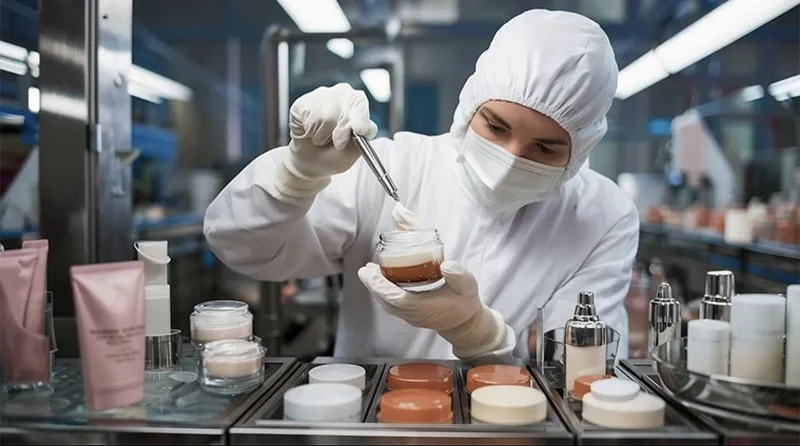
Specify residual moisture, packaging performance and reconstitution before ordering freeze-dried skincare. This buyer guide connects formulation decisions with MOQ, sample planning and US/EU documentation.
For a freeze-dried skincare OEM project, buy a validated powder, activator and packaging system—not a promise that drying preserves every active. Agree how residual moisture, seal performance, reconstitution and post-mixing use will be assessed. These decisions determine whether an attractive laboratory sample can become a reliable, commercially viable product for your target market.
1. Start with the failure you need to prevent
A premium vial can fail commercially even when the powder looks excellent: the active changes during storage, the cake absorbs moisture, or the customer cannot mix it consistently. Define the intended use before selecting ingredients. Is the product mixed once and used immediately, or reconstituted for several applications? Is the activator supplied, and what storage conditions will distribution involve?
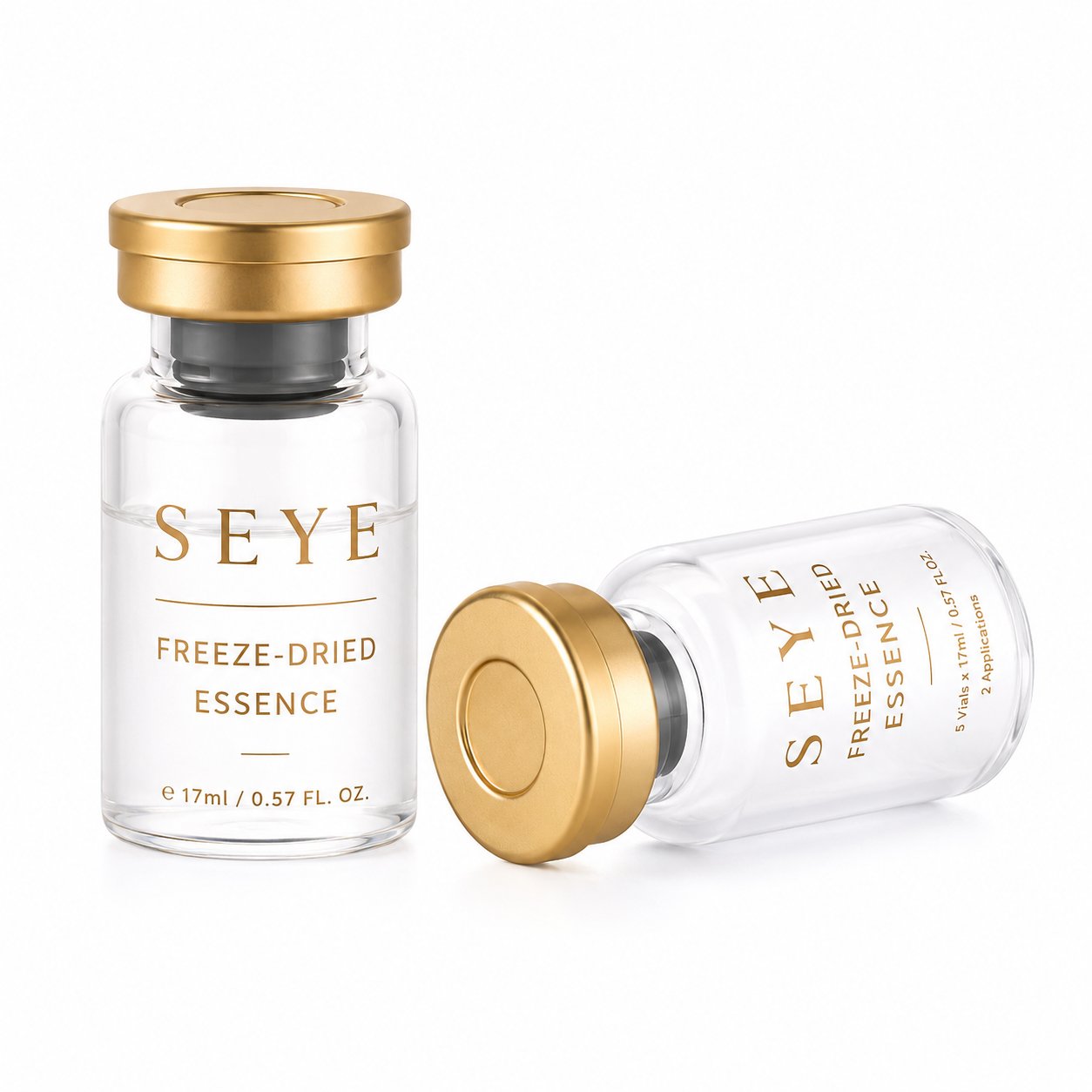
Browse SEYE's Lyophilized product category to establish a candidate format, then write acceptance criteria for that format. Do not treat a catalogue photograph as evidence of a finished formula's shelf life.
Formulation logic before freezing
Removing water can reduce some water-dependent degradation pathways, but freezing also concentrates solutes and changes the local environment. Model protein research shows that buffer and excipient composition can affect freeze-thaw behavior; it does not establish efficacy for cosmetic peptides.2
A development brief should identify the active's identity, intended concentration and analytical method. Sugars such as sucrose may be candidates for a protective matrix; bulking agents, buffers and humectants can influence structure and reconstitution. Their suitability must be assessed together rather than copied from another formula. A clear, firm cake is not proof of retained activity.
2. Make residual moisture a specification, not a slogan
Residual moisture is the water remaining after drying. Water activity describes how available that water is; the measurements answer different questions. Neither is a universal guarantee of stability. Ask the laboratory to propose a method, sampling plan and acceptance range supported by the actual formula's storage data.
For example, a validated Karl Fischer method may quantify water content, while additional physical and chemical assessments explain whether that result matters. The purchase specification should connect moisture to appearance, active assay where appropriate, reconstitution and the intended storage conditions. Do not prescribe one moisture percentage for every peptide, botanical extract or vitamin system.
Oxygen remains relevant. Published experiments on lyophilized model proteins illustrate that oxygen exposure and packaging can influence oxidation.1 These are formulation lessons, not clinical evidence for skincare. A “freeze-dried” label cannot replace testing of the commercial product or substantiate a potency-retention percentage.
3. Qualify the entire container-closure system
Packaging compatibility testing must include the powder, activator and every contact component. Review the vial, stopper, cap, dispensing attachment and any dual-chamber seal—not simply whether the glass looks premium. Moisture or oxygen can enter through an unsuitable closure, while component interactions can affect the product or its safety assessment.
Use final production-intent components for an agreed test programme. Assess sealing performance after assembly and transport simulation, product appearance, relevant chemical results and dispensing behavior. Where appropriate, review material specifications and migration risks with the safety assessor. A decorative cap is not necessarily the functional moisture barrier.
Test the activator's bottle and dispenser separately, then test the assembled system. Changing a stopper supplier, vial geometry or filling process after approval should trigger a documented review of the affected evidence. Packaging is part of the formulation decision, not an artwork task saved until the end.
4. Specify reconstitution and the after-opening window
“Dissolves easily” is not a purchasing specification. Define the activator composition and volume, mixing sequence, temperature conditions, acceptable mixing time and appearance after preparation. Measure relevant pH, consistency and dispensing performance. Include aged samples, not only freshly prepared laboratory material.
A clear liquid is not automatically chemically stable or microbiologically safe. Evaluate preservation and microbial risk for the intended handling pattern. Single-use instructions and multi-use dispensers create different exposure scenarios; adding water can change the conditions that protected the dry product.
The unopened dry-state shelf life and the permitted use period after mixing are separate decisions. Establish both from finished-system evidence. Do not borrow a competitor's “use within seven days” instruction or assume refrigeration solves an untested preservation problem. If consumers must supply water, its quality and the preparation instructions become additional development risks.
5. Compare MOQ at the sellable-system level
SEYE's freeze-dried skincare OEM platform evaluates the dry format and activator together. Your MOQ assessment should distinguish powder units, activator units, closures, dispensing accessories and completed retail kits. A kit with several vials can require more components than its sellable-unit count suggests.
Ask for separate assumptions covering batch size, equipment utilisation, component supplier minimums, decoration, assembly, testing and expected manufacturing losses. Confirm who owns unused packaging and how repeat orders use the approved specification. Compare quotations at the same unit definition and evidence scope, not only at a headline price.
Starting MOQ is subject to formula, packaging and market documentation; request a project-specific quotation. If a conventional liquid format better fits your budget or usage pattern, compare the Skincare product category before committing to a more complex kit. Freeze-drying should solve an identified technical or consumer-use problem, not merely provide a premium story.
6. Separate initial sampling from commercial qualification
SEYE's initial laboratory planning policy is: Target: 5–7 business days after the approved development brief. For a freeze-dried project, confirm whether that first sample covers an existing candidate, an activator revision or a new matrix and process. Technically complex development can require further iterations and a project-specific schedule.
That sampling target is not completion of long-term stability, packaging qualification or export documentation. Sample dispatch follows approval; shipping transit is separate. Agree sample quantity, test scope, approval owner and the next decision before starting. An attractive first prototype should progress to documented compatibility and stability work, not directly to a bulk-production promise.
7. Keep manufacturing credentials separate from market permission
SEYE's ISO 22716 / GMPC manufacturing credentials support factory due diligence. Request current quality-system evidence and confirm its scope against the proposed work. These credentials do not replace formula safety, packaging evidence or market-specific responsibilities. ISO 22716 addresses cosmetics good manufacturing practice, including production, control, storage and delivery.5
For the United States, scope the applicable FDA MoCRA facility-registration, product-listing and safety-substantiation responsibilities with the responsible parties. FDA explicitly states that registration and listing are not an approval programme and do not constitute product approval.3 Avoid “FDA-certified formula” claims.
For Europe, appoint the appropriate Responsible Person, prepare the required safety report and Product Information File, and complete CPNP notification before placing the product on the market.4 5 CPNP is notification, not a certificate. Ensure the safety assessment considers the activator, reconstitution instructions, packaging and foreseeable consumer use, rather than assessing only the dry powder.
Buyer questions
Is lower residual moisture always better?
No universal moisture target suits every formula. Agree a validated measurement method and an acceptance range supported by finished-system stability, appearance and reconstitution data.
Can a dry product's shelf life be used after mixing?
No. Unopened dry-state shelf life and the use period after reconstitution require separate evidence for the actual activator, packaging, preservation and handling conditions.
Does a five-to-seven-business-day sample establish export readiness?
No. The initial laboratory sample target follows an approved development brief. Compatibility, stability, safety documentation, packaging confirmation and market responsibilities remain separate workstreams.
References
- Moisture, oxygen and packaging in lyophilized model proteins.
- Formulation composition and freezing behavior in model protein systems.
- FDA: cosmetic facility registration and product listing.
- European Commission: Cosmetic Products Notification Portal.
- Tukes: obligations of the cosmetics Responsible Person.
SEYE R&D Team
Formulation & OEM Specialists
Publication details are shown from the article record. Individual expertise, reviewer information, and review dates appear only when verified for public display.