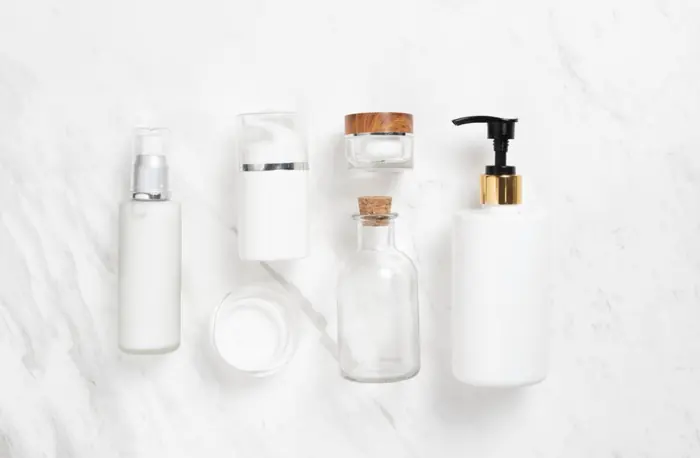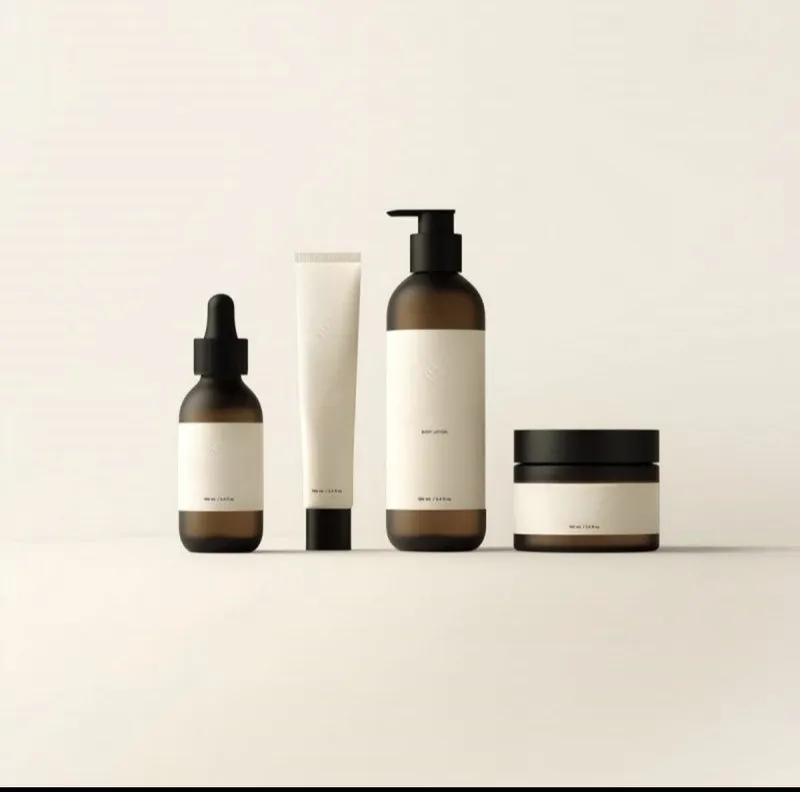
A low MOQ does not mean every part of a skincare launch should be minimized. Learn how emerging brands can prioritize formula, packaging, testing, and commercial flexibility without relying on a misleading one-size-fits-all budget split.
The Low-MOQ Budget Question Is Not “Formula or Packaging?”
For an early skincare launch, a low minimum order quantity creates useful flexibility—but it also concentrates decision-making. With fewer units over which to spread development and packaging costs, every choice matters more. The wrong response is to cut the same percentage from every line item. A stronger response is to protect the elements that make the product credible, while simplifying the elements that do not yet create a commercial advantage.

At low MOQ, budget allocation is a sequence of priorities: product promise first, technical viability second, recognizable presentation third, and costly customization only where it changes the customer decision.
This guide offers a practical planning framework rather than a fixed percentage split. Actual cost drivers differ by formula, pack format, decoration, order quantity, destination market, required testing, and project scope. For the broader relationship between first-purchase appeal and repeat-purchase experience, read Formula vs Packaging: Skincare Budget Guide.
Why Low MOQ Changes the Economics of a Skincare Launch
At a larger production scale, fixed development, tooling, artwork, testing, and setup expenses can be distributed across more units. At low MOQ, those choices are more visible in the unit economics. That does not make low MOQ a poor strategy; it makes scope discipline more important.
The goal is to launch a product that customers can understand, use, and reorder—not to reproduce every feature of a large brand’s launch on day one. A focused low-MOQ private-label skincare project can reduce inventory exposure and create a learning cycle, provided the launch brief identifies what must be proven first.
| Budget question | Low-MOQ planning response |
|---|---|
| What makes this product different? | Protect the formula or sensorial feature that supports the core promise. |
| What must shoppers understand immediately? | Invest in clear pack hierarchy, functional format, and legible product communication. |
| What can wait until demand is proven? | Custom molds, excessive decoration, a broad SKU range, or complexity that does not change use or positioning. |
| What cannot be skipped? | Finished-product safety, stability, package compatibility, and market-appropriate claims and documentation. |
Start with a Product Promise, Not a Cost Percentage
A useful brief begins with one sentence: “For this customer, this product helps create this cosmetic experience in this format at this price position.” That sentence anchors both the formula and the packaging.
For example, a simple daily barrier serum may need a light, fast-absorbing texture, an easy-to-use pump or dropper format, and a clear message about routine use. A premium overnight oil may justify more sensorial development and a more tactile component. Neither approach is universally “better”; each must be consistent with the target consumer and channel.
Before seeking a quotation, define these five inputs:
- Hero benefit: What cosmetic outcome or routine role is central to the product?
- Consumer experience: What must texture, fragrance, dispensing, and finish feel like?
- Commercial boundary: What target price, MOQ, lead time, and initial SKU count are realistic?
- Market boundary: Where will the product be sold, and what claims or documents must the launch support?
- Scalability boundary: Which elements should be easy to upgrade later, after demand is proven?
Brands that need help converting those inputs into a technical brief can use the Custom Formula Development process as a starting point. For an overview of when bespoke development is justified, see Should You Create Your Own Skincare Formula?.
A Four-Bucket Budget Framework for Low MOQ
Instead of choosing between two line items, allocate the project around four interdependent buckets. The order below is a decision order, not a universal cost percentage.
| Priority bucket | What it includes | What to protect at low MOQ | What can often be simplified initially |
|---|---|---|---|
| 1. Product performance | Formula base, texture, sensory quality, active direction, preservative and stability approach | The user experience needed to support the promise | Novelty ingredients or complex claims that do not change the core experience |
| 2. Pack functionality | Primary component, dispensing, product protection, compatibility | A component appropriate for the formula and normal use | Bespoke molds, unnecessary multi-part components, or hard-to-source finishes |
| 3. Market communication | Label copy, carton decision, design hierarchy, product photography direction | Clear, credible explanation of what the product is and how to use it | Overly elaborate embellishment or too many message layers |
| 4. Validation and launch readiness | Stability, compatibility, safety work, documentation, claims review, logistics preparation | Tests and records appropriate to the product and market | Rushing launch by treating validation as an optional design expense |
The framework prevents a common mistake: treating packaging as merely visual and testing as invisible overhead. Research on cosmetic packaging notes that a package is part of product protection and that compatibility should be assessed with the product in its final container.1 Stability planning also considers physical formula stability, preservative performance, and packaging interaction—not only how the bottle looks on a shelf.2
Decide What to Standardize—and What to Customize
The lowest-risk place to save is often unnecessary novelty. Standard or semi-standard components can still feel distinctive when the formula, decoration, label hierarchy, color system, and story work together. Customization is most valuable when it changes the consumer’s understanding, the product’s use, or the formula’s viability.
Usually worth protecting
- The product format: A serum, cream, toner, or oil should dispense in a way that supports consistent use.
- Formula–pack fit: The chosen component must be evaluated with the finished formula, not selected only from a visual sample.
- A credible sensory target: Texture and finish are often experienced before a consumer can assess longer-term cosmetic benefits.
- Clear artwork and claims discipline: The promise should be legible and supported by the finished-product evidence.
Often worth deferring
- A proprietary mold before product-market fit is established.
- Several complex decorative processes on the same component.
- A large collection before one hero SKU has repeat-purchase evidence.
- Multiple active stories that make the formula, positioning, and claim support more difficult to explain.
Low MOQ is a learning stage, not a lower-quality stage. Simplify the project architecture—not the product integrity.
The Formula–Packaging Compatibility Checkpoint
An apparently economical component can become expensive if it creates risk later. Packaging materials, additives, barrier behavior, dispensing mechanics, transport conditions, and formula characteristics can interact in ways that affect product integrity. The final product therefore needs to be considered in its intended container, under an appropriate stability and compatibility plan.1 2
This is why the conversation should not end with “Which bottle is cheapest?” Ask instead:
| Compatibility checkpoint | Decision to document |
|---|---|
| Formula profile | Water- or oil-based system, pH range, volatile materials, sensitive active direction, viscosity, and fragrance profile |
| Container and closure | Material, pump/dropper/airless system, seal, liner, and expected dispensing behavior |
| Use environment | Bathroom humidity, travel, shipping route, normal consumer handling, and storage expectations |
| Quality observations | Appearance, odor, texture, pH, viscosity, package function, leakage, and changes during agreed testing |
| Change control | What must be re-evaluated if the formula, component, decoration, or manufacturing condition changes? |
For active-serum projects, this checkpoint should be established before a visual component becomes “final.” Explore the private-label facial serum platform for an example of how formula direction and packaging format can be scoped as one development discussion.
Use a “Hero SKU First” Launch Design
Low MOQ is most effective when it reduces commitment while preserving focus. Rather than dividing a limited budget across three or five loosely related products, many early brands are better served by one hero SKU with a complete development story: one audience, one routine role, one clear pack, and one proof plan.
That approach lets the brand learn from sampling, customer questions, first orders, and repeat-purchase signals before it adds another formula or component. It also makes product photography, sales education, paid acquisition, and reorder planning easier to manage.
Our article on why brands grow faster with fewer products explains the portfolio logic behind this focused launch approach.
Compare OEM Quotations by Scope, Not by Headline Price
Two low-MOQ quotations may look different because their scope is different. One may cover a stock formula and standard component; another may include a more specialized ingredient direction, a different component, more documentation, additional testing, a different order quantity, or a different level of customization. A lower number is not automatically a better commercial choice if it excludes work the launch later requires.
Use a scope-comparison table before deciding:
| Scope item | Questions to compare |
|---|---|
| Formula | Stock, adapted, or custom? What sensory and active direction is included? |
| Packaging | Exact component, material, dispensing format, decoration, carton, and assembly scope? |
| Quality program | Which stability, compatibility, microbiological, and safety work is included or planned? |
| Documentation | What product information, ingredient, quality, or market-support records are available? |
| Commercial terms | MOQ, lead time, sample stages, payment terms, and what changes may alter the price? |
For a more detailed explanation, see Why Cosmetic OEM Quotations Are Different. If the product is intended for export, bring market and claims requirements into the scope from the start through the Global Compliance for Cosmetics planning path.
A Practical Sequencing Plan
The following sequence helps avoid spending on decoration or SKU expansion before technical and commercial questions are resolved.
- Define the hero SKU and customer promise. Limit the brief to one product, one primary user situation, and one price position.
- Choose a formula path. Start from a proven platform or develop only the changes that are central to differentiation.
- Select functional packaging options. Review components for use, availability, compatibility needs, and positioning before final decoration.
- Align artwork and claims. Ensure the visual promise matches the tested product and target market.
- Confirm validation and production scope. Treat stability, compatibility, safety, documentation, and logistics as launch requirements.
- Launch, measure, and upgrade selectively. Use customer feedback and reorder data to decide whether advanced packaging or formula extensions are justified.
Frequently Asked Questions
Is there a universal formula-to-packaging budget ratio for low MOQ skincare?
No. The right allocation depends on product format, formula direction, component availability, decoration, market, testing needs, order quantity, and brand position. A decision framework is more useful than a fixed percentage because the risk and commercial value of each element change by project.
Should a low-MOQ brand use a stock formula or develop a custom formula?
Use a stock or adapted platform when it supports the core product promise and helps reduce development risk. Consider custom development when a differentiated texture, active direction, sensory identity, or product performance is central to the brand’s position and can be validated appropriately.
Can standard packaging still look premium?
Yes. A standard or semi-standard component can feel premium when the format is functional, the product story is clear, the decoration is coherent, and the experience matches the price position. Premium does not require a proprietary mold at the first launch.
Why must formula and packaging be tested together?
The finished product is the formula in its final container. Package material, closure, dispensing, and storage conditions can affect product quality and function, so compatibility and stability considerations should be part of the product-development plan.1 2
What should I ask when comparing two low-MOQ OEM quotations?
Compare exactly what is included: formula scope, packaging specification, decoration, sample stages, testing and documentation, MOQ, lead time, payment terms, and the changes that could alter the final price. Compare scope before comparing price.
When should a brand invest more in custom packaging?
Invest when packaging changes the product’s functional use, protects a formula requirement, makes the product meaningfully easier to recognize, or becomes commercially justified by proven demand. Otherwise, upgrade after the hero SKU has stronger market evidence.
Plan a Focused Low-MOQ Launch
SEYE can help map a low-MOQ skincare project from product brief to formula direction, packaging selection, validation planning, and production scope. Contact our OEM team with your hero product idea, target market, order quantity, preferred format, price position, and launch timing to discuss a practical development path.
References
SEYE Cosmetics
OEM Project Advisory Team, SEYE Cosmetics
Publication details are shown from the article record. Individual expertise, reviewer information, and review dates appear only when verified for public display.