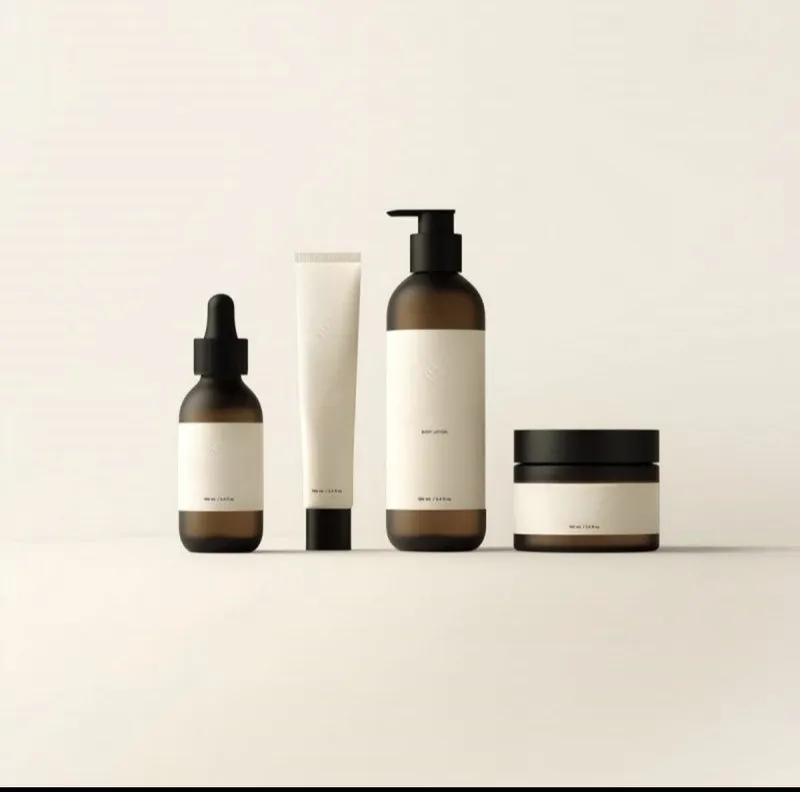
A low-MOQ skincare launch moves only as fast as its slowest approval or component. Use this practical timeline and responsibility matrix to coordinate brand decisions, OEM work, packaging suppliers, quality gates, and first-order readiness without relying on an arbitrary launch date.
A Low-MOQ Timeline Is a System of Decisions—Not a Countdown
From an initial sample to a first production order, a low-MOQ skincare project can feel deceptively simple: approve the formula, choose a bottle, place an order, and wait for shipment. In practice, a launch moves through connected workstreams: product positioning, formulation, samples, packaging, artwork, market requirements, quality planning, supplier procurement, production scheduling, and final acceptance.

Research on skin-care product development frames the process across conceptualization, detailed design and prototyping, and manufacturing and launch, with management, marketing, R&D, manufacturing, and finance activities overlapping rather than operating in isolation.1 For a small first order, this means the project is controlled by dependencies, approvals, and information handoffs—not by a single promised number of weeks.
The right low-MOQ timeline has two outputs: a dated critical path and a named decision owner for every gate.
This guide gives brands a practical responsibility matrix to use with an OEM. It is not a universal production-time promise. Actual timing depends on formula complexity, test scope, packaging availability, artwork revisions, market requirements, payment milestones, production capacity, and freight. If you are deciding whether a low-MOQ launch is commercially appropriate, begin with the Low-MOQ Private-Label Skincare hub.
Why a Sample Approval Does Not Mean the Order Is Ready to Run
A formula sample can be an important milestone, but it is only one input to the production plan. Cosmetic projects can have separate minimums and readiness conditions for formula work, finished goods, bottles and closures, labels and decoration, raw materials, and freight or storage commitments.2 The first finished unit cannot move through the line until the required inputs are complete and released.
| Milestone | What it proves | What it does not prove by itself |
|---|---|---|
| Product brief approved | The team agrees on audience, product role, target price, market, and project scope | The formula, pack, claims, or production slot are ready |
| Lab sample reviewed | A proposed formula direction can be evaluated | Final formula specification, stability work, component compatibility, or batch readiness |
| Packaging sample selected | The physical format and appearance can be reviewed | Component availability, decoration approval, final pack compatibility, or assembly readiness |
| Artwork approved | A specific artwork version may proceed | All supplier materials have arrived or the product can enter the line |
| Production slot discussed | Capacity may be tentatively planned | The factory can start without the agreed readiness inputs |
This distinction is valuable because it stops teams from treating “sample approved” as a reason to begin every downstream commitment at once. The more reliable approach is to release each workstream at the correct decision gate, then record the owner, deadline, evidence, and consequence of a late change.
The Sample-to-First-Order Timeline: Stages and Gates
The timeline below is a planning map, not a fixed duration commitment. Some activities can progress in parallel, while the final production window depends on the longest chain of unresolved, sequential tasks. In particular, packaging, final approvals, test requirements, and material arrival can become the critical path.
| Stage | Main objective | Typical outputs | Gate to move forward |
|---|---|---|---|
| 1. Project brief | Convert the idea into an executable project scope | Product brief, target consumer, use case, target market, quantity band, price position | Brand and OEM agree on a written brief and assumptions |
| 2. Formula direction and sample plan | Select a proven platform or define a custom formulation path | Formula direction, sensory target, sample rounds, preliminary ingredient considerations | Brand accepts the sample plan and decision criteria |
| 3. Packaging architecture | Select a functional container/closure system and decoration route | Component specification, sourcing options, MOQ/lead-time assumptions, label or print method | Compatible pack option is selected for sampling and supply confirmation |
| 4. Sample review and revision | Test the product experience against the approved brief | Review notes, revised sample request or formula approval | Brand provides consolidated written approval or change request |
| 5. Final specification and quality plan | Turn the approved direction into controlled production inputs | Formula and packaging specs, test plan, acceptance criteria, market-document requirements | Parties confirm which tests, records, and approvals are required before release |
| 6. Artwork, materials, and production readiness | Secure every critical input required to schedule production | Released artwork, purchase confirmations, material-arrival plan, payment milestone | “Ready-to-schedule” checklist is complete |
| 7. Production, QC, and acceptance | Make, inspect, assemble, and reconcile the first order | Batch records, in-process controls, finished-goods inspection, quantity reconciliation | Finished goods meet the agreed acceptance and dispatch conditions |
| 8. Dispatch and reorder learning | Deliver the order and create a better second run | Shipping documents, issue log, sales/reorder trigger, remaining-material plan | Post-launch review captures changes for the next order |
For many projects, it is sensible to run formula work and packaging exploration in parallel. It is not sensible to treat either as finally locked until the formula–pack combination is technically and commercially confirmed. Cosmetic stability planning needs to consider physical formula stability, preservative performance, interaction with the final packaging, and package function under relevant conditions.3
The Responsibility Matrix: Who Owns What?
The best timelines are not merely calendars. They state who is Responsible, who gives final Approval, who must be Consulted, and who must be Informed. The matrix below uses a practical RACI-style approach tailored to a low-MOQ cosmetic project.
| Workstream / decision | Brand | OEM | Packaging / print supplier | Shared evidence or output |
|---|---|---|---|---|
| Product positioning, target consumer, price, sales channel | Approves / owns | Consults on feasibility | Informed | Signed product brief |
| Formula path and technical feasibility | Approves product direction | Responsible | Informed | Formula proposal and sample plan |
| Sample feedback and change request | Responsible / approves | Interprets and executes feasible changes | Informed if pack-related | Consolidated review sheet |
| Packaging function and availability | Approves commercial fit | Consults on compatibility and filling | Responsible for component data and supply commitment | Component spec, MOQ, lead-time confirmation |
| Artwork, mandatory label text, and design approval | Responsible / approves | Consults on production and technical limits | Consults on print requirements | Released artwork version and proof |
| Stability, compatibility, and quality planning | Confirms business and market requirements | Responsible for agreed technical program | Supplies relevant component documentation | Test plan, records, and change-control triggers |
| Production scheduling | Confirms all approval and payment gates | Responsible for feasible schedule and updates | Confirms component arrival | Ready-to-schedule checklist and production window |
| Finished-goods acceptance and reconciliation | Approves against agreed specification | Responsible for QC records and batch reconciliation | Supports component-defect investigation if needed | Inspection outcome, quantity and loss reconciliation |
| Market feedback and reorder decision | Responsible / owns | Consults on capacity, formula, and component implications | Consults on replenishment options | Reorder forecast and change list |
The exact contract roles will vary, but the operating principle is stable: the brand cannot outsource strategic approval, and the OEM cannot responsibly schedule what has not been technically or commercially released. Any matrix that leaves ownership blank creates delay risk later.
Five Decision Gates That Prevent Late-Stage Confusion
Gate 1: The Brief Is Specific Enough to Quote and Sample
The brand should provide a product category, target user, use case, preferred texture or sensory benchmark, fill size, market, quantity band, target price position, packaging direction, and launch constraint. The OEM should identify assumptions, technical questions, feasibility risks, and items that could change scope.
If the project changes from “hydrating serum” to “premium active serum in airless packaging for three markets,” the formula, packaging, testing, documentation, and schedule may change with it. A written brief prevents teams from treating a new project as a minor revision.
Gate 2: The Sample Decision Is Consolidated
Collect input from the appropriate brand decision-makers before returning feedback. Multiple uncoordinated comments often create avoidable iterations. The feedback should state what is approved, what must change, what can remain within a range, and whether the requested change affects formula, fragrance, texture, pack, label copy, or claims.
For a deeper framework on choosing where to spend early-stage development money, read How to Allocate Formula and Packaging Budget at Low MOQ.
Gate 3: Packaging Is Functional, Available, and Approved for the Formula
Packaging selection has three separate questions: Does it fit the brand? Can it be supplied at the intended quantity and timing? Is it appropriate for the formula and dispensing experience? A visually appealing component that cannot be sourced or does not suit the final formula is not a finished decision.
Use common packaging with differentiated formulas where appropriate to reduce component complexity, but do not force products into a shared pack when protection, dispensing, or compatibility requires a different solution.
Gate 4: The Project Is “Ready to Schedule”
Define the exact inputs required before production enters the queue. A practical checklist normally includes approved formula/specification, confirmed components, released artwork, agreed test/quality scope, required documentation, purchase order, payment milestone, and a change-freeze date.
High-mix, low-volume production has frequent changeovers and dynamic scheduling constraints.4 The best protection is not a vague “priority” promise; it is a shared definition of what counts as ready, plus an agreed production window and a prompt notice process if a critical input moves.
Gate 5: Finished Goods Are Accepted Against an Agreed Standard
Before the batch starts, define the finished-goods specification, inspection process, acceptable packaging variation, recordkeeping, usable-output commitment, and treatment of defects or short delivery. This turns the final phase from a subjective inspection into a known commercial process.
The article From 500 to 3,000 Units: Avoid Hidden Costs and Lead-Time Traps provides a fuller checklist for setup fees, yield allowances, loss reconciliation, scheduling, and change control.
The Critical Path: What Usually Controls the First Order?
The critical path is the chain of dependent tasks that determines the earliest realistic completion date. In a low-MOQ cosmetic project, the critical path is often not “how fast the factory can fill.” It may be an unresolved formula revision, a pump/sprayer lead time, decoration proof approval, a required compatibility check, an incomplete market-document request, or a missed payment milestone.
| Potential critical-path item | Early warning signal | Brand action | OEM / supplier action |
|---|---|---|---|
| Formula is still changing | Feedback does not distinguish must-have changes from preferences | Consolidate decision-makers and prioritize changes | Explain technical/schedule impact and propose viable paths |
| Packaging supplier commitment | No exact component SKU, supplier confirmation, or arrival date | Approve a primary and contingency option | Validate component availability and technical fit |
| Artwork / label copy | Multiple untracked artwork files or unapproved market text | Assign one approval owner and use version control | Supply dielines, print limits, and production deadlines |
| Test and compliance scope | Market, claims, or document requirements are undecided | Confirm intended market and claims boundary | Map required technical work and change triggers |
| Production window | A slot is mentioned before all inputs are released | Agree the ready-to-schedule definition | Provide a feasible window and update route |
| Cash and order release | Deposit or purchase order is not aligned with the work plan | Tie internal approvals to payment dates | State payment conditions and effects on procurement / schedule |
This does not mean every project needs a complex project-management system. A one-page critical-path sheet with dates, owners, status, dependency, and “decision needed by” can materially reduce missed handoffs.
How Brands Can Make the First Order Easier to Execute
A low-MOQ project becomes easier when it reduces unnecessary variation while preserving what customers notice. This is the same principle behind a focused hero-SKU launch: learn quickly without creating a supply chain that is harder to manage than the market evidence justifies.
| Simplify early | Protect early | Why it matters |
|---|---|---|
| Limit the first launch to a focused hero SKU or tightly linked variants | The formula’s core sensory and use promise | Fewer competing approvals and a clearer reorder decision |
| Use stock or semi-standard components where functional | Formula–pack fit and final component availability | Fewer supplier dependencies and less component risk |
| Prefer controlled label-based variation when appropriate | Accurate regulatory and market-facing copy | Faster artwork adaptation without losing product identity |
| Establish a single approval owner | Cross-functional feedback before the deadline | Less rework and fewer contradictory comments |
| Set a change-freeze date | A documented exception process for necessary changes | Prevents late revisions from quietly moving the production window |
The objective is not to remove rigor. It is to spend rigor on the places that protect consumer experience, product integrity, and commercial viability. For a related decision framework, see Should You Spend More on Formula or Packaging?.
A One-Page Meeting Agenda for Brand and OEM
Use this agenda at the project kickoff and every major gate. It creates a shared operating language before timing pressure develops.
- What is the product and who is the final approval owner? Confirm the brief, market, claims boundary, price position, quantity band, and target launch window.
- What is complete and what is only assumed? Separate approved items from open formula, pack, artwork, testing, or supply questions.
- Which task controls the critical path? Identify the next non-negotiable decision, its owner, and its deadline.
- Which workstreams can progress in parallel? Coordinate formula, component sourcing, artwork preparation, and market documentation without finalizing incompatible choices prematurely.
- What changes need formal approval? Define who may change the formula, packaging, artwork, quantity, market, test plan, or schedule—and how impact is recorded.
- What qualifies the project for production scheduling? Confirm every readiness condition, the production window, and the escalation path if a dependency slips.
Brands entering new markets should bring the intended geography and claims to the kickoff rather than treating compliance as a dispatch-stage task. The Global Compliance for Cosmetics hub outlines how market requirements connect to a broader product-development path.
Frequently Asked Questions
How long does a low-MOQ skincare project take from sample to first order?
There is no reliable universal duration. The path depends on formula complexity, number of sample rounds, packaging availability, decoration and artwork approvals, agreed testing, market requirements, production capacity, payment timing, and freight. Use a stage-and-gate plan with named dependencies rather than an arbitrary countdown.
Can packaging and formula development run at the same time?
Yes, early packaging exploration and formula work can run in parallel. However, the final packaging decision should be confirmed against formula requirements, supply availability, dispensing performance, and the agreed compatibility/stability approach.
Who should approve the formula sample?
The brand should identify one final decision owner and consolidate cross-functional feedback before submission. The OEM is responsible for explaining technical feasibility, executing agreed revisions, and documenting the approved formula direction.
What makes an order ready to schedule for production?
The exact checklist should be agreed with the OEM, but it commonly includes the approved formula/specification, confirmed packaging, released artwork, quality/testing scope, required documentation, purchase order, payment milestone, and a defined change-freeze point.
Why can a packaging issue delay production when the formula is approved?
The final product needs all required components to be available and suitable for the formula. Component MOQ, supplier lead time, decoration proofs, dispensing performance, and package compatibility can all affect the critical path.2 3
What should be included in a responsibility matrix?
Assign responsibility and approval ownership for the brief, formula direction, sample feedback, packaging supply, artwork, quality/testing, documentation, production readiness, inspection, quantity reconciliation, dispatch, and reorder planning. For each item, record the evidence, deadline, dependency, and escalation owner.
Turn Your First Order into a Repeatable Process
SEYE can help align your low-MOQ product brief, sample criteria, formula direction, packaging plan, quality scope, production-readiness checklist, and first-order timeline. Contact our OEM team with your product format, target market, intended quantity, packaging status, formula direction, and launch constraint to map an executable development path.
References
SEYE Cosmetics
OEM Project Advisory Team, SEYE Cosmetics
Publication details are shown from the article record. Individual expertise, reviewer information, and review dates appear only when verified for public display.