Plan a first skincare OEM range with a practical SKU-count framework. Compare a 1–3 SKU launch with a broader collection through demand, budget, inventory, marketing, and reorder capacity.
The Short Answer: Launch Enough to Make One Clear Offer
When launching a skincare brand, one of the earliest OEM decisions is whether to start with one product, three products, or a complete line. There is no universal answer. The practical SKU count is determined less by how many products look good together and more by how much product, inventory, marketing, and replenishment complexity the business can actually manage.
For many new brands, a focused 1–3 SKU launch is easier to control than a broad collection. A larger range—such as 4–6 SKUs—can be reasonable when audience demand, retail requirements, launch funding, and the operating plan are already clear. These are planning ranges, not manufacturer promises: the right number depends on the brand’s product concept, target market, sales channel, commercial resources, and each product’s own requirements.
The Low-MOQ Private Label Skincare hub explains how a focused first launch can lower unnecessary commitment. This article helps turn that principle into a range decision: choose enough SKUs to make the offer compelling, but not so many that cash, attention, and supply planning become fragmented.
Key Takeaways
- Six SKUs do not mean “six products”; they mean six inventory positions competing for the same first-launch budget.
- If a brand plans 500 finished units across five SKUs, that is 2,500 units before considering component MOQs, cartons, freight, documentation, or market-specific work.
- Consumers do not require a complete routine on day one. Each SKU should have a distinct commercial role.
- The right question is not “how many products can the factory produce?” but “how many products can this business market, sell, support, and reorder?”
- A larger collection should be justified by demand evidence, retailer expectations, or a clear operating plan—not only by the desire to appear bigger at launch.
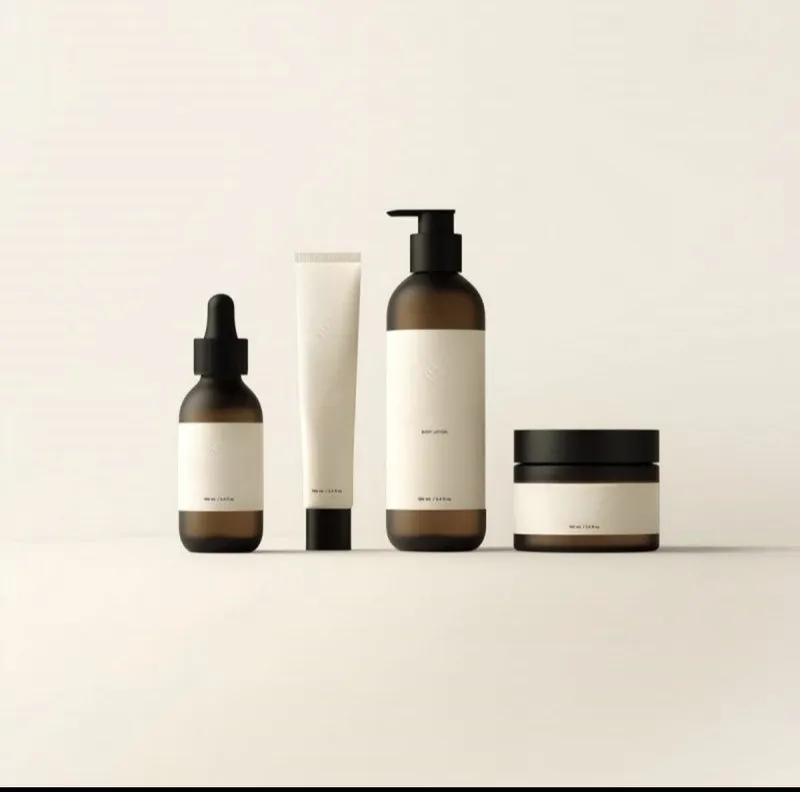 Every added SKU is its own development, inventory, content, and reorder track—not simply another item on a shelf.
Why SKU Count Multiplies Complexity, Not Just Inventory
Each additional product can create its own formula brief, sample approval, packaging configuration, artwork, purchase commitment, inventory position, product page, photography, marketing content, and market review. The result is not merely a larger catalogue; it is a larger set of projects competing for the same launch calendar and working capital.
That does not make a multi-SKU launch wrong. It means the range needs a commercial logic. A cleanser, serum, and moisturizer may form a coherent routine. Three unrelated products with three unrelated customer stories may divide the brand’s attention before any one of them earns traction.
For the broader strategic question of one hero product versus a full collection, see Should You Launch One Hero Product or a Full Skincare Collection First?. This guide focuses more specifically on what SKU count means for a first OEM order: the order quantity, budget, inventory exposure, approval workload, and ability to repeat the initial range.
Three SKU-Count Ranges and When Each Can Fit
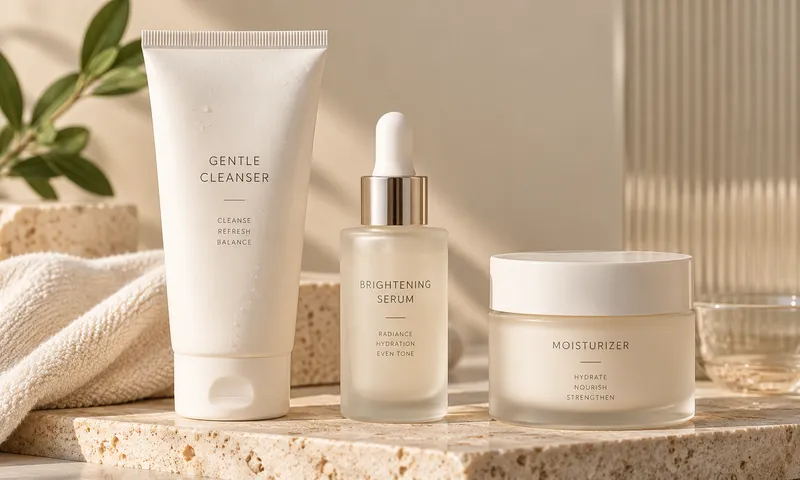 A compact routine can create bundling and cross-selling opportunities without the operational burden of a large collection.
1 SKU: Testing One Strong Idea
A one-SKU launch gives the brand one customer problem, one product story, and one main inventory position to validate. It can suit a focused serum, moisturizer, targeted treatment, or other product with a clear reason to exist. With fewer approvals and less spread across content or advertising, the team can learn faster from consumer questions, repeat purchasing, and stock movement.
The trade-off is concentration: the product must carry the whole brand promise. When choosing a hero direction, why some skincare brands grow faster with fewer products can help test whether the first SKU is clear and memorable enough to lead the range.
2–3 SKUs: A Balanced First Launch
Two or three SKUs can create a simple routine, bundle, or “hero plus support” structure. For example, a brand may connect a cleanser, serum, and moisturizer—or pair a hero serum with a supporting cream and eye product. This size can still look like a considered collection while leaving the brand a manageable number of products to explain, stock, and promote.
Before committing, make sure each product has a job: an entry product, a hero benefit, a routine complement, or a distinct channel need. If two SKUs tell the same story, it may be better to strengthen one product rather than divide the budget between both.
4–6 SKUs: When Demand and Distribution Are Clearer
A broader first range can make sense for brands with an existing audience, confirmed retail placement, a distributor that requires assortment depth, strong launch funding, or validated demand across several use cases. But each additional SKU can add formula, packaging, artwork, inventory, marketing, and compliance work.
At this stage, the important control is not just the finished-goods MOQ. Review the packaging and material commitment for each SKU, the approved artwork versions, the marketing assets needed, the cash tied up in slow stock, and who will own the reorder forecast. The first skincare production-run mistake-prevention guide offers a practical pre-production control list for this broader approval set.
Same Total Budget, Two Different SKU Strategies
A range should be compared by what it lets the business learn and support—not only by the number of products on the launch page.
| Approach | Illustrative structure | Main trade-off |
|---|---|---|
| Option A: Variety | 6 SKUs × 500 finished units | More choice, but inventory, content, approvals, and marketing are spread across six products. |
| Option B: Focus | 2 SKUs × 1,500 finished units | Less variety, but more concentrated product education, inventory management, launch content, and customer feedback. |
Neither route is automatically correct. A retailer may need a collection while a direct-to-consumer brand may benefit more from focus. For an unvalidated new brand, focus is often easier to manage because there are fewer possible reasons for stock, messaging, or supply to become fragmented.
The low-MOQ formula and packaging budget guide can help quantify the connected decisions behind each SKU. The cost is not just the formula or bottle; it can also include development changes, compatibility planning, artwork, component MOQs, documentation, and launch support.
The SEYE First-Order SKU Framework
 Inventory exposure grows when several SKUs each need their own minimum stock, packaging, and marketing support.
Use these five questions before confirming a first product range:
- Budget: Can the brand fund every SKU and still retain working capital for launch content, samples, fulfilment, and marketing?
- Demand: Which products have the clearest audience signal, pre-launch interest, retail requirement, or customer problem to solve?
- Marketing capacity: Can the team give each SKU a clear message, useful product page, visual assets, and adequate launch attention?
- Inventory risk: If one SKU sells slowly, how much cash becomes tied up in finished goods and packaging components?
- Reorder capacity: Can the formula version, component configuration, and supply assumptions be repeated when the hero SKU gains momentum?
The key question is not “can the factory accept 500 pieces?” It is “can the business support 500 pieces across every SKU?” A product without enough marketing attention or a defined commercial role can become slow inventory regardless of how good the formula is.
For a range expected to serve more than one market, bring the market pathway into the decision early. The Global Compliance for Cosmetics hub explains why formula, packaging copy, documentation, and claims responsibilities should be visible before multiple SKU artworks are finalized.
Do You Need a Full Routine on Day One?
Not necessarily. A brand can start with one strong reason to buy and expand later. A cleanser can support a serum; a moisturizer can deepen a routine; an eye product can create a relevant premium step. But a product added only to make the range “look complete” can create inventory and marketing work without improving the core offer.
A larger launch is easier to justify when customers already expect a routine, retailers have confirmed a broader assortment need, or the brand has evidence and resources to support inventory plus education for every SKU. For a useful lens on component and finished-goods commitment, read the private label skincare MOQ guide. Then work through the first-order reorder-readiness guide so the range is designed not only for launch day, but also for a manageable second order.
Frequently Asked Questions
Is one skincare product enough to launch a brand?
Yes. A clear hero product can be enough when it addresses a defined customer need and the brand can explain why it deserves attention. The first SKU should have a focused product role, credible positioning, and enough launch support to generate useful feedback.
Is three products automatically better than one?
No. Three products can create a routine and support bundling, but they also require more inventory, approvals, content, marketing, and replenishment planning. Choose three only when each SKU has a distinct commercial purpose.
Should every new skincare brand launch a cleanser, serum, and moisturizer?
No. That routine is one possible structure, not a requirement. Build a multi-product routine when the products fit the brand promise and the business can support each product’s development, inventory, messaging, and future reorder.
Does low MOQ mean I should launch more SKUs?
No. Low MOQ may reduce the finished-goods quantity for an individual SKU, but multiple SKUs can still increase total inventory, component commitments, project work, and launch costs. Compare the complete range scope, not just the MOQ per product.
How do I know if I am launching too many SKUs?
You may have too many if you cannot clearly state the job of each product, fund launch activity after paying for stock, create credible product education for every SKU, or explain how slow inventory and repeat orders will be managed.
When is it sensible to add another SKU after launch?
Add a SKU when evidence supports it: the hero product has a clear audience, customers or retailers identify a relevant adjacent need, and the brand can fund the new product without weakening the current product’s stock, marketing, or customer experience. Capture the learning from the first run before issuing the next brief.
Final Takeaway
The best first OEM range is not the largest one a factory can make. It is the number of products the brand can successfully explain, approve, finance, market, sell, and replenish. For many early-stage skincare brands, a focused 1–3 SKU launch creates a clearer learning cycle than a broad collection. Start with enough products to make the offer compelling—then expand because the market and the business are ready, not because the catalogue looks incomplete.
Planning Your First Skincare OEM Order?
Send SEYE your product ideas, target market, MOQ target, launch budget range, and intended sales channel. The team can help structure a first SKU range around product opportunity, production reality, and inventory control. Plan your first SKU range with the OEM team.
SEYE Cosmetics
OEM Product Planning & Brand Strategy Team, SEYE Cosmetics
Publication details are shown from the article record. Individual expertise, reviewer information, and review dates appear only when verified for public display.