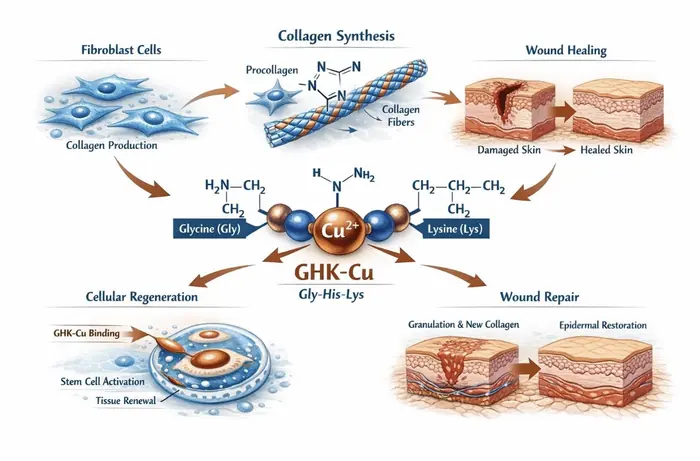
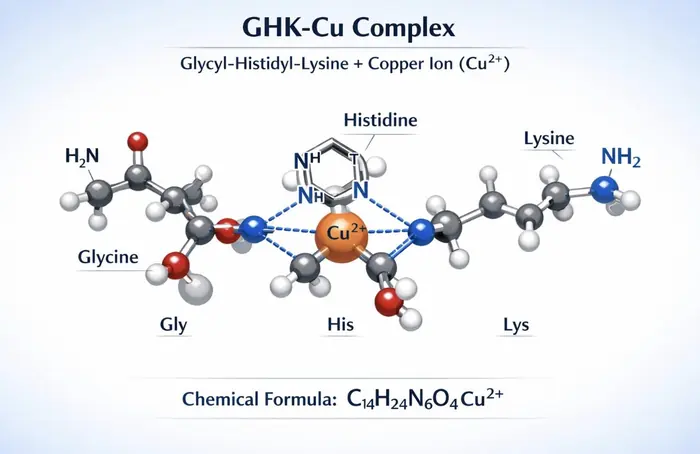
Copper Tripeptide-1 is one of the most heavily marketed peptide ingredients in skincare — and one of the most frequently misrepresented. This guide provides a practical four-question framework for evaluating claims, from study type to cosmetic regulatory compliance.
Copper Tripeptide-1 (GHK-Cu) is one of the most heavily marketed peptide ingredients in modern skincare. Descriptions range from evidence-backed to marketing language that has drifted far from the original lab observation. For brand owners and product developers, knowing how to evaluate these claims is essential for scientific credibility, regulatory compliance, and long-term consumer trust.

Quick Answer
Apply a four-question framework: What type of study supports the claim? Has the effect been shown in humans? Does the claim match cosmetic regulations? Has the finished product been tested? Most overreaching copper peptide claims fail at least one of these four tests.
Key Takeaways
- Most copper peptide claims are based on in vitro or animal studies, not human clinical trials.
- Cosmetic regulations prohibit drug-like claims such as "repairs DNA" or "activates stem cells."
- Color intensity and concentration claims are commonly misunderstood by consumers.
- Finished-product testing matters as much as raw material quality for defensible claims.
- A four-question framework helps brands distinguish evidence-backed claims from marketing drift.
Why This Matters for Skincare Brands
Understanding the difference between evidence-backed and overreaching claims matters for three reasons: scientific credibility with informed consumers, compliance with cosmetic regulations in key markets, and long-term brand trust. For a detailed look at regulatory requirements, see our EU cosmetics compliance guide for private label brands.
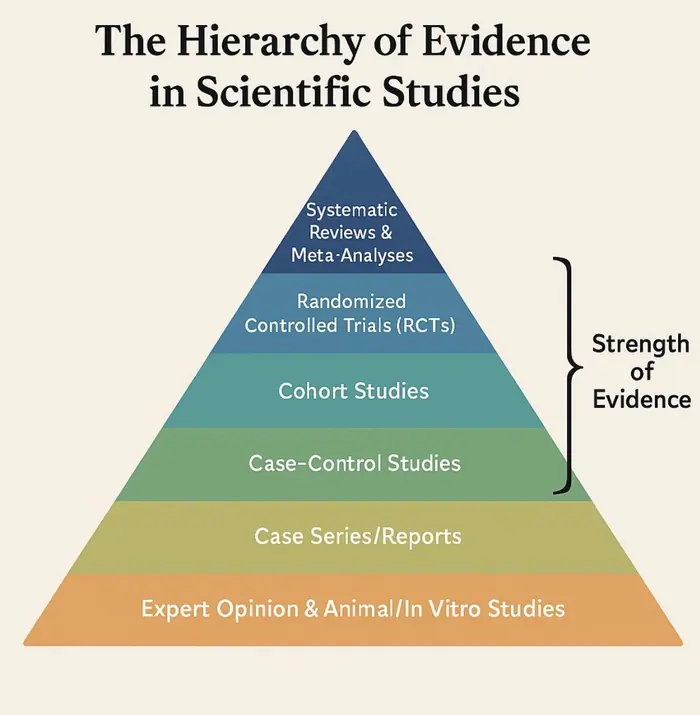
The Evidence Hierarchy
Not all evidence is equal. Before evaluating any copper peptide claim, it helps to understand where the supporting study sits in the evidence hierarchy:
| Evidence Type | Typical Confidence |
|---|---|
| Systematic Review / Meta-analysis | Highest |
| Randomized Human Clinical Trial | Very High |
| Controlled Human Study | High |
| Observational Human Study | Moderate |
| Animal Study | Moderate |
| In Vitro (Cell) Study | Preliminary |
| Theoretical Mechanism | Hypothesis |
The Four-Question Framework
Apply these four questions to any copper peptide claim before using it in marketing materials:
- What type of study supports the claim? Match it against the evidence hierarchy above. A claim backed only by in vitro data should be framed as preliminary, not proven.
- Has the effect been shown in humans? Cell-culture fibroblast activity is not the same as proven wrinkle reduction. Most GHK-Cu studies are in vitro or animal; human clinical evidence is currently rated moderate.
- Does the claim match cosmetic regulations? "Repairs DNA" should become "helps support skin recovery." "Activates stem cells" should become "supports skin renewal processes." Our guide to starting a skincare brand covers how to frame claims appropriately from the outset.
- Has the finished product been tested? Raw material quality does not guarantee finished-formulation performance. Stability, pH, and ingredient interactions all affect whether the active GHK-Cu complex survives to reach the skin.
This connects directly to the formulation stability considerations covered in our article on why formulation matters more than the active ingredient.
Rewriting Overreaching Claims
Here are practical rewrites for the most common overreaching copper peptide claims:
- Replace "activates stem cells" with "supports skin renewal processes."
- Replace "repairs DNA" with "helps support skin recovery."
- Replace "boosts collagen production by X%" with "supports extracellular matrix remodeling" — unless the X% figure comes from a human clinical trial on the finished product.
- Confirm compatibility claims (like Vitamin C pairing) reflect the complete formulation, not a universal rule.
For a deeper understanding of the actual mechanisms behind GHK-Cu, see our article on how Copper Tripeptide-1 works and our overview of its biological functions beyond collagen.

OEM Development Considerations
Consumers purchase finished products, not isolated ingredients. Brands should confirm whether testing has been conducted on the finished formulation, intended packaging, stability over time, and real consumer use conditions.
Rather than focusing solely on MOQ or price, evaluate whether your OEM partner can explain formulation strategy, stability considerations, and quality control procedures. Our complete guide to Copper Tripeptide-1 (GHK-Cu) covers the full OEM development pathway from ingredient selection to finished product.
For brands comparing peptide-based actives, our peptide and retinol anti-aging serum OEM guide provides a useful framework for positioning copper peptide products alongside other actives in your line.
Frequently Asked Questions
Is Copper Tripeptide-1 better than Retinol?
Not necessarily — they work through different mechanisms. Retinol primarily influences epidermal renewal, while Copper Tripeptide-1 appears to support tissue repair and matrix remodeling; they often serve different formulation objectives rather than replacing one another.
Does a darker blue color mean a stronger product?
No. Product color cannot determine concentration, purity, or biological activity on its own, and can also be influenced by formulation design.
Can Copper Peptides be used with Vitamin C?
Compatibility depends on the complete formulation — ingredient forms, pH, and antioxidant system — rather than a universal separation rule.
How should brands choose a Copper Peptide OEM manufacturer?
Evaluate whether they can explain formulation strategy, stability considerations, ingredient compatibility, packaging evaluation, and quality control — these factors influence long-term success more than price or MOQ alone.
What's a quick way to sense-check a supplier's marketing claim?
Ask them to name the study type behind the claim. A supplier who can immediately identify whether it came from an in vitro, animal, or human trial is generally more transparent than one who only points to a headline benefit.
Evaluating a Copper Peptide Product Claim?
At SEYE Cosmetics, our development approach emphasizes formulation compatibility, manufacturing consistency, and evidence-appropriate claims throughout the OEM process. Contact our team to discuss your copper peptide formulation requirements.
SEYE R&D Team
Formulation & OEM Specialists
Publication details are shown from the article record. Individual expertise, reviewer information, and review dates appear only when verified for public display.