Evaluate an OEM skincare sample against your product brief using texture, dry-down, after-feel, layering and consumer fit. Separate sensory feedback from safety, claims and production approval.
You receive three skincare samples from an OEM manufacturer. Sample A feels lighter. Sample B has the most attractive ingredient list. Sample C feels the most luxurious. Which one should you choose? This is where many brands make a product-development decision too quickly.
Short Answer: Testing an OEM skincare sample is not simply about whether you like the product. Evaluate whether the formula delivers the intended texture, absorption, after-feel, layering performance and overall consumer experience defined in your original product brief — evaluate it as a potential product direction, not as an approved or production-ready product based on how it feels for 30 seconds.
Key Takeaways
- Always evaluate samples against the original product brief , not personal preference — the founder is not necessarily the target consumer.
- Use the 7-point framework : Appearance → Application → Absorption → After-Feel → Layering → Consumer Fit → Product Positioning.
- Absorption and after-feel change over time — evaluate immediately, at 2 minutes, and at 10 minutes.
- Test in a realistic routine (e.g. serum → moisturizer → sunscreen → makeup), not just on the back of the hand.
- Sensory approval is one development milestone — not proof the product is ready for bulk production.
Before opening a single sample, the original product brief is the standard every formula gets measured against.
Start With the Brief, Not the Sample
Before opening samples, return to the original brief. An illustrative positioning brief might be: Barrier Repair Moisturizer, normal/combination/sensitive skin, U.S. market, hydration + barrier support, lightweight gel-cream, comfortable and non-greasy, suitable for layering under sunscreen and makeup. That brief becomes the evaluation standard. If you are still shortlisting formulas, start with our OEM formula-library selection guide.
Without it, brands tend to choose the formula they personally prefer. With it, the useful question becomes: which sample delivers the product experience we originally intended to create?
Before any skin application, confirm with the manufacturer that the sample is suitable for the intended evaluation, and follow its instructions and the agreed protocol. Do not treat an unreviewed sample as safe for hand or facial use. Sensory observations do not establish safety, tolerability or efficacy.
The 7-Point OEM Skincare Sample Evaluation Framework
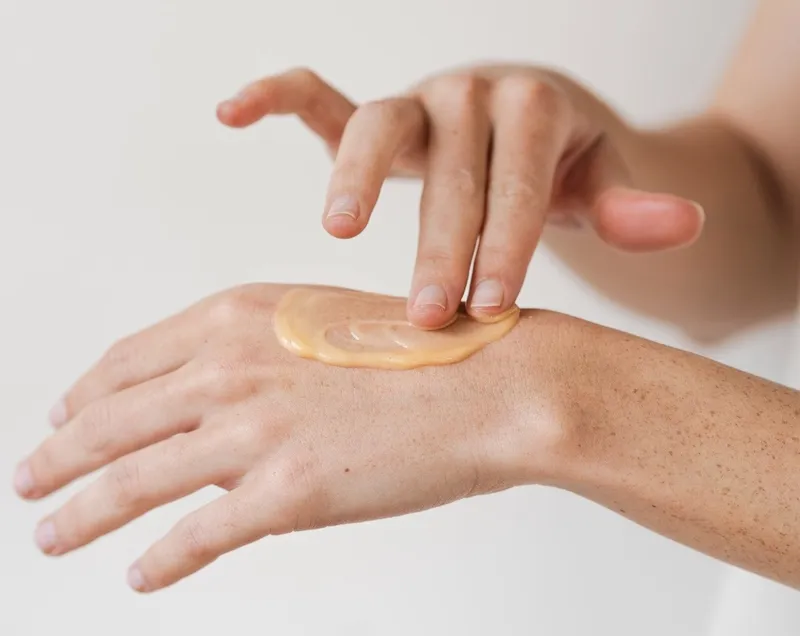
Application, absorption and after-feel each tell a different part of the story — none alone is the full picture.
For most leave-on products — serums, moisturizers, eye creams — evaluate across seven connected areas.
1. Appearance
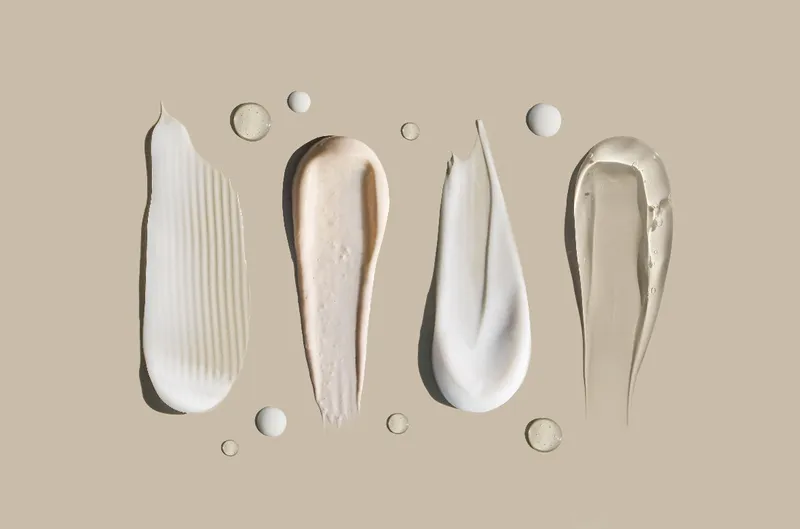
Color, clarity, uniformity, viscosity. Ask whether the look matches the intended positioning, not just whether it looks attractive.
2. Application
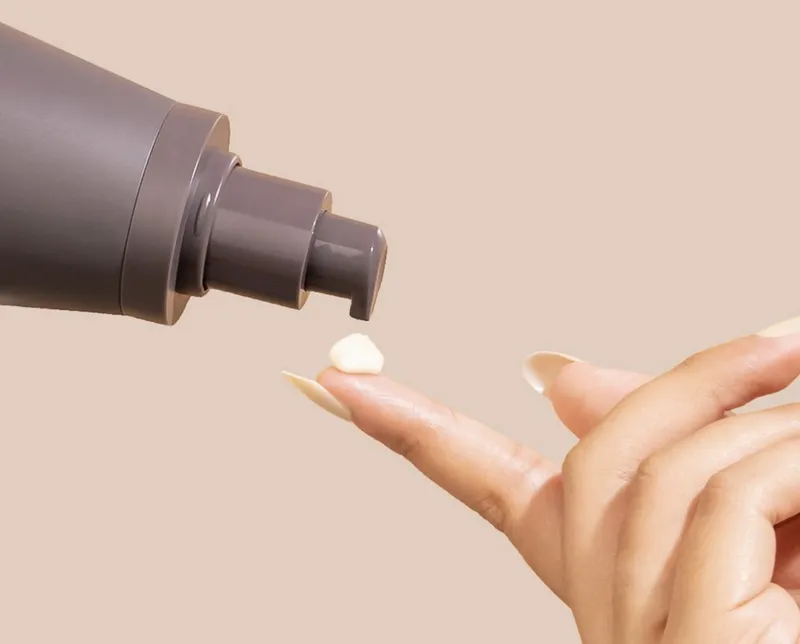
Spreading, slip, drag, cushion, tackiness. Use a consistent amount and application area — comparing one drop to three pumps is not a fair test.
3. Absorption
Do not judge immediately. Check the finish right after application, at ~2 minutes, and at ~10 minutes — the finish can change significantly. Here, "absorption" describes perceived dry-down and surface finish; it does not measure ingredient penetration into skin.
4. After-Feel
Tackiness, greasiness, softness, film or residue. There is no universally correct after-feel — only one appropriate for the intended consumer.
5. Layering
Test within a real routine (serum → moisturizer → sunscreen → makeup). Watch for pilling, excess shine or makeup application problems.
6. Consumer Fit
Ask "would our intended consumer enjoy using this repeatedly?" — not "do I like this formula?"
7. Product Positioning
Does the experience feel convincing at the intended retail price? A technically impressive formula can still be commercially wrong.
Comparison: Efficacy Claims vs Texture Evaluation
Texture, absorption and after-feel can be judged relatively quickly. Claims such as "improves hydration," "brightens," "reduces the appearance of wrinkles" or "improves firmness" are different — good sensory feel after a few uses does not prove these benefits. Depending on the claim and market, substantiation may require formulation evidence, instrumental testing, consumer studies or clinical testing.
| Question | What It Tells You |
|---|---|
| Do we like the product experience? | Sensory / consumer-fit evaluation |
| Do we have appropriate evidence for our claims? | Regulatory / claim-substantiation evaluation |
Our cosmetic claim-substantiation guide explains the evidence-planning side. These are related questions, but they are not the same question — and both need to be answered before a claim goes on packaging or a website.
Recommendations: How to Give Useful Feedback
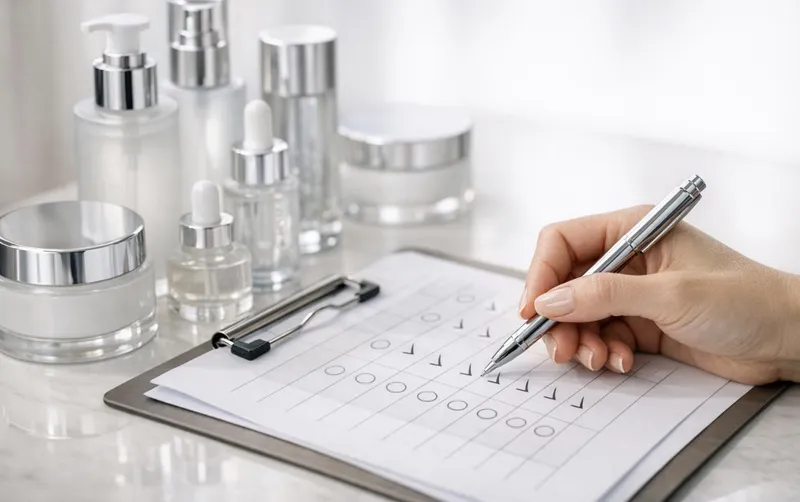
A written comment next to each score tells the formulation team far more than a number alone.
Compare two types of feedback:
- Weak feedback: "We don't like Sample B. Please improve it." This tells the R&D team almost nothing.
- Useful feedback: "Sample B is closest to our target. We like the lightweight texture, spreading and absorption. After 5–10 minutes, the finish is slightly tackier than we want for daytime use. Please keep the current lightweight profile but evaluate whether the residual tackiness can be reduced."
Useful feedback tells the formulation team what works, what does not, when the problem appears, and what must be preserved . Change one important variable at a time rather than requesting five changes at once — otherwise the next sample becomes difficult to evaluate. The custom formula development process explains how changes are scoped and controlled between sample rounds.
Sample Evaluation Scorecard
Score each sample (out of 5) on: Appearance, Application, Absorption, After-Feel, Layering, Target Consumer Fit, and Product Positioning Fit. Always add a written comment — "4/5, pleasant sensory feel and smooth finish, but slightly tacky after 10 minutes" is far more useful to a formulation team than a number alone.
OEM Development Considerations: What a Sample Cannot Tell You
A physical sample says a great deal about consumer experience. It cannot answer every question required before commercial production, including formula stability, microbiological quality, packaging compatibility, ingredient and regulatory review, documentation, claim substantiation, production feasibility and finished product cost . "I like the sample" is not the same as "the product is ready for bulk production." Our bulk production versus laboratory sample guide explains how the approved reference and written specification work together. Confirm market-specific documentation through the global cosmetics compliance hub.
A practical development sequence: Product Brief → Sample Evaluation → Identify the Best Direction → Separate "Must Change" From "Nice to Improve" → Give Specific Feedback → Optimize if Necessary → Confirm the Final Direction. Use the sample-to-first-order responsibility matrix to assign approval owners and follow-on checks. For related sourcing context, see our private label MOQ guide and guide to starting a skincare brand .
Frequently Asked Questions
Can I approve a skincare formula after testing it once?
We do not recommend a final decision from a single quick application. Repeated use under realistic conditions gives more useful sensory information, particularly for leave-on products. Any repeated-use evaluation should follow the agreed safety review and protocol; it is not a substitute for safety, quality, stability, regulatory or claim-substantiation work.
Should I test skincare samples on my hand or face?
Hand testing can help compare texture and spreadability. For facial products, facial evaluation may better reflect the intended consumer experience, but any skin application should follow an appropriate safety and technical review and the agreed evaluation protocol. An unreviewed sample should not be assumed safe for hand or facial use.
What if I like the texture but not the fragrance?
Tell the manufacturer exactly what works and what does not. Fragrance may be adjustable without changing the entire product direction, though any modification needs technical evaluation.
What if the sample pills under sunscreen or makeup?
Report the products used, application order, approximate amounts and when the pilling occurs — this helps the formulation team understand the conditions under which the problem appears.
Does approving a sample mean it is ready for bulk production?
Not automatically. Sensory approval should be followed by the technical, packaging, documentation and commercial confirmations appropriate for that project.
Final Takeaway
Don't ask only "do I like it?" Ask whether it looks right, applies correctly, absorbs as intended, matches the brief's after-feel, layers properly, fits the target consumer, and supports the product positioning. That turns sample testing from personal preference into product development — and when you send feedback, explain both what should change and what should stay exactly as it is .
Evaluating Skincare Samples for Your Brand?
Send SEYE your product brief and sample feedback, including the target market, consumer, desired texture, intended usage, preferred ingredients, packaging size and estimated first-order quantity . Our product team can use that information to identify the most suitable formula direction for the next development step.
Discuss your sample feedback with SEYE. Starting MOQ is subject to formula, packaging and market documentation; request a project-specific quotation.
SEYE Cosmetics
OEM Sample Evaluation & Product Planning
Publication details are shown from the article record. Individual expertise, reviewer information, and review dates appear only when verified for public display.