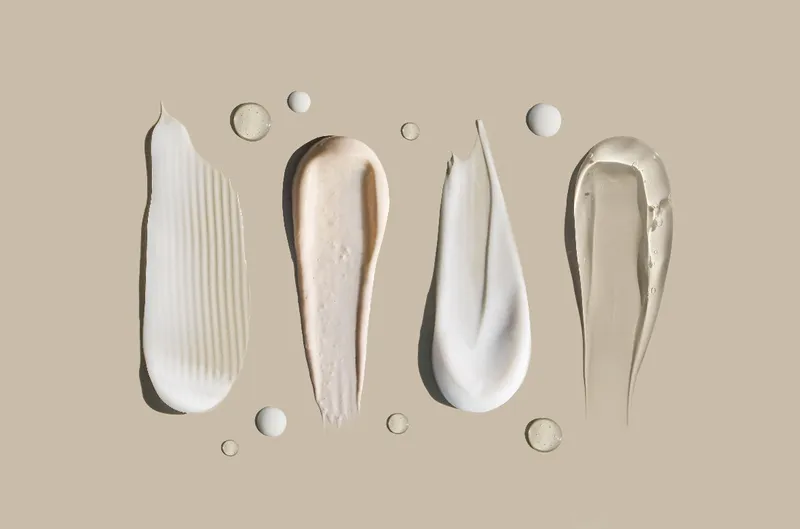
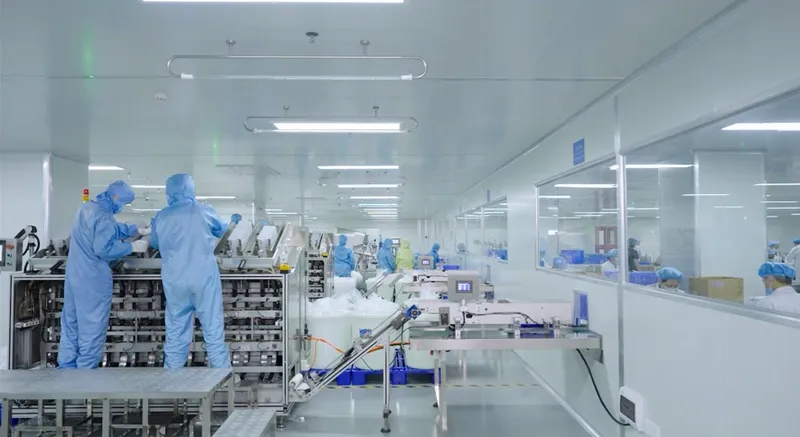
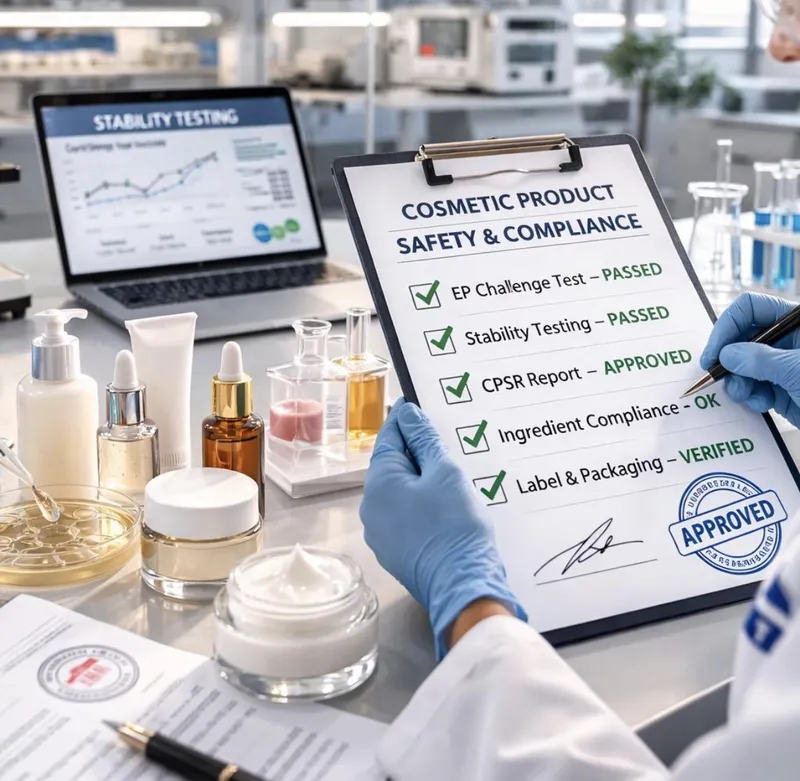
Compare existing, semi-custom and fully custom skincare development before investing in a first launch. Review the product brief, modification feasibility, validation work, project-specific MOQ and written formula rights rather than assuming custom is always better.
One of the first decisions a skincare brand faces with an OEM/ODM manufacturer is whether to use an existing formula or develop a custom one. The answer is not simply that custom is better and existing is cheaper.
Short Answer: A ready-made formula can suit a new skincare brand prioritizing market validation, a smaller development commitment and an achievable first order. Custom development is more useful when no available platform meets the required active system or sensory target. Compare the product brief, modification feasibility, validation work and written rights; neither route automatically guarantees a faster launch, low MOQ or exclusivity.
Key Takeaways
- Some existing formulas can be modified, subject to technical feasibility and manufacturer approval — for example fragrance or viscosity adjustments — creating a middle ground between standard private label and full custom development.
- The wrong question is "which one is better?" The right question is: where does my product genuinely need differentiation?
- Custom does not mean "add more ingredients" — ingredient additions or changes can affect stability, pH, viscosity, preservation, color, odor and cost.
- A practical middle route exists: Existing Formula → Sample Evaluation → Targeted Modification → Final Formula.
- Formula exclusivity is never automatic — confirm ownership and exclusivity terms before development begins.
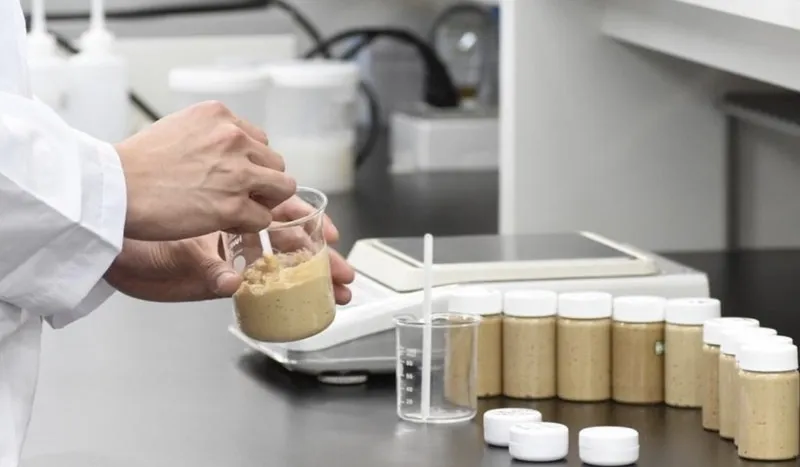
Illustrative laboratory scene: both existing and custom routes need project-specific sample evaluation and defined approval steps.
Why This Matters: Defining the Two Development Routes
An existing (ready-made) formula is one an OEM/ODM manufacturer has already developed before your project begins, with a defined texture, appearance, manufacturing process and preservation approach. You select it, evaluate samples and apply your branding and packaging; limited modification may be possible. Use our OEM formula-library selection guide to shortlist suitable starting platforms.
A custom formula is developed around your brief: target consumer, desired benefits, key actives, texture, absorption, fragrance, benchmark product and target cost. The R&D team builds prototypes toward that target, which may require several adjustment rounds. Our custom formula development hub explains the brief, review gates and change-control process.
Prior development or test data do not automatically establish suitability for your final product. Confirm relevant safety, stability, preservation, packaging compatibility and target-market documentation for the approved formula and packaging.
Neither route is automatically better. Brand A, planning an illustrative small first order and competing mainly on branding and content, may be better served by a suitable existing formula. Brand B, built around a specific peptide system that no available formula can match, may justify custom development. Both can support premium positioning if the final product meets its agreed requirements.
Market Insights: Why New Brands Default to Existing Formulas
For a first launch, uncertainty is the dominant condition — brands are still learning whether consumers want the product, what price they will accept, and whether they will reorder. Putting too much capital into product development before market validation increases risk. An existing formula keeps more resources available for packaging, photography, marketing, logistics and customer acquisition.
For a proposed small-batch launch, full custom development can absorb a large share of the available budget. This is a planning trade-off, not a universal market rule or a guaranteed order quantity. Compare development, packaging, testing and launch expenditure using our low-MOQ formula and packaging budget guide.
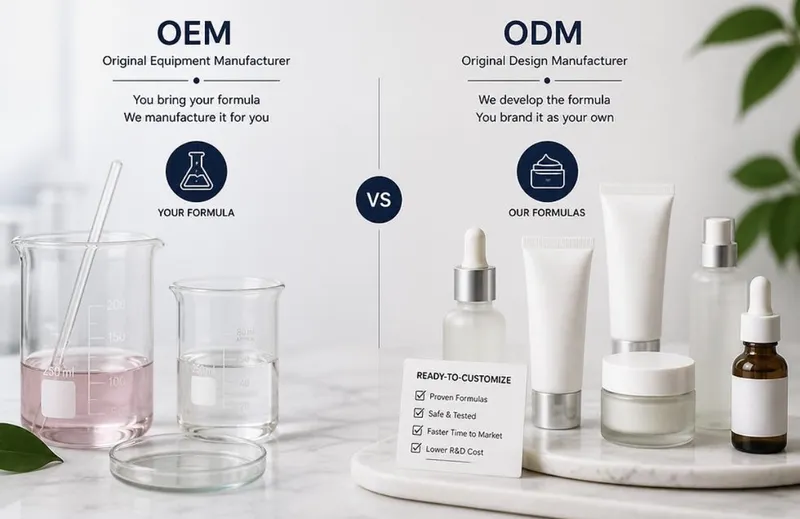
Simplified example of OEM/ODM responsibilities, not a universal mapping of ready-made to ODM and custom to OEM. Manufacturer-developed custom formulas can also be ODM. The pictured "Safe & Tested" label is not evidence of safety or testing for your final product; confirm responsibilities, validation and rights in writing.
Comparison: Existing Formula vs Custom Formula
| Factor | Existing Formula | Custom Formula |
|---|---|---|
| Development speed | Potentially shorter with a suitable platform | Often longer when new development is needed |
| Initial development cost | Often lower development expenditure | Depends on brief, prototypes and validation |
| Development complexity | Lower | Higher |
| Small first order | Often more practical | Depends on manufacturer |
| Formula flexibility | Limited to moderate | High |
| Unique texture or active system | Depends on available formulas | Better suited |
| Sampling process | Usually simpler | Often multiple prototypes |
| Formula exclusivity | Not automatic | Can be negotiated |
| Brand differentiation | Mainly positioning, packaging, execution | Can include the formula itself |
Directional comparison only, not a SEYE price or delivery commitment. Both routes depend on the approved brief, validation scope, packaging and market requirements.
This table should not be read as "existing = basic" and "custom = premium." A well-developed existing formula can support premium positioning; a poorly conceived custom formula can still produce a weak product. The quality of the result depends on how well the formula fits the overall product strategy.
Existing Makes Sense When...
You are launching your first product, planning a small first order, or differentiating through branding, packaging and customer experience rather than a unique formula. Confirm that the available platform meets the brief and project-specific requirements.
Custom Makes Sense When...
The formula is central to your brand story, no existing formula can hit your target, you have a clear sensory benchmark, or formula exclusivity is strategically important.
The Middle Route
Start with a suitable existing formula and evaluate targeted modification — lighter after-feel, fragrance removal, viscosity adjustment or a justified active change — rather than assuming development from zero is necessary. Follow an agreed sample-evaluation process before deciding what needs to change.
Modification is subject to technical feasibility and manufacturer approval. Formula or packaging changes may require renewed stability, preservation, compatibility or safety assessment, updated documentation and a revised cost or timeline before production.
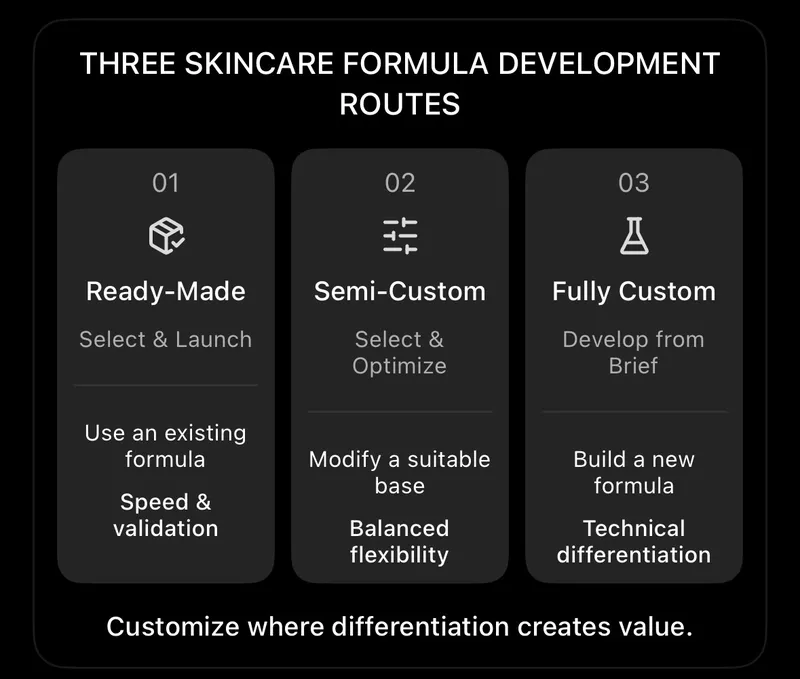
The three routes describe development choices, not permission to bypass required validation, packaging review or production approval.
Recommendations: The SEYE Formula Development Decision Framework
Before deciding between existing and custom formulation, ask five questions:
- 1. What is the product's real point of difference? Is it the formula, or the brand, audience, packaging and distribution?
- 2. How close is an existing formula to the target? If it already meets most of your agreed performance, sensory and cost requirements, evaluate limited optimization before starting custom development.
- 3. Has the market been validated? The less certain the demand, the more carefully upfront investment should be considered.
- 4. What is the real launch budget? Formula cost should be weighed against packaging, testing, freight, photography, website and advertising.
- 5. Is exclusivity actually required? Ask what exclusivity will protect and whether that value justifies the added development commitment.
Key question: customize where differentiation creates value; standardize where it does not. For many emerging brands, that principle creates a healthier balance between differentiation, development risk and launch capital.
OEM Development Considerations: A Practical Example
Hypothetical planning example — not a SEYE quotation or MOQ commitment: imagine a brand proposing a 30 mL barrier-support serum for the United States: accessible-premium positioning, a Ceramides + Panthenol + Ectoin direction, a proposed 500-unit first order and a $32 target retail price. The quantity, price and formulation assumptions are illustrative and require project-specific confirmation. Suppose an available platform offers the desired lightweight texture with Panthenol and Ceramide NP, but not Ectoin.
- Route A: consider the existing formula unchanged if it meets the essential brief — potentially fewer development changes, but still subject to required product and packaging review.
- Route B: assess a targeted active adjustment only if technically feasible, with affected testing, cost and timing reviewed.
- Route C: develop a fully custom formula — best when the existing formula cannot deliver the intended system, texture or positioning.
The correct route is decided by comparing the commercial value of the difference against the additional development work — not by assuming "custom sounds more premium." For related sourcing decisions, see our guide on private label skincare MOQ and our step-by-step guide to starting a skincare brand.
Whichever route you select, use the pre-bulk production approval checklist to confirm the formula revision, specifications, packaging, claims, artwork and reference sample before authorizing manufacturing.
Frequently Asked Questions
Is a custom skincare formula always more expensive?
Usually it requires more development work than selecting an existing formula, but total cost depends on the project — development fees, prototype rounds, testing, ingredients, MOQ and packaging all affect the final investment.
Can an existing formula still look like my own brand?
Yes. Your branding, packaging, artwork, positioning and marketing can be customized independently of whether the formula began as an existing platform. Formula exclusivity, however, should not be assumed.
Can I start with an existing formula and customize later?
Often, yes. Some brands validate a product first and invest in deeper formulation differentiation in later production runs, depending on the manufacturer's process and the extent of future changes. Treat later changes as a controlled revision and review affected testing, compatibility, documentation, costs and timing.
How many custom formula prototypes are normally required?
There is no universal number. A clear original brief and benchmark usually make development more efficient; the number of rounds depends on the technical target and agreed review process.
Who owns a custom skincare formula?
Ownership and exclusivity depend on the agreement between brand and manufacturer. Paying a development fee does not automatically transfer all formula rights — confirm the terms before starting development.
Final Takeaway
An existing formula can support market validation and controlled development investment when a suitable platform is available. Custom formulation can support technical differentiation and a defined sensory target. Between them sits a practical third route: start with a suitable existing formula and customize only what genuinely matters. Ownership or exclusivity exists only as agreed in writing; the goal is a differentiated product that remains technically and commercially viable.
Not Sure Which Formula Route Fits Your Project?
Send SEYE your product concept, target market, desired ingredients, texture, packaging size, estimated first-order quantity and target positioning. Our product and R&D teams can evaluate whether a suitable existing formula is available before recommending full custom development.
Compare formula options with SEYE. Starting MOQ is subject to formula, packaging and market documentation; request a project-specific quotation. Production timing starts only after formula approval, packaging confirmation, artwork sign-off, required market documentation, component availability and agreed payment conditions are complete.
SEYE Cosmetics
OEM Development & Product Planning
Publication details are shown from the article record. Individual expertise, reviewer information, and review dates appear only when verified for public display.